
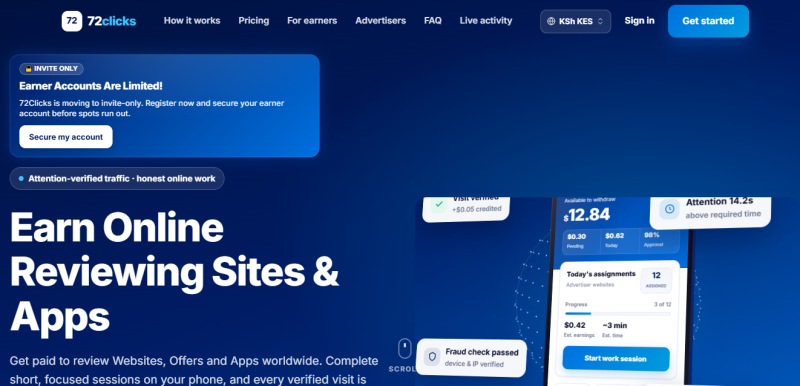
Short answer: There are serious doubts about 72Clicks. It promises weekly pay for keeping websites open on your phone, but after a 14-day free trial, users must buy a paid membership to keep earning. Being paid simply to click or view sites is a long-debunked model, and paying upfront to unlock earnings carries the hallmarks of an advance-fee and task scam.
72Clicks says you can get paid to review websites, offers and apps from anywhere in the world. Members complete short, focused sessions on their phone, and every "verified visit" is supposedly credited to a wallet and paid out weekly.
It sounds like easy money: open a few pages, tap a button, collect a payout. But the details of how the platform works tell a different story.
This structure is the key problem. The free trial lets people see their wallet balance grow, which builds trust and makes the platform feel real. Then, just as earnings start to add up, continuing requires a payment. At that point, many users feel they have already invested time and do not want to lose the balance they have built, so they pay.
It is also worth asking who pays for all this clicking. Advertisers want real customers, not people paid to leave a page open. Paid traffic of this kind is generally treated as low value or even invalid by ad networks, which makes it hard to see how a platform could fund steady weekly payouts from it alone.
72Clicks uses pop-ups to push visitors into signing up quickly. One warns that earner accounts are limited, that the platform is moving to invite-only, and that you should register now to secure your account before spots run out.
Scarcity messages like this are designed to stop you from researching first. A genuine platform with real advertisers would not need to rush people in with claims of disappearing spots. The urgency also sets up the next step: once people feel lucky to have secured a place, they are more likely to pay for an upgrade to keep it.
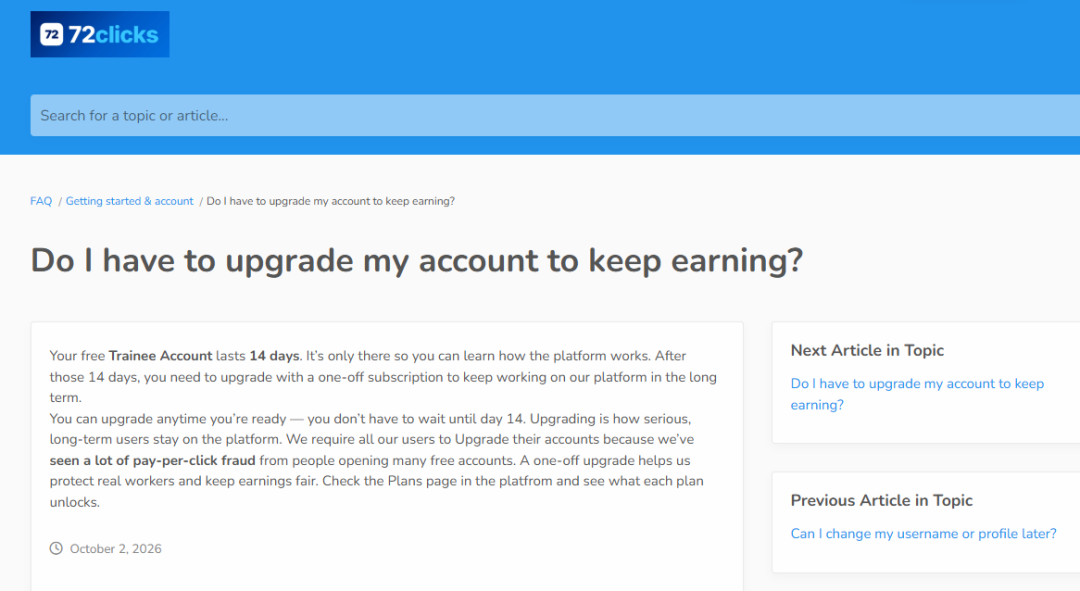
That is the big unanswered question. On similar sites, users have found they cannot withdraw their balance because of sudden "fees," "taxes," "verification charges" or whatever name the platform comes up with. Each payment is usually followed by another request, and the money never arrives.
There is no evidence yet that this is happening on 72Clicks. But its setup, a free trial that builds a visible balance followed by a required paid upgrade, looks very similar to platforms where withdrawals later became impossible.
There are serious doubts. 72Clicks offers pay for clicking and viewing websites, uses scarcity pop-ups, and asks users to buy a membership once a free trial ends. That combination has the hallmarks of a task and advance-fee scam, so keep your money in your pocket.
This article has been written by a scam fighter volunteer. If you believe the article above contains inaccuracies or needs to include relevant information, please contact ScamAdviser.com using this form.
Adam Collins is a cybersecurity researcher at ScamAdviser who operates under a pseudonym for privacy and security. With over four years on the digital frontlines, he specialises in translating complex threats into actionable advice. His mission: exposing red flags so you can navigate the web with confidence.
