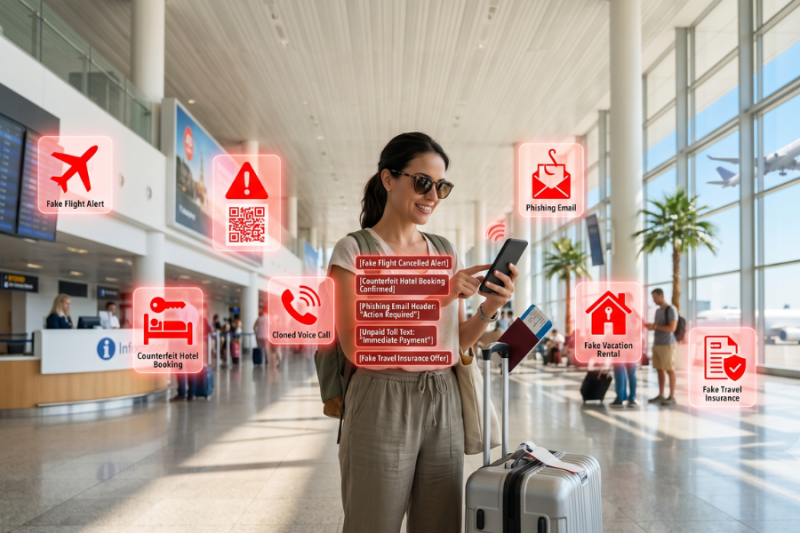
Planning a summer getaway? So are scammers. Here's how to spot the eight most common tech scams that spike during the travel season before they catch you off guard.
In a Nutshell
Summer changes how people behave online. More bookings, more travel confirmations, more time spent checking phones for flight updates and hotel emails. That shift in behavior is exactly what scammers wait for. When people expect messages from airlines, rental platforms, and delivery services, a fake one blends right in.
Here are eight scams that reliably rise every summer, how each one works, and what actually stops them.
A text or email arrives saying there's a problem with your flight, hotel, or rental car. It looks like it came from the real company. The logo is right, the layout is right, and there's a link asking you to confirm payment details before your booking gets cancelled.
The pressure works because the trip is real and the fear of losing it feels real too. People click before they think.
What stops it: go to the company's app or website directly instead of using the link in the message. If something is genuinely wrong with your booking, it will show up there too.
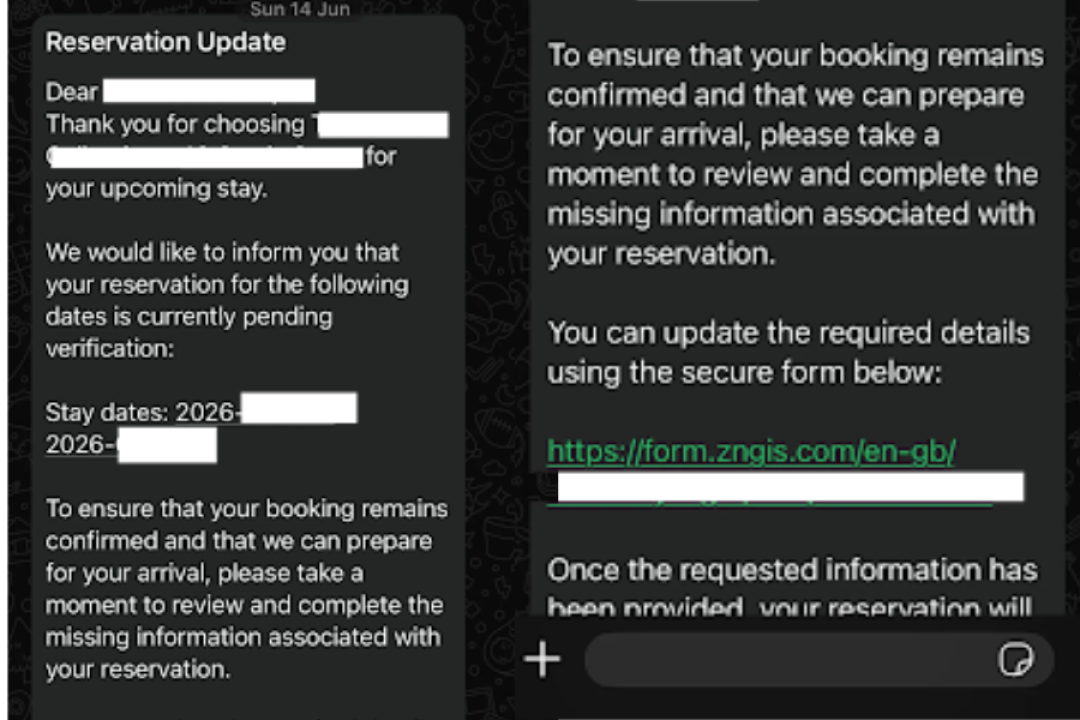
Source: reddit
Scammers copy photos and descriptions from an actual vacation rental and repost them somewhere else, often at a lower price. Someone pays a deposit, sometimes the full amount, for a place that was never theirs to rent. The scam usually only surfaces when the renter shows up and finds someone else already staying there.
Older versions of this scam had obvious tells like awkward wording or blurry photos. Not anymore. Listings now look polished enough to pass for the real thing.
What stops it: book through the platform's own payment system and stay there for the whole conversation. A host asking to move things to WhatsApp or a bank transfer is a sign to walk away.
A few seconds of audio, often lifted from a video someone posted online, is enough to recreate a voice convincingly. Scammers use this to call family members pretending to be a relative stuck somewhere and in urgent need of money. The same trick shows up in fake customer service calls from airlines or cruise lines walking someone through a "refund."
The voice sounds right, so people skip the part where they'd normally stop and check.
What stops it: hang up and call the person or company back using a number you already had, not one given to you during the call.
As ScamAdviser's 2026 scam predictions note, AI voice cloning has moved from experimental to operational. Scammers no longer need technical expertise to deploy it.
An ad shows a flight or charter deal priced well below anything else available. Summer airfare is already expensive, so a low price feels like relief rather than a warning sign. People pay and either get nothing or show up to find the flight doesn't exist.
What stops it: compare the price against a few other sources first. A fare that undercuts everyone else by a wide margin deserves more scrutiny, not faster action.
A sticker with a fake QR code gets placed over a real one on a parking meter, menu, or hotel sign. Scanning it leads to a payment page built to steal card details or a site that installs malware.
QR codes became routine enough during the pandemic that most people stopped questioning them. That's exactly the gap this scam uses.
What stops it: look closely at the code before scanning. A sticker sitting on top of printed signage is a giveaway. If it leads to a payment page, check that the web address matches the real business before entering anything.
A text claims you owe money for a toll or parking fee and includes a link to pay immediately. During a road trip through unfamiliar states or countries, this is oddly believable. Toll systems vary everywhere, and most drivers aren't sure which charges have gone through.
What stops it: skip the link and check your toll account directly through the toll authority's own app or site. Real unpaid balances show up there too.
An offer for trip protection or cancellation coverage shows up during checkout on a shady site, or arrives separately after a real booking is already made. The coverage doesn't exist, or the seller has no intention of honoring a claim.
This one works because buying travel insurance is already a normal habit for a lot of travelers. The scam doesn't need to convince anyone insurance is worth it. It just needs to look like the real offer.
What stops it: buy insurance directly from a known provider or through the booking platform itself, not from a follow-up email or unexpected pop-up.
Several travel companies have had data breaches this year, exposing names, contact details, and booking records. Scammers now use that real information to write phishing messages that reference an actual trip, a real confirmation number, or accurate personal details.
A message that gets your booking details right feels trustworthy. That instinct doesn't hold up anymore, given how much personal data has already leaked.
What stops it: don't treat accurate details as proof a message is real. Contact the company through a number or website you looked up yourself, not the one included in the message.
Every one of these scams depends on the same thing: getting you to act through a link, number, or code that arrived inside the suspicious message itself. Break that pattern and most of these scams fall apart on their own. Go to the source directly, check accounts through official apps, and treat urgency as a reason to slow down rather than speed up.
FAQs
Why do scams increase during summer?
Summer means more people are booking holidays, checking travel updates, and making online payments. Scammers know travelers expect messages from airlines, hotels, and rental companies, making fake alerts much more convincing.
What is the most common summer travel scam?
Fake booking confirmations and payment requests remain among the most common. Victims receive emails or texts claiming there's an issue with a reservation and are pressured into clicking a malicious link or entering payment details.
Are QR codes safe to scan while traveling?
Usually, yes—but only if they belong to the business you're visiting. Criminals sometimes place fake QR code stickers over legitimate ones to redirect people to phishing websites or fraudulent payment pages.
How can I protect myself from travel scams?
Always book through trusted platforms, verify messages using official apps or websites, avoid paying outside booking platforms, and never trust unexpected links, QR codes, or phone numbers sent in messages.
Adam Collins is a cybersecurity researcher at ScamAdviser who operates under a pseudonym for privacy and security. With over four years on the digital frontlines, he specialises in translating complex threats into actionable advice. His mission: exposing red flags so you can navigate the web with confidence.