
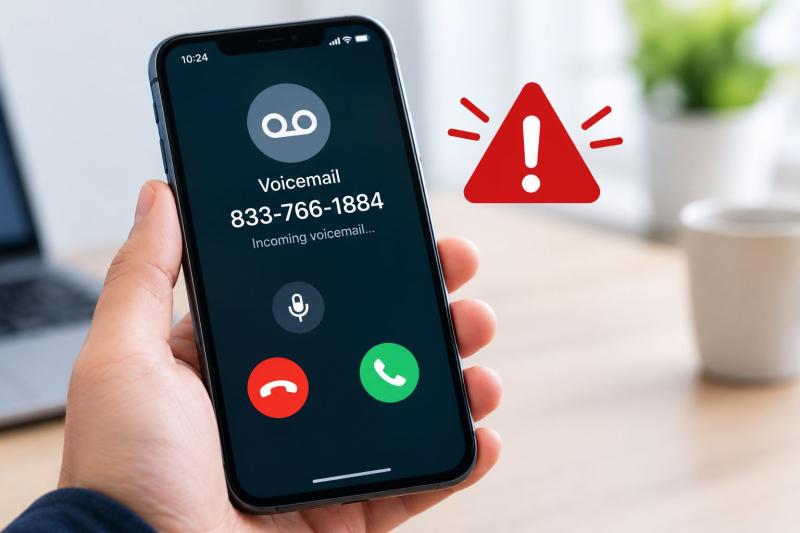
The 833-766-1884 tax resolution robocall or voicemail scam warns recipients about supposedly overdue taxes, expired deadlines, and rising interest to pressure them into calling back. The message claims that contacting a so called tax resolution department can help reduce interest and stop further collection activity.
These scare tactics are common warning signs of tax impersonation scams designed to exploit people's fear of owing money to the IRS. If you receive this voicemail, do not call back or share personal or financial information. Instead, verify any alleged tax debt directly through official IRS channels.
The 833-766-1884 tax resolution robocall is associated with a voicemail claiming that recipients have overdue taxes and need to contact a so called tax resolution service. The message creates pressure by referring to expired deadlines, accumulating interest, and possible collection activity.
The caller presents the situation as urgent and suggests that calling back could help the recipient enter a resolution program. However, the message does not establish the recipient's identity, the amount allegedly owed, the tax year involved, or the legal authority of the organization making the claim.
This is important because scammers can send similar prerecorded messages to large numbers of people, including those who do not owe any taxes.
The 833 prefix is used for toll-free telephone numbers in the United States. However, scammers can use toll-free numbers or manipulate caller ID information to make their communications appear more credible. The number's format alone cannot establish whether the caller is legitimate.
The safest approach is to verify the claim independently instead of trusting the voicemail.
Recipients may encounter messages like the following:
"This is an important update regarding your past due taxes. As you know, resolution options are time sensitive and extension deadline has passed... To reduce accruing interest, give us a call as soon as you get this at 833-766-1884."
Another version may contain almost identical wording:
"This is an important update regarding your past due taxes. As you know, resolution options are time sensitive and extension deadline has passed........... To reduce accruing interest, give us a call as soon as you get this at 833-766-1884."
Both examples use similar language to create urgency and encourage a callback.
Notice that the message does not provide a clear tax assessment, identify a specific tax year, or explain how the recipient can independently verify the alleged debt. Instead, it directs the recipient to contact the supplied number. Do not assume that a voicemail is genuine simply because it mentions taxes, deadlines, interest, or collection procedures.
Scammers often use a simple process to turn an unexpected call into a financial or identity theft attempt as below:
The message claims that a deadline has passed and interest may continue to increase. This can make recipients feel that they must act immediately. People who are worried about tax debts may be more likely to call back without checking whether the claim is genuine.
A caller may introduce themselves as part of a Tax Resolution Team, Tax Relief Resolution and Abatement Office, Tax Mediation Agency, or another professional sounding department.
Such names do not establish that the caller works for the IRS or another government agency. A private tax relief company may offer legitimate services, but its identity, fees, and claims must be verified independently.
After a recipient calls back, the person answering may ask for details such as:
Some information may be needed by a legitimate tax professional to provide services. However, an unverified caller should not be trusted with sensitive details. Fraudsters can use stolen information for identity theft, fraudulent tax returns, or unauthorized financial transactions.
Another possible outcome is a request for payment to enroll in a tax relief program, stop collection activity, or reduce an alleged tax debt.
Some legitimate tax professionals charge fees for their services. The warning sign is an unverified company that makes unrealistic promises, uses aggressive pressure, or demands money before clearly explaining its identity, services, and terms.
Be especially cautious if anyone asks for payment through gift cards, cryptocurrency, wire transfers, or prepaid cards.
If you respond, the caller may continue contacting you with additional offers, payment demands, or requests for information. A callback can also reveal that your number is active, potentially leading to more unwanted calls.
Several details in this voicemail deserve attention which include:
According to the Internal Revenue Service (IRS), the agency normally contacts taxpayers by U.S. mail first. The IRS warns that urgent or threatening prerecorded messages are a sign of a scam. However, legitimate IRS employees may call about certain tax matters after sending a notice or letter. Authorized private collection agencies may also contact taxpayers about qualifying unpaid tax debts, but only after the required written notices have been sent.
Therefore, an unexpected tax related call should be verified rather than automatically accepted or dismissed. The IRS also states that it will not demand immediate payment using gift cards or prepaid cards, threaten immediate arrest for unpaid taxes, or demand payment without giving taxpayers an opportunity to question or appeal the amount owed. Legitimate tax payments should be made through official IRS payment channels, not to an unverified caller.
Follow these steps to protect yourself.
The 833-766-1884 tax resolution robocall or voicemail displays warning signs of a tax impersonation scam, using claims about overdue taxes, expired deadlines, and rising interest to pressure recipients into calling back. Although the available message does not independently confirm who operates the number, recipients should treat the call with extreme caution, avoid sharing personal or financial information, and verify any alleged tax debt directly through official IRS channels.
A genuine tax issue should be handled through verified government channels, not through pressure created by an unexpected prerecorded voicemail.
The information in this article is provided for educational and awareness purposes. Company names, phone numbers, sender names, and other details referenced may have been impersonated, spoofed, or otherwise misused by scammers. Their appearance in this article does not necessarily identify the legitimate company, owner of a phone number or account as being involved in fraudulent activity.
This article has been written by a Scam Fighter Contributor, De-Reviews.com Team. If you believe the article above contains inaccuracies or needs to include relevant information, please contact ScamAdviser.com using this form.
De-Reviews.com Team is a group of scam researchers, editors, and online safety advocates dedicated to exposing online fraud and helping consumers stay safe online. The team has been investigating scams, fraudulent websites, phishing campaigns, and other online threats since 2014. Read the Full Author Profile.
