
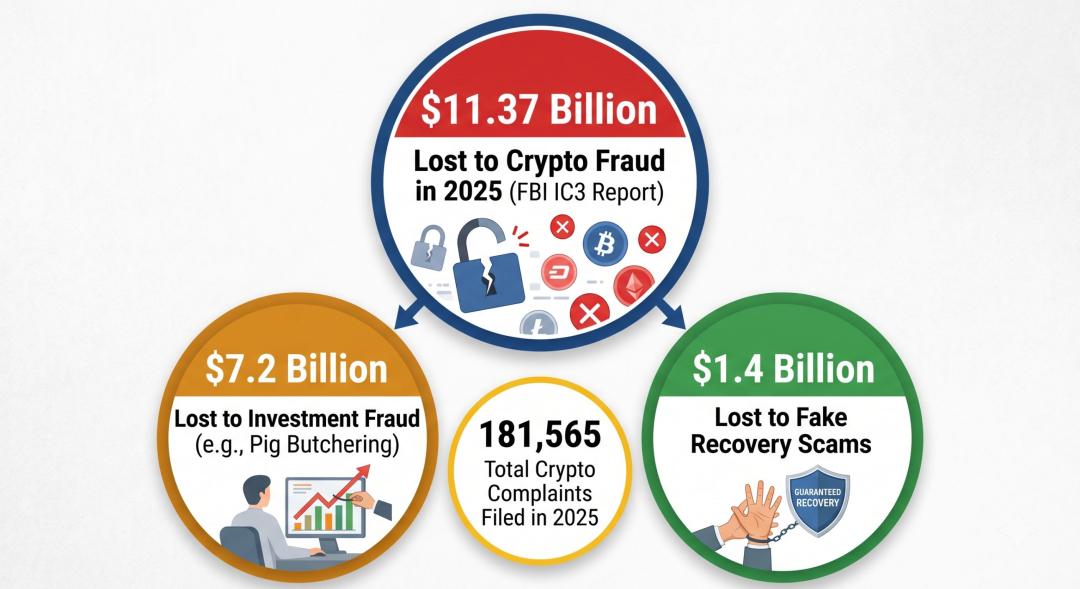
Americans lost $11.37 billion to cryptocurrency fraud in 2025 — accounting for more than half of all internet crime losses reported to the FBI. The scams are getting smarter, utilizing advanced AI and deeply manipulative tactics. This comprehensive guide breaks down exactly how each scam works, shares real victim stories, and provides step-by-step protection tools to keep your digital assets safe.
Cryptocurrency transactions are irreversible by design. Unlike a credit card purchase or a wire transfer, there is no bank fraud department, no chargeback mechanism, and no centralized authority that can undo a completed blockchain transaction. The moment you sign the wrong contract or send funds to the wrong address, the money is permanently gone.
Furthermore, the tooling available to criminals has advanced dramatically. In 2026, scammers routinely utilize:
A wallet drainer is a highly sophisticated attack. It begins when you land on a malicious website—often a convincing fake of a popular NFT mint, a token airdrop, or a DeFi exchange. The site prompts you to "Connect Wallet" and then asks you to click "Approve." By clicking approval, you are digitally signing a malicious smart contract that grants the attacker permission to transfer assets out of your wallet. Automated scripts sweep every token, NFT, and coin out of your account in milliseconds.
Critical Warning: Before clicking "Approve" on any smart contract interaction, pause and read the full transaction details in your wallet interface. Legitimate mints and DeFi protocols do not need permission to transfer arbitrary amounts of assets you didn't explicitly select.
Responsible for $7.2 billion in reported losses in 2025 alone, pig butchering (shā zhū pán) involves international organized crime syndicates building intense emotional trust with a victim before convincing them to invest in a fraudulent crypto platform.
The scam follows a strict psychological playbook:
Real Victim Case Study: > A 58-year-old retired teacher in Ohio lost $83,000 after an 11-week online friendship with a contact claiming to be a finance professional. Her fake dashboard showed her $40,000 investment grow to $180,000. When trying to withdraw funds for her grandson's tuition, the platform demanded $43,000 in sequential "tax compliance" and "regulatory clearance" fees before her family intervened.
Because creating a crypto token takes less than an hour, scammers build slick branding, use stock photos for fake "doxxed" team members, and engineer social media hype to trigger FOMO (Fear Of Missing Out).
Classic Rug Pull: Developers attract millions of dollars into a project's liquidity pool, then abruptly withdraw all backing funds, rendering the token instantly unsellable.
The Slow Rug: The team gradually drains value over months by selling off their pre-mined allocation bit by bit until they quietly abandon the project.
Clipboard Hijackers: Silent malware that infects your computer or phone. When you copy a crypto address, the malware instantly replaces it in your clipboard with the attacker's address.
If you post a complaint about an exchange or wallet on X, Discord, or Reddit, automated bots and human scammers will instantly DM you pretending to be "support agents." They will direct you to a portal that looks identical to the real service and ask you to "sync" your wallet by entering your seed phrase.
The Golden Rule: No legitimate wallet provider, exchange, or tech support agent will EVER ask for your seed phrase. Your seed phrase is the master key to your entire blockchain identity. Sharing it gives the recipient total, permanent ownership of your assets.
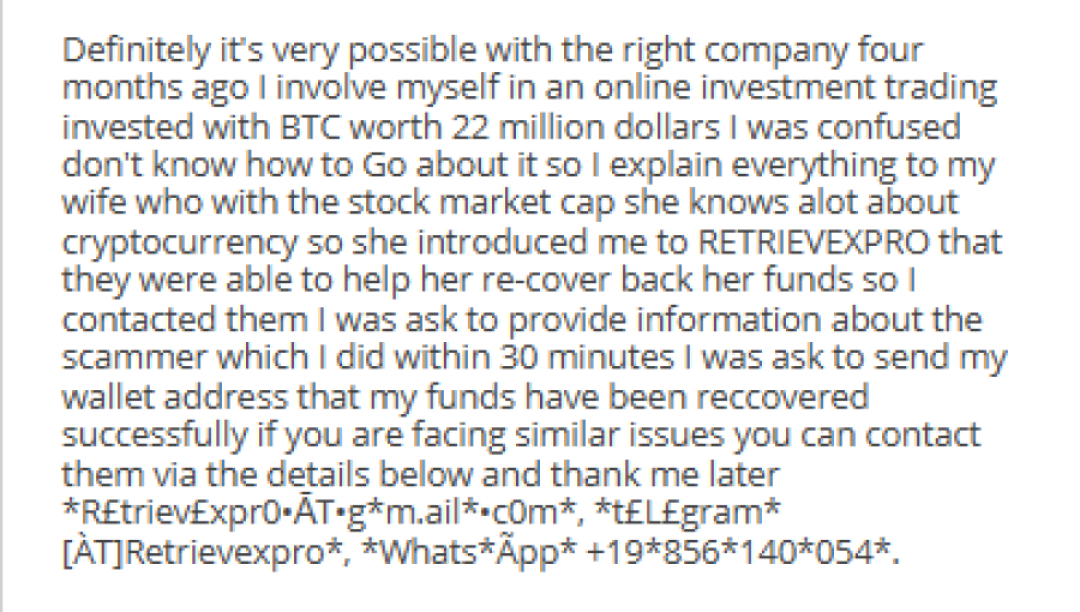
After a victim publicly posts about being scammed, fake "law firms" or "blockchain investigators" target them. They charge hefty upfront fees, claiming they can hack the scammer or force a blockchain reversal. They cannot. No private entity can reverse a blockchain transaction. This results in a secondary financial blow to an already vulnerable victim.
If you accept peer-to-peer (P2P) crypto payments or freelance payments from unverified individuals, you may accidentally receive funds tied to a hack or exploit. When you try to move those funds to a regulated exchange like Coinbase or Binance, compliance algorithms will flag the history of those coins, freezing your account indefinitely.
This is the fastest-growing threat in 2026. Scammers use consumer-grade AI video tools to create hyper-realistic deepfakes of public figures like Elon Musk endorsing fake high-yield investment programs.

Live Video Call Manipulation: Syndicates are now using real-time AI video manipulation during video calls to impersonate financial advisors to fool high-value targets.
A honeypot is a token encoded with malicious smart contract rules that allow anyone to buy the token, but blocks anyone except the creator from selling it. The chart looks incredibly green and healthy because no one can sell, pumping up fake value until the creator pulls the plug.
ScamAdviser is an invaluable free tool that analyzes dozens of technical signals to score a website’s legitimacy from 0 to 100.
What ScamAdviser Analyzes:
Your Step-by-Step Verification Guide:
The FBI has transitioned to a highly proactive model to counter automated crypto threats through two primary operations:
Frequently Asked Questions
What is the most financially devastating crypto scam right now?
Investment fraud, primarily pig butchering, causes the largest financial losses. The FBI's data shows it accounted for $7.2 billion of all crypto fraud losses, driven by individual victims routinely losing their entire retirement or life savings to long-term psychological manipulation.
Can a stolen crypto transaction be reversed?
No. The underlying architecture of blockchain technology dictates absolute immutability. Once a transaction is confirmed on-chain, it cannot be altered or reversed by any bank, court, or government entity.
Treat that specific wallet address as permanently compromised and stop using it.
Securely transfer any remaining tokens to a brand-new wallet address created on a clean device.
Go to Revoke.cash and wipe out all smart contract approvals on the old wallet.
Submit the attacker's wallet addresses to blockchain analytics firms like Chainalysis (reportscam@chainalysis.com).
File an official complaint detailing transaction hashes and communications at ic3.gov.
Ignore any direct messages from individuals claiming they can recover your funds.
Disclaimer: This article is for educational purposes only and does not constitute financial or legal advice. Cryptocurrency investments carry significant inherent risk. Last verified and updated: June, 2026.
Adam Collins is a cybersecurity researcher at ScamAdviser who operates under a pseudonym for privacy and security. With over four years on the digital frontlines, he specialises in translating complex threats into actionable advice. His mission: exposing red flags so you can navigate the web with confidence.
