
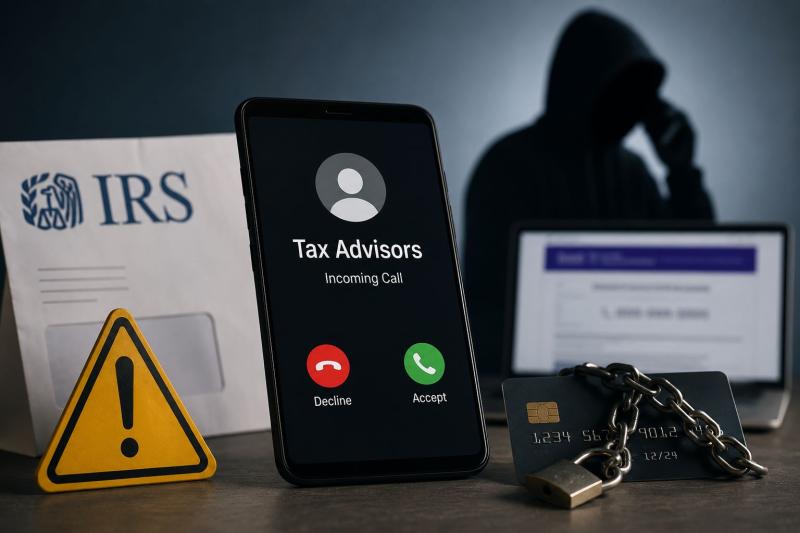
If you receive an unexpected call, text message, or voicemail from "American Tax Advisors", "American Tax Consultants", or a similar sounding company claiming that you owe back taxes, have a tax problem, or need immediate assistance, be careful. These messages are linked to a common tax related scam where criminals use fear and urgency to steal personal information or pressure people into making fraudulent payments.
The real IRS does not randomly call people and demand immediate payment over the phone. The IRS generally starts communication about tax issues through official postal mail. If someone contacts you unexpectedly and threatens legal action unless you pay immediately, it is a major warning sign.
This scam usually begins with a phone call, text message, or voicemail. The person contacting you may claim they represent a tax service, tax consultant, or government related department.
They may tell you:
Scammers may also invent fake department names with official sounding titles, such as Tax Resolution Oversight Department, Federal Tax Compliance Division, or Tax Liability Review Department, to make their claims appear legitimate.
These names are designed to confuse victims and make the message sound like it comes from a real government agency. The main goal is to create panic so victims do not take time to verify the information.
A genuine tax issue usually does not begin with a threatening phone call, text message, or voicemail from an unknown person. Scammers use aggressive tactics because fear makes people more likely to follow instructions without checking whether the claim is real.
The Better Business Bureau (BBB) and law enforcement agencies have warned consumers about similar tax impersonation scams where criminals pretend to represent real companies or government organizations.
These scams are not only about stealing money. They are also designed to collect personal information that can be used for identity theft.
One of the biggest warning signs is false urgency. Scammers may say:
These statements are meant to scare you into acting quickly. A legitimate organization will not usually demand immediate payment through a random phone call while threatening you.
Many people receive automated voicemail messages from scammers. The message may say that your file has been flagged for manual review because of missing tax returns or unpaid tax issues. It may instruct you to call back immediately to avoid further action.
These robotic messages may sound professional, but they are often designed only to get you to contact the scammer.
Scammers often pretend they need to confirm your identity. They may ask for:
Some scammers describe this as a red flag check or another verification process. However, their real purpose is often to collect sensitive information that can be misused. Hence, never share private financial information with an unexpected caller.
Another common trick is offering fake tax assistance. The scammer may claim that they can reduce your tax debt through a special "IRS liability reduction program" or another tax relief service.
They may promise:
However, they often demand large processing fees or upfront payments before providing any service. After receiving payment, the scammer may disappear or continue asking for more money.
A major warning sign is being asked to pay through unusual methods. Scammers may demand:
These payment methods are popular among scammers because they are difficult to reverse and can make it harder for victims to recover their money. The IRS and legitimate tax professionals do not demand tax payments through gift cards or cryptocurrency.
Example 1: Fake Tax Voicemail:
You receive a voicemail saying:
"Your tax file has been flagged for manual review due to missing returns. This is our final attempt to contact you before legal action begins. Call us immediately."
This message contains several warning signs:
Example 2: Fake Tax Consultant Text Message
You may receive a text saying:
"Your account qualifies for an IRS tax reduction program. Contact our tax advisor today and pay the processing fee to start your application."
This is suspicious because it asks you to take immediate action and may request payment before any verification.
If you receive a suspicious call, text, or voicemail from someone claiming to be American Tax Advisors, American Tax Consultants, or a similar organization:
Scammers often use spoofed phone numbers. This means the displayed number may be legitimate, but it does not prove the caller is genuine. Calling back may confirm that your number is active and can lead to more scam attempts.
If you are worried that you may actually owe taxes, do not use the phone number provided by the caller or text message. Instead, check your information directly through official IRS resources.
You can create or access your secure account on IRS.gov to review your tax balance, notices, and account transcripts. Remember, the IRS generally contacts taxpayers through official mail before making phone contact about tax matters.
If you already provided personal or financial details to the caller, take action as soon as possible.
You should:
Reporting tax related scams can help authorities track fraud networks, identify scam trends, and protect other consumers from becoming victims. If you receive suspicious calls, texts, emails, or voicemails, consider taking the following steps:
Unexpected calls, texts, and voicemails from people claiming to be American Tax Advisors, American Tax Consultants, or similar tax related organizations should be treated as highly suspicious. These messages often use fake urgency, threats, false government connections, requests for sensitive information, and unusual payment methods to target victims.
If someone claims you owe taxes, do not panic and do not follow instructions from an unexpected caller. Verify everything through official IRS channels and never share personal information or make payments based only on a phone call or text message.
Disclaimer: The information in this article is provided for educational and awareness purposes. Company names, phone numbers, sender names, and other details referenced may have been impersonated, spoofed, or otherwise misused by scammers. Their appearance in this article does not necessarily identify the legitimate company, owner of a phone number or account as being involved in fraudulent activity.
Author Information:
This article has been written by a Scam Fighter Contributor, De-Reviews.com Team. If you believe the article above contains inaccuracies or needs to include relevant information, please contact ScamAdviser.com using this form.
De-Reviews.com Team is a group of scam researchers, editors, and online safety advocates dedicated to exposing online fraud and helping consumers stay safe online. The team has been investigating scams, fraudulent websites, phishing campaigns, and other online threats since 2014. Read the Full Author Profile.
