
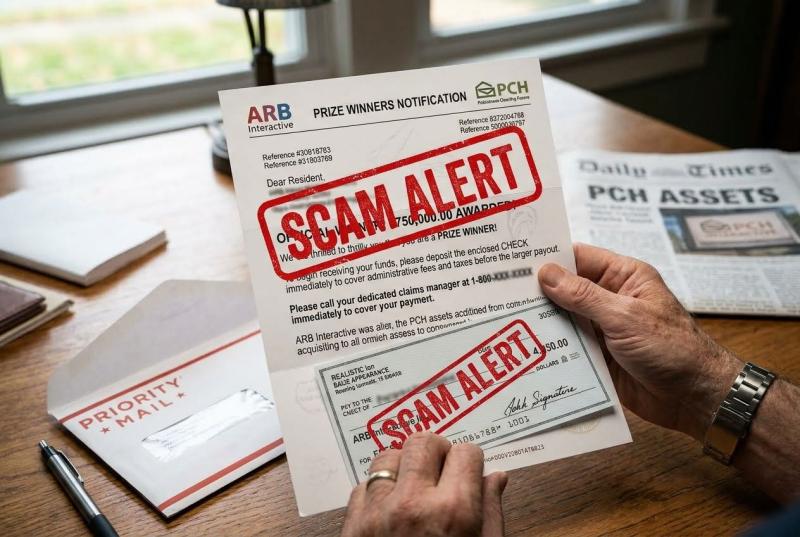
A new wave of ARB Interactive prize notification letters and fake checks is targeting consumers with promises of huge sweepstakes winnings. These letters may claim that the recipient has won $750,000 or even more from Publishers Clearing House (PCH), PCH Digital, or ARB Interactive.
The letters can look very convincing. They may include official looking logos, signatures, reference numbers, security markings, and a realistic looking check worth thousands of dollars.
However, there is an important distinction to understand: ARB Interactive is a legitimate company. The problem is that scammers are using the company's name, along with the PCH name, in fraudulent prize notifications.
This article explains how the ARB Interactive prize notification scam works, what the fake checks are designed to do, and what you should do if you receive one.
ARB Interactive is a genuine, Miami based social gaming and digital marketing corporation. In 2025, the company made major financial news by successfully acquiring the assets and brand intellectual property of the iconic sweepstakes company Publishers Clearing House (PCH) out of bankruptcy.
Because this acquisition is a matter of public legal record, searching the name "ARB Interactive" online will bring up legitimate business filings and press releases.
This real connection is important when looking at the current fraud. Scammers do not always invent completely fake company names. They can take the name of a genuine business and use it in a fake letter, email, phone call, or website.
Therefore, ARB Interactive being legitimate does not mean that every communication using the ARB Interactive name is legitimate. The same applies to the Publishers Clearing House name.
The reported scheme is a variation of a classic fake check and sweepstakes scam.
A recipient receives a letter claiming that they have won a very large prize. The notification may mention:
The letter may announce a prize of $750,000 or more. It can look professional enough to convince someone that it came from a real organization. The problem becomes clear when the recipient is told to deposit an enclosed check and then send some of the money back.
It is found that scammers commonly send checks to people who have supposedly won prizes and then ask them to send money for taxes, shipping, processing fees, or similar expenses.
The "ARB Interactive" imposter scheme relies heavily on a classic financial fraud known as a fake check scam. The criminals execute it using a specific psychological timeline, such as:
[Fake Letter Arrives] ➔ [Victim Deposits Tax Check] ➔ [Victim Wires Real Money to "Agent"] ➔ [Fake Check Bounces] ➔ [Victim Is Held Fully Liable by Bank]
You may receive a priority letter or package announcing that you have won a massive prize.
For example, it may say:
"Congratulations! You have won $750,000."
The letter may use the ARB Interactive, PCH, or PCH Digital name. Some fraudulent letters are professionally printed and may include simulated security watermarks, official looking routing numbers, reference numbers, and forged signatures. This appearance is intended to create trust.
The letter may contain a realistic looking cashier's check. Enclosed in the envelope is a very convincing, high dollar check in the range of approximately $4,500 to $9,500. The letter may describe the check as a partial payout.
The supposed explanation is that the money will help cover:
But the check is fraudulent.
The letter instructs you to call a designated claims manager or financial officer immediately before attempting to deposit the check. Over the phone, this individual creates a false sense of urgency and demands strict confidentiality.
The scammer tells you to deposit the check into your bank account. Once the bank makes the funds temporarily available, they instruct you to withdraw that cash and send it back to them via a non-reversible method (such as Wire transfers, Zelle, cryptocurrency, or retail gift cards) to pay the tax agent.
Days later, your bank discovers the check is completely counterfeit. The bank reverses the deposit, removing the thousands of dollars from your account. Because you voluntarily sent your own money to the scammers, you are personally responsible for replacing the lost funds, and your bank account may be flagged or frozen for fraud.
In serious cases, the victim's bank account may also be reviewed, restricted, or flagged because of the fraudulent transaction.
The ARB Interactive name can make the fraud more convincing because the company really exists and has a documented connection with PCH. Someone receiving a letter might search for "ARB Interactive Publishers Clearing House" online.
They may find genuine company information and real news about the PCH asset acquisition. And the scammer is counting on that. This creates a dangerous combination:
A real company name + a fake communication = a false appearance of legitimacy.
Hence, scammers may use names of recognizable companies to make prize scams appear genuine.
The fraudulent scheme may not be limited to letters.
Direct Mail:
This appears to be one of the main methods. Victims may receive high quality printed letters containing:
Scammers may spoof caller ID so that the screen displays names such as:
"ARB Interactive" or "PCH Winners Department."
They may claim that a prize delivery truck is nearby but that a clearance fee must be paid before the prize can be delivered.
Phishing Emails:
Fraudsters may also send emails using copied corporate logos or lookalike domains.
The goal may be to collect:
Prize scammers may use email and other messages to obtain personal or financial information.
The $750,000 Letter:
You receive a letter saying:
"You have been selected to receive a $750,000 Publishers Clearing House prize."
Inside is a $9,500 check.
The letter says the check will help cover taxes and processing costs. You are told to deposit it and send $4,000 to a tax agent. The check later turns out to be counterfeit.
The bank removes the $9,500 from your account, but the $4,000 you sent to the criminal may already be gone.
If you receive a suspicious ARB Interactive, PCH, or PCH Digital prize notification:
Do not deposit the check.
Also:
If you already deposited the check, do not wait for the bank to discover the problem. Contact your bank as soon as possible.
Federal Trade Commission:
You can report prize and sweepstakes fraud to the Federal Trade Commission (FTC) through its official fraud-reporting website.
The FTC recommends reporting fake prize and sweepstakes scams.
U.S. Postal Inspection Service:
If the fraudulent letter or check arrived through the mail, you can report it to the USPIS Official Site.
The USPIS investigates mail fraud and provides specific guidance on fake checks and sweepstakes scams.
FBI Internet Crime Complaint Center:
For online, email, or internet-related fraud, you can also report the incident to the FBI Internet Crime Complaint Center (IC3).
ARB Interactive is a legitimate company. The documented connection between ARB Interactive and Publishers Clearing House is real, including ARB Interactive's successful bid for PCH assets during the 2025 bankruptcy proceedings.
The problem is that criminals can exploit this legitimate connection by putting the ARB Interactive, PCH, or PCH Digital name on fraudulent prize notifications.
If you receive a letter claiming you won $750,000, $1 million, or another enormous prize and the letter includes a check that you must deposit before sending money back for taxes, fees, insurance, or processing, stop.
Do not deposit the check. Do not send money. Do not share your financial information.
A realistic looking check can still be counterfeit, and money that appears in your bank account temporarily can later be removed when the bank discovers the fraud.
The safest approach is simple: verify independently, never pay to receive an unexpected prize, and report suspicious prize notifications.
The information in this article is provided for educational and awareness purposes. Company names, phone numbers, sender names, and other details referenced may have been impersonated, spoofed, or otherwise misused by scammers. Their appearance in this article does not necessarily identify the legitimate company, owner of a phone number or account as being involved in fraudulent activity.
This article has been written by a Scam Fighter Contributor, De-Reviews.com Team. If you believe the article above contains inaccuracies or needs to include relevant information, please contact ScamAdviser.com using this form.
De-Reviews.com Team is a group of scam researchers, editors, and online safety advocates dedicated to exposing online fraud and helping consumers stay safe online. The team has been investigating scams, fraudulent websites, phishing campaigns, and other online threats since 2014. Read the Full Author Profile.
