
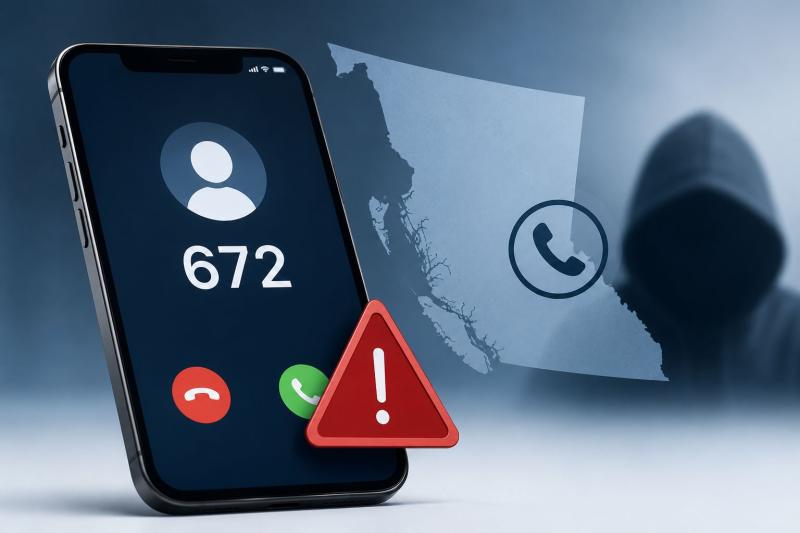
The 672 area code is an officially assigned Canadian telephone code that serves parts of British Columbia. However, having a genuine area code does not always mean that every call or message from it is trustworthy. Scammers can misuse real phone numbers by using techniques like caller ID spoofing and VoIP services to make their communication come from a local 672 number. These fake local calls or texts are often used to create a sense of trust and encourage people to share sensitive details, click links, or engage with fraudulent schemes.
Receiving a call or message from a 672 number does not automatically mean it is a scam. However, if the message is unexpected, asks for personal details, contains suspicious links, or creates a sense of urgency, it is important to stay cautious.
Scammers use different methods to make 672 calls and messages look believable. By hiding their real phone number and location, they can make victims think they are dealing with a nearby person, company, or organization. Here are the methods scammers commonly use:
One common method is number spoofing. Scammers can change the information that appears on your phone screen so the call or text looks like it comes from a 672 number. This helps them look more trustworthy while hiding their actual identity.
A scammer may pretend to represent a business, government agency, delivery service, or another trusted organization. The real owner of the phone number may have no connection to the scam.
Many 672 scam messages try to steal sensitive information by using fake stories. For example, a message may claim that:
These messages often include links that lead to fake websites designed to collect passwords, banking details, or other personal information.
Another common trick starts with a simple message that appears harmless, such as:
"Hello" or "Is this the right number for [Name]?"
The scammer may pretend they contacted the wrong person and slowly build a conversation. Over time, they may introduce fake investment opportunities, cryptocurrency offers, or other schemes designed to convince people to send money or share information.
Some scammers send random messages to check whether a phone number is active. Even a simple reply can confirm that your number is being used by a real person. This can result in more unwanted messages and scam attempts in the future.
Some suspicious numbers may try to convince you to call back. The purpose may be to connect you to expensive services, international forwarding systems, or other costly phone charges. Calling back can also confirm that your number is active.
Scammers often change their stories to match current events, popular services, or common daily activities. Here are some examples of how a suspicious 672 message may look:
Example 1: Fake Package Delivery Text:
A person may receive a message saying:
"Your package could not be delivered. Please confirm your address by clicking this link."
The message may look like it comes from a delivery company. However, the link may lead to a fake website that asks for personal details, payment information, or login credentials.
What to remember:
Real delivery companies usually provide tracking information through their official websites or apps. Be careful with unexpected delivery messages, especially if they ask you to click a link or make a payment.
Example 2: Fake Government Notice:
A scammer may send a message pretending to be from a government office. The message may claim that you have an unpaid fine, tax issue, or urgent requirement.
It may say:
"Immediate action required. Pay now to avoid penalties."
These messages try to create fear and pressure people into acting quickly without checking whether the request is real.
What to remember:
Government agencies do not ask people to provide passwords, banking information, or make urgent payments through random text messages.
Example 3: Suspicious Activity Notice:
A scammer may send a message claiming:
"We noticed unusual activity on your account. Verify your information immediately."
The message may include a link to a fake login page designed to steal usernames, passwords, or banking details.
What to remember:
Banks and financial institutions recommend contacting them through official channels instead of clicking links in unexpected messages.
A few simple steps as mentioned below can help reduce your risk of falling victim to these scams:
If you receive an unexpected message from an unknown 672 number, avoid replying. Do not call back unless you can confirm who contacted you. Responding tells scammers that your phone number is active, which may lead to more spam messages or scam attempts.
Never click links in unexpected text messages. Scammers often use fake websites that look similar to real companies to collect login details, payment information, or other personal data.
If a message claims to come from your bank, a delivery company, or a government organization, do not use the contact details provided in the message. Instead, visit the official website or use a trusted customer service number to confirm whether the message is real.
Legitimate companies and government offices will not ask you to send passwords, PIN numbers, or sensitive financial information through random text messages. Be especially careful with messages that create urgency or threaten penalties if you do not respond immediately.
You can block unwanted 672 numbers through your phone settings. However, remember that scammers can easily change numbers or use new spoofed numbers, so blocking one number may not stop all future attempts.
If you receive a suspicious text message, you can report it by forwarding the message to 7726 (SPAM). This helps mobile carriers identify and block spam sources. You can also report suspicious activity to the appropriate fraud reporting organization, such as the Canadian Anti-Fraud Centre.
If you replied to a suspicious message, do not panic. Take these steps:
If you shared sensitive information, contact the relevant organization, such as your bank, using official contact details.
The 672 area code itself is not dangerous. It is a real Canadian area code serving British Columbia. The problem comes from scammers who misuse legitimate numbers through spoofing technology to make their messages and calls look like trustworthy.
The best protection is to stay cautious. Avoid replying to unknown messages, do not click unexpected links, verify requests through official channels, and never share sensitive information with unknown contacts.
Caller ID is helpful, but it is not a guarantee that a caller is genuine. Scammers can manipulate the information displayed on your phone using spoofing technology. A little awareness can help you recognize 672 area code scams and avoid becoming a victim of phone and text message fraud.
Disclaimer: The information in this article is provided for educational and awareness purposes. Company names, phone numbers, sender names, and other details referenced may have been impersonated, spoofed, or otherwise misused by scammers. Their appearance in this article does not necessarily identify the legitimate company, owner of a phone number or account as being involved in fraudulent activity.
This article has been written by a Scam Fighter Contributor, De-Reviews.com Team. If you believe the article above contains inaccuracies or needs to include relevant information, please contact ScamAdviser.com using this form.
De-Reviews.com Team is a group of scam researchers, editors, and online safety advocates dedicated to exposing online fraud and helping consumers stay safe online. The team has been investigating scams, fraudulent websites, phishing campaigns, and other online threats since 2014. Read the Full Author Profile.
