
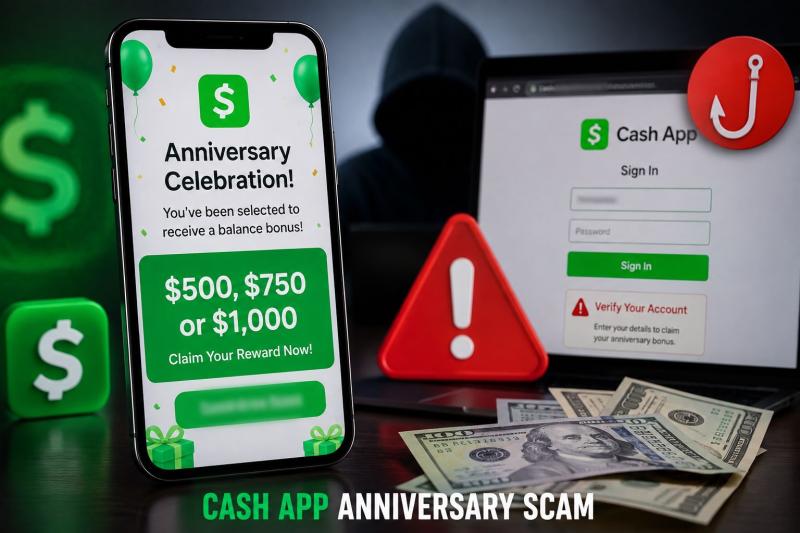
Have you received a message saying you can claim a free Cash App Anniversary Celebration Balance Bonus, such as a $500, $750, or $1,000 reward? Before you click any link, you should know that this offer is not a real Cash App promotion. These fake anniversary bonus messages are part of a phishing campaign that tries to steal personal information, access your Cash App account, or trick you into sending money.
Scammers often use popular financial apps like Cash App because millions of people trust the brand. By creating fake giveaways and celebration offers, they try to make their messages look like official promotions.
The Cash App Anniversary Celebration scam is a fake giveaway that claims Cash App is rewarding users with a free balance bonus. The message may appear through text messages, emails, social media posts, or direct messages.
The scam usually promises a large reward, such as:
The message creates excitement and urgency to make users act quickly without checking whether the offer is real. Cash App does not randomly send users free anniversary bonuses through social media post links, text messages, or online surveys.
Scammers use several methods to make this fake promotion look believable which include:
The scam starts when a user receives a message saying they have been selected for an anniversary reward.
For example:
"Congratulations! Cash App is celebrating its anniversary. Your $500 bonus balance is ready. Claim it now before it expires."
Also, they may promote similar content via social media posts. The message or social media post may include Cash App logos, attractive graphics, or professional looking designs to appear trustworthy.
The message or social media post usually contains a link that takes users to a fake website. This website may look similar to the official Cash App login page.
The fake page may ask users to enter:
Once users provide this information, scammers can use it to try to access their accounts. A major warning sign is that the link usually leads to an unknown third party website instead of the official Cash App platform.
Some versions of this scam do not ask for login details. Instead, they tell users that they need to pay a small fee before receiving their larger reward.
For example:
"Send $50 for account verification and your $500 anniversary bonus will be released."
This is a common trick. Real rewards do not require users to send money first. Cash App will never ask you to pay a clearance fee, processing fee, or verification payment to receive a bonus.
Some scam websites send users through multiple survey pages before claiming they can receive their reward.
These pages may ask users to:
The promised bonus never arrives. Instead, scammers may collect information or earn money through misleading affiliate offers.
The Cash App Anniversary Celebration scam appears across different platforms, especially social media and text or direct messages.
Social media is one of the main ways scammers spread this fake promotion.
They often create colorful posts with:
These posts are designed to look like real company announcements. Scammers also take advantage of real Cash App promotions from the past, such as legitimate campaigns using the #CashAppFriday hashtag. They may copy similar wording or use the same style to confuse users.
Another common trick is the share with friends method. Some fake websites tell users they must share the offer with 5 to 10 people on Facebook, Instagram, or WhatsApp before they can receive their bonus. This helps scammers spread the fake promotion through people whom users already know and trust.
Scammers may also send fake direct messages from accounts that look official. Sometimes they use hacked social media accounts to make the message appear more believable.
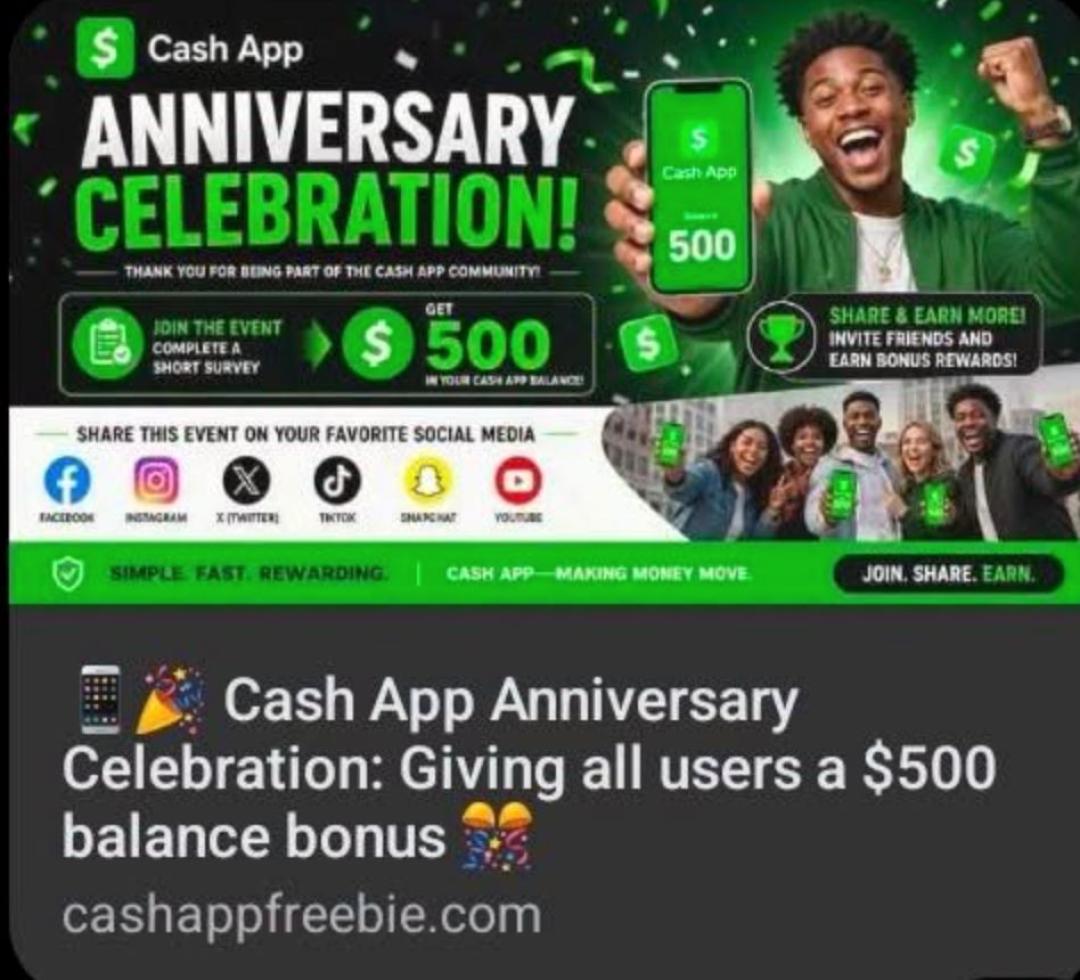
The scam is also widely distributed through SMS messages. Scammers often send thousands of messages at once using automated systems.
A typical message may say:
"Cash App Anniversary Alert: You have a pending $500 bonus balance waiting. Claim immediately at [fake website link]."
These messages often include pressure tactics, such as:
The goal is to make users click quickly before they have time to check the information.
You can identify this scam by looking for common warning signs:
Requests for Upfront Money:
No legitimate Cash App giveaway requires you to send money to receive money.
Links in Text Messages:
Official Cash App messages do not ask users to claim rewards through external website links.
Requests for Private Information:
Cash App will never ask you to provide:
especially through an external website.
Fake Customer Support Numbers:
Scammers sometimes include fake support phone numbers to appear helpful. Always verify support information through official Cash App channels.
Too Good To Be True Offers:
A random message promising hundreds of dollars is a major warning sign. Real promotions are announced through official sources, not unexpected links shared through messages or social media posts.
If you receive a Cash App Anniversary Celebration message or social media post:
If you are unsure whether a promotion is real, open the official Cash App application directly and check your account activity. Do not use links provided in messages.
If you already entered your information on a suspicious website:
The Cash App Anniversary Celebration Free Balance Bonus is not a legitimate Cash App reward program. It is a fake promotion created to steal personal information, compromise accounts, or trick users into paying unnecessary fees.
The safest approach is simple: never trust unexpected messages or random social media posts that promise free money. Always check promotions directly inside the official Cash App app and avoid clicking links from text messages, social media posts, or unknown websites.
Disclaimer: The information in this article is provided for educational and awareness purposes. Company names, phone numbers, sender names, and other details referenced may have been impersonated, spoofed, or otherwise misused by scammers. Their appearance in this article does not necessarily identify the legitimate company, owner of a phone number or account as being involved in fraudulent activity.
Author Information:
This article has been written by a Scam Fighter Contributor, De-Reviews.com Team. If you believe the article above contains inaccuracies or needs to include relevant information, please contact ScamAdviser.com using this form.
De-Reviews.com Team is a group of scam researchers, editors, and online safety advocates dedicated to exposing online fraud and helping consumers stay safe online. The team has been investigating scams, fraudulent websites, phishing campaigns, and other online threats since 2014. Read the Full Author Profile.
