
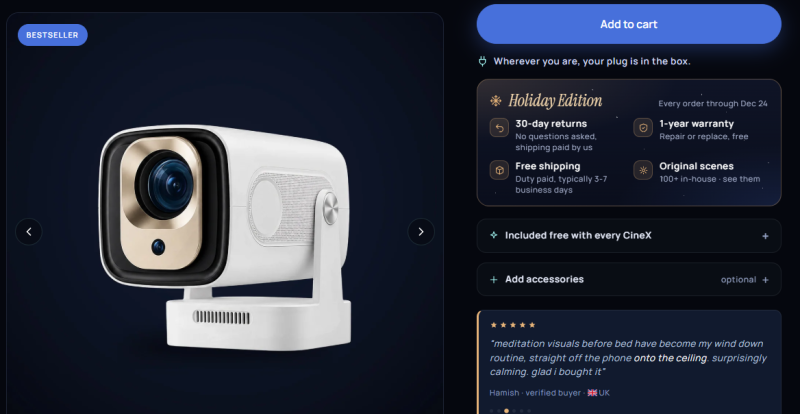
Scam alert: Ads for the CineX "Christmas Ceiling Projector" are popping up just in time for holiday gift shopping, showing a tiny gadget that turns any wall or ceiling into a giant cinema screen. The seller, SimplifyTech, claims more than 100 happy customers, but we couldn't find a single independent review. Before you order one as a Christmas gift, here's what you should know.
The product is sold on simplifytech.shop with a big promise:
"CineX by SimplifyTech, pocket cinema for any wall or ceiling. Turn a blank wall into a 120-inch screen. No TV, no cables, no drilling."
It's marketed as a Christmas Ceiling Projector, ideal for movie nights, kids' bedrooms and holiday gatherings.
Setup is pitched as effortless:
"Up and running in 60 seconds. No installer. No drilling. No manual. If you can plug in a lamp, you can set up a CineX."
Easy setup is a fair selling point for a mini projector. The bigger question is what you'll actually see once it's switched on.
On its own website, SimplifyTech says CineX has over 100 reviews. Outside the site, those customers are nowhere to be found.
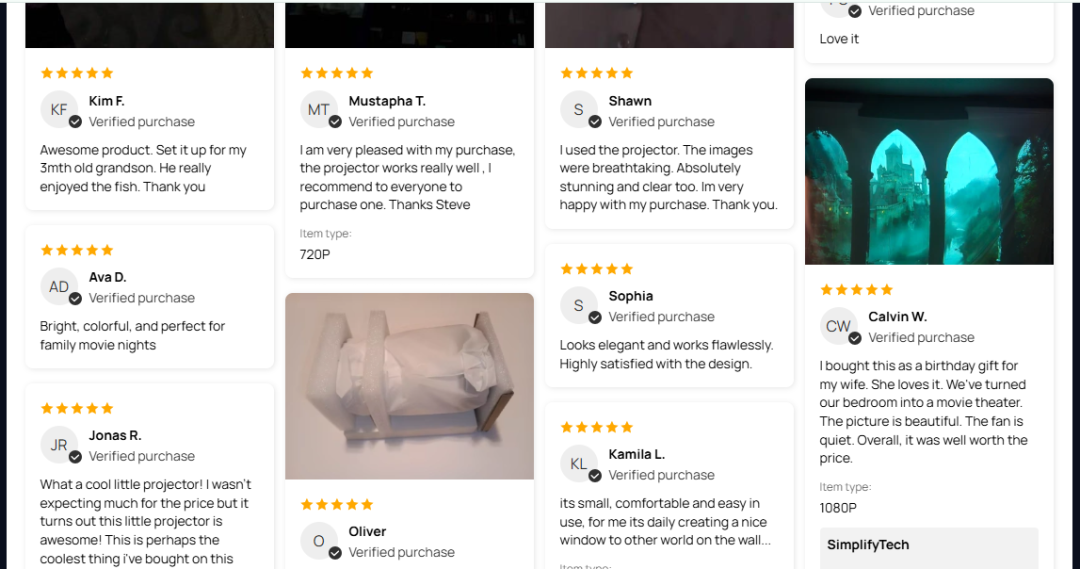
On Trustpilot, simplifytech.shop has zero reviews and an unclaimed profile, with no reviews at all in the past 12 months. A product that has supposedly satisfied more than 100 buyers would usually leave at least some trace on independent review sites, social media or forums.
Reviews shown only on the seller's own site are easy to fake, edit or filter. Until independent reviews appear, treat the on-site star ratings as marketing, not evidence.
The ads show CineX lighting up entire rooms with a bright, sharp, cinema-sized picture. Manage your expectations. Based on similar pocket and mini projectors we've seen, that kind of result can be hard to reproduce at home:
Be cautious. We can't say CineX is a scam, but the seller claims over 100 reviews that don't appear on any independent site, and its ads promise results that similar mini projectors often struggle to deliver. If you're buying it as a Christmas gift, compare it with well-reviewed alternatives from known retailers first.
If you believe the article above contains inaccuracies or needs to include relevant information, please contact ScamAdviser.com using this form.
Adam Collins is a cybersecurity researcher at ScamAdviser who operates under a pseudonym for privacy and security. With over four years on the digital frontlines, he specialises in translating complex threats into actionable advice. His mission: exposing red flags so you can navigate the web with confidence.
