

The ads look magical: a glowing Christmas scene that seems to step out of your wall in rich, realistic 3D depth. Videos of the Christmas Magic Trail Wall Light have been spreading across social media this season, promising instant festive wonder for any room.
Short answer: The ads appear to be misleading. Rather than a ready-made 3D light display, buyers report receiving flat plastic pieces printed on both sides, which have to be taped together by hand, plus a simple string of LED fairy lights that needs batteries not included in the box. Before you order, it is worth knowing what actually arrives.
The Christmas Magic Trail Wall Light is not tied to one brand. Versions of it appear on Pinterest and Amazon, as well as on standalone online stores such as nordoravelle.com. Seeing the same product under different names and prices across many sites is typical of a mass-produced item sourced from the same overseas suppliers and resold through dropshipping.

The store side of this deserves a closer look. Nordoravelle.com is mainly a general clothing shop, selling men's and women's jackets, linen sets and "old craftsman" jewellery, not a specialist in Christmas decorations. Its homepage is full of "Last Day 50% Off" and "Clearance" labels, some of its product image files are labelled as created with Google's Gemini AI image generator, and its footer still reads "Copyright © Company name," a template placeholder that was never filled in. Those details do not prove the store is a scam, but they suggest a quickly assembled shop rather than an established retailer.
On the ScamAdviser YouTube channel, we put the ads side by side with the real product. Watch the comparison here.
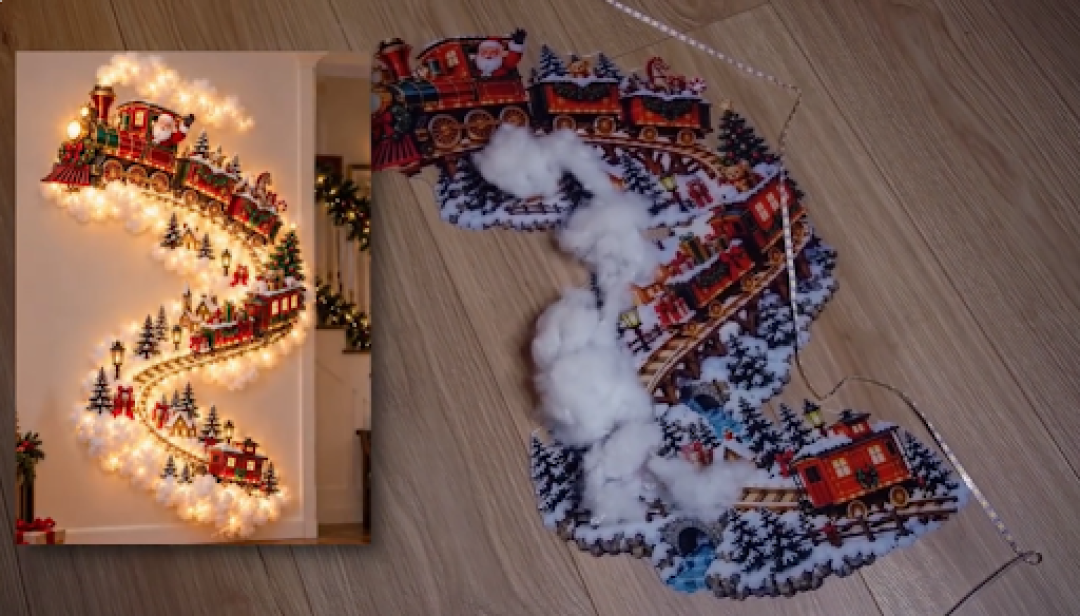
The difference is striking. In reality, the Christmas Magic Trail Wall Light consists of simple, flat pieces of plastic printed on both sides, which the buyer has to tape together themselves. The rich 3D depth and realistic lighting shown in the ads are absent.
The "magic" glow comes from a basic string of LED fairy lights. Those lights need separate batteries, which are not included in the box, so the display will not light up straight out of the package.
This gap between the ad and the product is a common problem with viral holiday decorations. Many ads use computer-generated renders or carefully lit studio footage that the actual product cannot match in a normal living room.
The sales pages lean on familiar tactics:
These messages are designed to create urgency during the holiday rush, when shoppers are already worried about stock running out and delivery times. On stores like this, purchase pop-ups and viewer counters are often generated automatically and are not a reliable sign of real demand. Bundle offers can also make it more expensive to back out if the first light disappoints.
Before buying any viral holiday decoration, look for real customer photos and videos, not just the seller's ads. Read the product description carefully for words like "assembly required," "2D" or "batteries not included," and check the actual size in centimetres or inches. Search the product name with "review" or "scam" to see what other buyers say.
If you still want to order, pay with a credit card or PayPal for buyer protection, keep screenshots of the ad and product page, and check the seller with a website checker first. If what arrives is nothing like the ad, contact the seller in writing, then open a dispute with your payment provider if they refuse a refund, and Report a Scam to warn others.
Probably not, at least not based on the ads. The Christmas Magic Trail Wall Light is marketed as a realistic 3D display, but buyers get flat printed plastic, tape and basic fairy lights without batteries. If you love the look, treat it as a simple craft decoration, and pay only what that is worth.
This article has been written by a scam fighter volunteer. If you believe the article above contains inaccuracies or needs to include relevant information, please contact ScamAdviser.com using this form.
Adam Collins is a cybersecurity researcher at ScamAdviser who operates under a pseudonym for privacy and security. With over four years on the digital frontlines, he specialises in translating complex threats into actionable advice. His mission: exposing red flags so you can navigate the web with confidence.
