

CogniMary claims to be a dietary supplement marketed as a natural memory support complex that purports to enhance cognitive function, improve memory, and boost focus. This CogniMary review provides an objective, analytical look at the supplement, examining its claims, ingredients, and the structural patterns surrounding its online presence, so you can make an informed decision.
CogniMary is presented online as a dietary supplement formulated with a botanical blend designed to support cognitive wellness. Promotional materials suggest it helps optimize memory retention, daily focus, and overall brain health. The product appears to be primarily distributed through direct to consumer landing pages.
While individual promotional pages list different botanical ingredients, a few recurring components are highlighted. Here is an objective look at what clinical research generally says about standard ingredients associated with brain health formulas:
Bacopa Monnieri:
This traditional herb has been studied for its potential to support memory consolidation and cognitive processing speed over long-term use.
Ginkgo Biloba:
Frequently utilized in traditional wellness practices, Ginkgo is believed to support peripheral circulation and blood flow, which may assist general alertness.
Phosphatidylserine:
A phospholipid that naturally occurs in brain cell membranes, some studies suggest it may support cognitive function, particularly in aging populations.
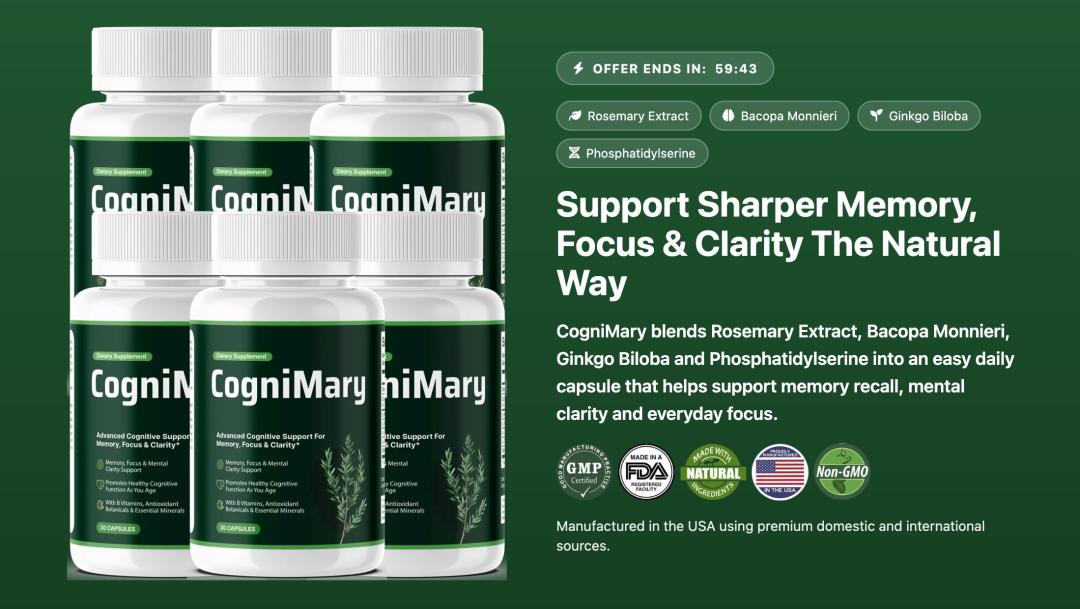
Apparent Lack of Uniformity on CogniMary:
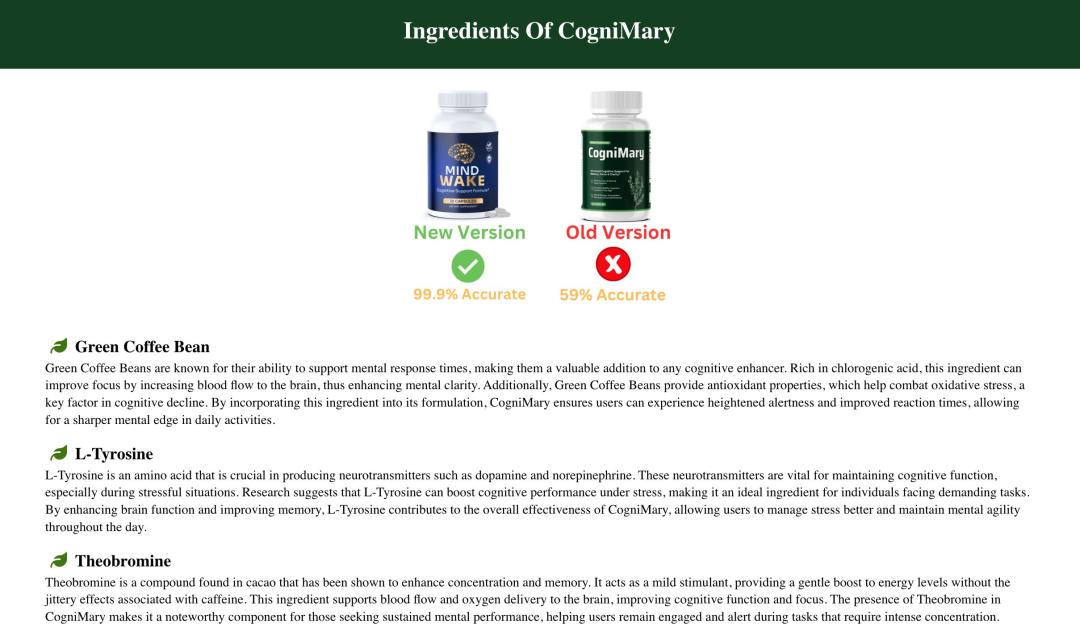
A notable observation with CogniMary is that different sales channels appear to present varying formulas. Some domains attribute the product's function to Rosemary Extract and Ginkgo, while others list L-Tyrosine, Green Coffee Bean, or Theobromine.
Absence of a Readily Accessible Supplement Facts Label of CogniMary:
Consumers may find it difficult to readily verify the exact milligram dosage of these ingredients online. Without a transparent nutritional label, it is challenging to determine whether the active ingredients are present in amounts aligned with clinical studies, or if the formula relies primarily on standard dietary binders.
When researching CogniMary, several unique operational and marketing choices stand out. Understanding these patterns is essential for maintaining consumer awareness.
Unlike traditional, established consumer brands that typically anchor their digital presence on a single official website, CogniMary appears to be distributed across a network of varying domains (including .net, .org, .co, .website, and various shopping extensions).
The Consumer Takeaway:
Operating through multiple distinct URLs may make it more complex for consumers to verify a central corporate entity, trace a physical business address, or establish contact with a unified customer support team.
Visitors to these landing pages will frequently encounter digital countdown timers, notices claiming limited inventory, or automated alerts stating that other users are purchasing the product in real-time.
The Consumer Takeaway:
These features appear to be calculated urgency tactics designed to encourage rapid purchasing decisions. An objective evaluation of a product's value should ideally be judged on its ingredient merits rather than artificial time limits.
Intriguingly, certain websites registered under variations of the product name feature graphics that rank CogniMary as an "Old Version" with a lower efficacy score, while directing users to click a link to purchase a completely different supplement.
The Consumer Takeaway:
This indicates that the web infrastructure may be heavily driven by affiliate marketing networks. The primary goal of these specific pages seems to be redirecting web traffic between various products rather than providing stable, standalone product support.
A comparative analysis of the digital advertisements, promotional scripts, and landing page layouts used for CogniMary reveals that its overall marketing strategy, website designs, and promotional claims share almost identical structural patterns with several other online cognitive products. These include brands such as MemoFlow, BrainMary, and Brain Savior.
The Consumer Takeaway:
The similarities in web design, identical graphics, and matching sales language suggest that these products may originate from the same underlying network of affiliate marketers or white-label manufacturers, making the uniqueness of each individual brand's formulation a matter of question for consumers researching these products online.
The CogniMary sales pages display badges referencing GMP (Good Manufacturing Practices) guidelines and claim the product is "Made in an FDA Registered Facility". While these claims imply basic sanitary protocols during bottling, this does not mean the product itself is FDA approved. The FDA registers manufacturing facilities for tracking purposes but does not pre-approve, test, or certify dietary supplement products before they are marketed.
Some CogniMary supplement variants utilize individual ingredients like Bacopa Monnieri and Ginkgo Biloba, which possess documented histories in nutritional science.
However, the operational choices surrounding the brand's online distribution raise questions regarding transparency and consumer experience. The apparent lack of a uniform formula, the difficulty in accessing a clear Supplement Facts label online, the reliance on high-pressure sales tickers, and the multi-domain marketing model make it challenging to verify the product's standard quality or corporate accountability.
Consumers looking for reliable cognitive support may prefer to seek options from products that offer fully transparent labeling, easily accessible customer service, and verified physical manufacturing details, as well as consult with healthcare professionals.
This objective review is for educational, informational, and critical commentary purposes only. The analysis and observations are based on an independent evaluation of publicly available marketing materials, ingredient listings, and third-party consumer feedback at the time of writing.
This content provides a neutral analysis of documented inconsistencies and does not make definitive accusations regarding the legality of the business entities involved. It neither promotes nor condemns the product, noting the presence of online storefronts without endorsing or criticizing their practices. Individual experiences may vary, and consumers are encouraged to autonomously evaluate marketing claims and digital transparency before purchasing.
All product names, logos, and trademarks (including "CogniMary") are the property of their respective owners and are used here under fair use guidelines exclusively for descriptive and identification purposes. This commentary does not constitute professional medical advice, diagnosis, or treatment. Always consult a licensed healthcare professional before introducing any new dietary or wellness supplements to your routine.
This article has been written by a Scam Fighter Contributor, De-Reviews.com Team. If you believe the article above contains inaccuracies or needs to include relevant information, please contact ScamAdviser.com using this form.
De-Reviews.com Team is a group of scam researchers, editors, and online safety advocates dedicated to exposing online fraud and helping consumers stay safe online. The team has been investigating scams, fraudulent websites, phishing campaigns, and other online threats since 2014. Read the Full Author Profile.
