
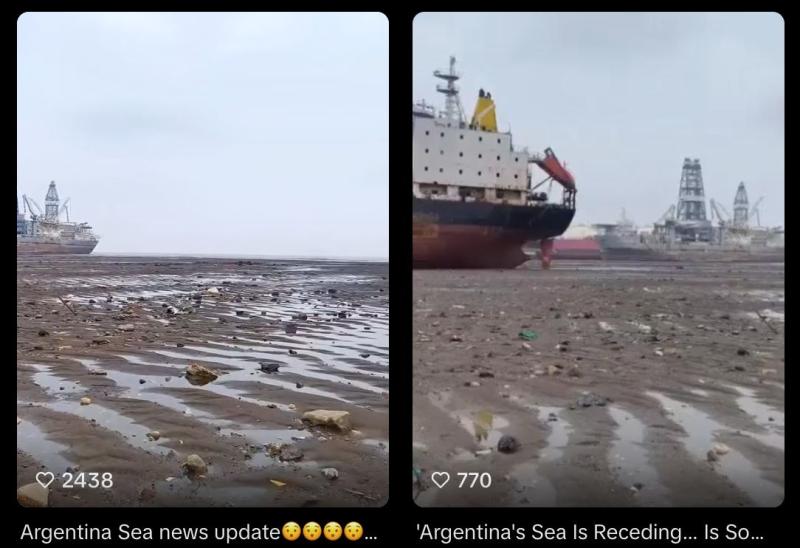
Viral videos across TikTok, YouTube, and Facebook have sparked global alarm with claims that the Atlantic Ocean in Argentina suddenly dried up overnight or Argentina sea receded. The dramatic footage shows vast expanses of exposed seabed, stranded boats, and a mysterious "new island" emerging from the water. Captions on these posts warn of a "global catastrophe" or apocalyptic events.
If you are wondering whether this ocean disappearance is real or a scam, here are the official facts.
The video footage showing the ocean pulling back is real, but the claims that the sea has permanently "dried up" or vanished into the earth are fake. The event is a temporary, well-documented natural phenomenon caused by meteorological forces, not a catastrophe.
The viral videos were captured along the coast of Mar del Plata, a major seaside resort city in the Buenos Aires Province of Argentina.
Over the course of a few hours, the water receded dramatically from the shore. As documented by the prominent Argentine national newspaper "LA NACION", the sudden drop in water level exposed a massive, permanent underwater rock formation known as the "Restinga del Faro", which normally remains fully hidden beneath the waves.
Because this platform is usually submerged, its sudden exposure looked to tourists like a brand new island. However, within a standard tidal cycle, the ocean water returned completely to its normal levels.
According to oceanographic principles and local maritime analyses, these dramatic coastal retreats are driven by a temporary combination of natural forces, such as:
Powerful Offshore Winds (Wind Setdown):
Local maritime outlet "Pescare" notes that when sustained, strong winds blow forcefully offshore, they act as an invisible wall, physically pushing the surface water away from the shallow coast and aggravating the drop.
Meteorological Tides:
Severe shifts in atmospheric pressure can temporarily distort regional sea levels, pushing coastal waters outward.
Extreme Low Tide Cycles:
The severe weather directly coincided with a natural, low tide cycle (bajamar), worsening the visual effect.
When weather forces water away from a coast like this, scientists call it wind setdown or a meteorological low tide. It is the exact opposite of a storm surge, where winds push the ocean onto the land.
When the sea recedes quickly, many people naturally fear an impending tsunami. However, tsunamis are triggered by underwater earthquakes or landslides, pulling water back in a matter of minutes before unleashing a destructive wave.
The event in Mar del Plata was driven purely by wind and weather over several hours and carried no tsunami risk. Similar weather-driven events happen around the world, such as when major hurricanes temporarily pull all the water entirely out of shallow bays.
Do not let sensationalized clickbait mislead you. The ocean in Argentina did not permanently dry up or vanish, the earth did not open up, and it is not a sign of a global disaster. While the shoreline did temporarily recede for a few hours, exposing the sandy ocean floor due to intense weather, it was a strictly short term event that corrected itself the very same day.
Always verify dramatic viral videos before sharing them to avoid spreading unnecessary panic.
Image Source: Screenshots compiled from public TikTok videos illustrating the viral claims that the Argentina sea receded or dried up overnight. These images are reproduced strictly for critical commentary, analysis, and educational purposes under international Fair Use laws.
The information provided in this article is for educational, informational, and general fact-checking purposes only. While every effort has been made to ensure the accuracy and reliability of the data presented based on official meteorological and oceanographic reports, the publisher makes no warranties or guarantees, express or implied, about the completeness or absolute accuracy of the content. This article does not constitute professional, scientific, or legal advice.
This article includes screenshots of third-party video footage sourced from public social media platforms (such as TikTok). These images are utilized strictly for the purposes of non-profit public education, critical commentary, analysis, and fact-checking. All copyrights, trademarks, and intellectual property rights belong exclusively to their respective owners. This use constitutes a "fair use" of any copyrighted material as provided for under international copyright laws. The publisher is not liable for any actions taken or decisions made by readers or users based on the information provided in this article.
This article has been written by a Scam Fighter Contributor, De-Reviews.com Team. If you believe the article above contains inaccuracies or needs to include relevant information, please contact ScamAdviser.com using this form.
De-Reviews.com Team is a group of scam researchers, editors, and online safety advocates dedicated to exposing online fraud and helping consumers stay safe online. The team has been investigating scams, fraudulent websites, phishing campaigns, and other online threats since 2014. Read the Full Author Profile.
