
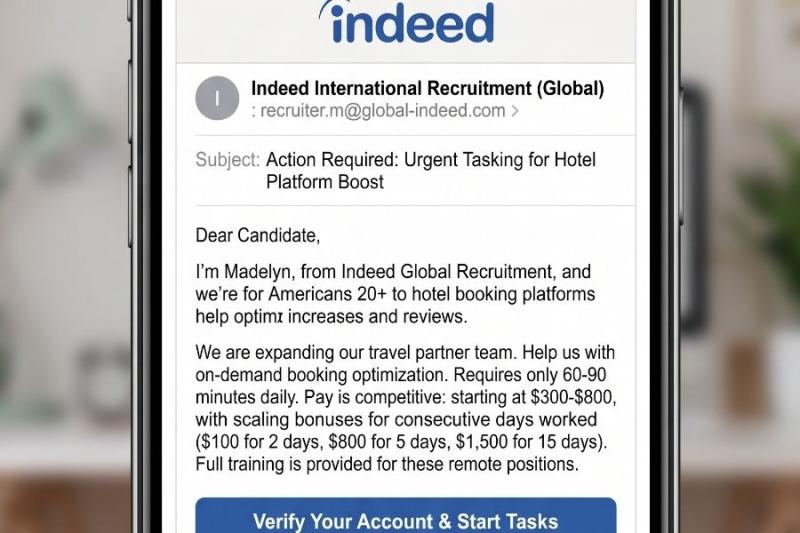
When applying for jobs online, many people wonder, does Indeed have scams? The answer is a costly yes, as job hunters are losing hundreds of millions of dollars to criminals who use legitimate platforms to disguise financial traps.
Key Takeaways:
According to data from the Federal Trade Commission (FTC), reported losses to job scams have reached over $500 million annually. What this means: The financial damage has multiplied fivefold since 2020, making employment fraud one of the most lucrative cybercrimes.
The FBI's Internet Crime Complaint Center (IC3) reports that tens of thousands of people fall victim to employment scams each year, resulting in individual losses ranging from a few hundred dollars to tens of thousands. What this means: People seeking a paycheck routinely end up emptying their own bank accounts instead.
Data from the Better Business Bureau (BBB) shows that job fraud is consistently the most dangerous scam targeting adults ages 18 to 34. What this means: Young professionals and recent graduates face the highest risk of being targeted during their job search.
Victims of employment fraud are already in a vulnerable state. They need income. This scam abuses the inherent trust in the hiring process. Applicants expect to hand over sensitive data like Social Security numbers and bank details to a new employer. They want to comply with instructions to secure the position.
What this means for ordinary users: The exact actions required to get a legitimate job are exactly what scammers use to steal your identity and your money.
Scammers create convincing company profiles on Indeed. They post remote work opportunities with attractive pay and low requirements.
Once you apply, the fake recruiter immediately moves the conversation off the job board. They contact you via text messages, WhatsApp, or Telegram.
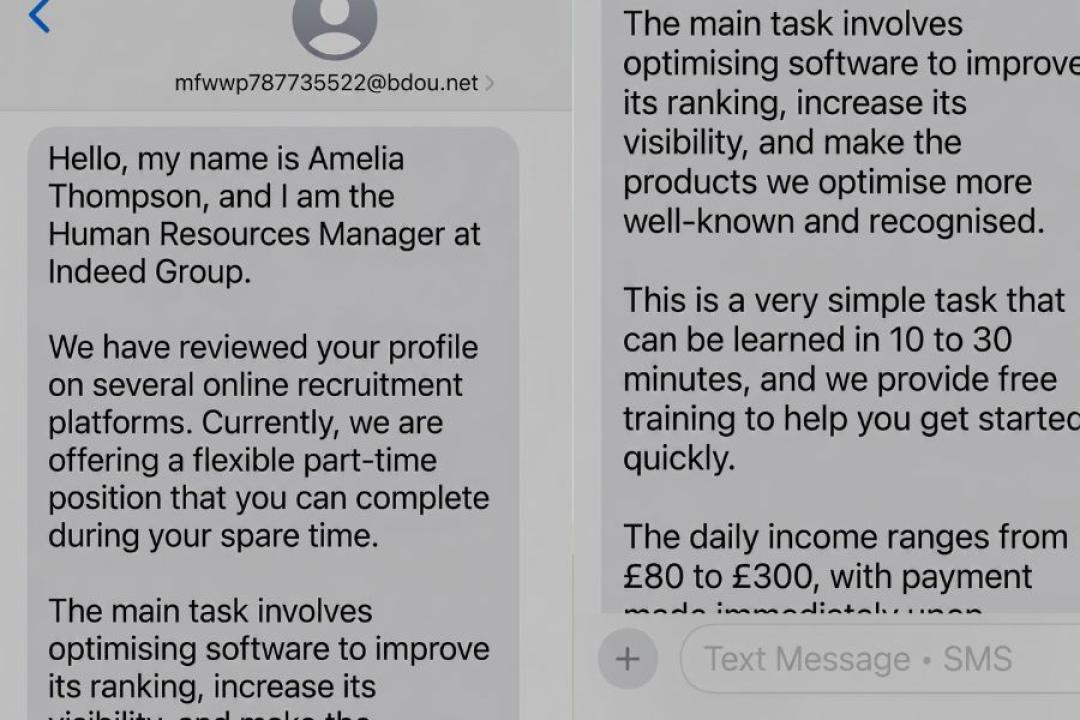
Example of a fake job text scam
They conduct text-based or brief phone interviews. They send professional-looking offer letters and onboarding documents to harvest your personal data.
They extract money using two main methods. They either send a fake check for home office equipment and ask you to wire the surplus to their vendor. Or, they force you to pay cryptocurrency to complete online tasks.
Task scams are a rapidly growing variant of employment fraud. The fake employer tells you your job is app optimization or product boosting. You log into a dashboard and click buttons to rate products. The platform shows you earning commissions. Eventually, the system requires you to deposit your own cryptocurrency to unlock the next tier of tasks and withdraw your earnings.
Key distinction: Unlike traditional fake checks that eventually bounce, task scams trick you into willingly sending cryptocurrency to a dashboard that displays fake, unwithdrawable profits.
A job seeker received a text from a recruiter using a former employer's name to build trust. She was directed to a fake marketing platform and told to fund online ads with her own money for a promised commission. She ultimately lost roughly $20,000 before realizing the operations were fake.
The lesson: Legitimate work never requires you to front your own cash to fund company operations.
A job seeker named Alicia applied for a personal assistant job online. The scammer sent her a fraudulent $11,000 check, followed by a $25,000 check, instructing her to send funds back for supplies. Her bank flagged the transactions and closed her account. The scammer then resorted to threatening her family when the money failed to clear.
The lesson: Depositing a check from an employer who asks you to send a portion of it back is always a scam.
A job seeker reported losing $4,800 after applying for a role that hijacked the name and vacancy of a real company. The scammers conducted the entire hiring process via chat without a video call. They tricked the victim into sending funds directly for supposed work materials.
The lesson: Scammers routinely hijack the names of real companies to bypass your initial suspicion.
Yes, Indeed does in deed have scams. Before you hand over your personal information to a recruiter, you need to ask yourself: is this website legit? Here are the signs that a job offer is a trap.
Step-by-Step
Scammers often spin up fake company websites to make their job offers look real. You can use ScamAdviser's website safety checker to verify the domain. You simply paste the link into the search bar. The tool provides a Trust Score and shows exactly when the domain was registered.
If a recruiter claims to represent a ten-year-old company but the website safety check shows the domain was created three days ago, you know it is a scam. This quick step helps you answer the question of is this a legit website before you make a costly mistake.
If you already sent your Social Security number or banking details to a fake employer, your identity is at risk. Contact your bank to secure your accounts. Place a freeze on your credit reports with the major bureaus. This prevents scammers from opening new lines of credit in your name.
Never trust the contact information provided in an offer letter. Find the real company's official phone number or LinkedIn page independently. Contact their actual human resources department. Ask them directly if they are hiring for the position and if the recruiter who contacted you actually works there. If you want to check a URL for scams, always test the specific login portal the recruiter gave you.
Employment scams turn the hope of a new job into a devastating financial loss. Whether it is losing thousands to a task scam or having a bank account closed over a fake check, the damage is severe and rarely recovered. Funds sent via wire transfer or cryptocurrency are gone the moment they leave your account.
See More interesting articles from ScamAdviser:
Adam Collins is a cybersecurity researcher at ScamAdviser who operates under a pseudonym for privacy and security. With over four years on the digital frontlines, he specialises in translating complex threats into actionable advice. His mission: exposing red flags so you can navigate the web with confidence.
