
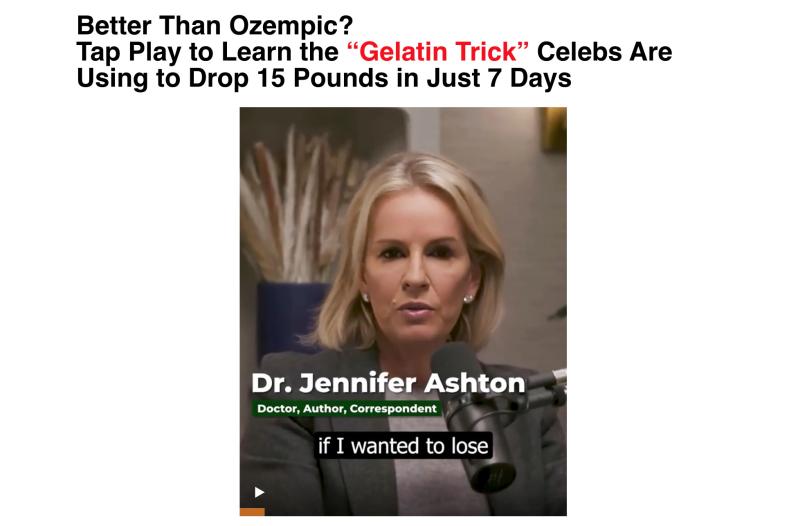
Across social media platforms like Facebook, YouTube, and TikTok, a new trend has been circulating under the name of a “Dr. Jennifer Ashton gelatin recipe” for rapid weight loss. These videos often appear highly convincing at first glance, showing medical style presentations, emotional testimonials, and claims of fast fat loss using a simple kitchen ingredient called gelatin.
But when we break down how these videos are structured and what is actually being claimed, several red flags and questionable patterns begin to appear that are worth paying attention to before trusting the claims.
The viral videos typically start with a familiar hook:
In many cases, the content suggests that gelatin alone has some special fat melting ability. Some variations also imply that other popular doctor backed versions exist, but are missing a key ingredient, making them ineffective.
However, there is no scientific evidence that gelatin directly burns fat or produces rapid weight loss results. While gelatin is a protein source and may help increase fullness temporarily, it is not a metabolic fat loss solution.
One of the most important aspects of this trend is how professionally it is presented. The structure is often designed like a medical investigation or news report:
In many cases, the content even includes familiar media logos of The New York Times, CBS, ABC, Fox, CNN or even news style visuals to create trust. However, these elements are often non-clickable images and not actual verified sources, which can create a misleading impression of credibility.
A recurring theme in these videos is the idea that:
“Other gelatin recipes don’t work because they are missing one critical ingredient.”
This storytelling method creates curiosity and pushes viewers to continue watching. But instead of revealing a simple recipe, the content usually shifts direction toward promoting a completely different product or solution. This pattern is commonly associated with marketing funnels designed to redirect attention away from the original claim.
A major concern with this trend is the use of Dr. Jennifer Ashton’s name and likeness in fabricated or misleading content. The videos often imply or suggest her endorsement, even though there is no verified connection between her and these claims.
In fact, Dr. Ashton has publicly addressed the misuse of her identity in similar promotional content and warned viewers about manipulated videos circulating online. She has clarified that her image and name are being used without permission to promote unrelated health products.
This type of identity misuse is often linked with AI-generated or deepfake style marketing content, where real public figures are digitally inserted into unrelated promotional narratives.
When analyzing the structure of these gelatin recipe videos, several warning signs repeatedly appear, such as:
Deepfake or Edited Public Figure Content:
The video may appear to show a known medical expert speaking, but the audio or context does not match their verified statements. The content often uses Dr. Jennifer Ashton and other well-known medical figures to create false credibility. This is done through edited clips, reused footage, or AI-style voiceovers or using Deepfake that make it seem like these doctors are recommending the recipe, even though there is no verified connection. Multiple doctor names are sometimes rotated across similar videos to build trust through association.
Fake Authority Positioning:
The content is often framed like a breaking medical discovery or an urgent expert update, using phrases such as recently updated health advice or doctor approved breakthrough. It is usually presented in a professional, medical news style format, but without any verifiable publication, official journal, or credible medical source to support the claim.
Fake Testimonials:
Many of the success stories shown in these videos appear highly polished and repetitive. They often follow a similar pattern, showing people claiming dramatic results in a short time. However, these testimonials usually lack verifiable identities, independent reviews, or any external evidence that confirms their authenticity.
Static or Non-Interactive News Pages:
Some versions mimic real news websites or medical articles, complete with headlines, comments, and share buttons. However, on closer inspection, many of these elements are not functional. Buttons may not work, comment sections may be fake or pre-filled, and links often do not lead to real external sources, suggesting the page is designed only for appearance, not interaction.
Redirect From Recipe to Product Pitch:
Instead of clearly and fully explaining the gelatin recipe, the content often shifts direction midway. What starts as a health explanation gradually turns into a promotion for a supplement or product, often introduced as the real solution without clear scientific explanation or prior disclosure.
Pressure Based Marketing Tactics:
These pages frequently use urgency driven language such as limited time offer, only a few spots left, or countdown timers. The goal is to create a sense of scarcity and pressure, encouraging quick decisions rather than careful evaluation of the information or claims being presented.
Misleading FDA Badge Claims:
Many videos display FDA Approved, clinically tested, or similar badges to appear trustworthy. However, these are often just marketing graphics. The U.S. Food and Drug Administration does not approve dietary supplements in this way or issue approval badges for weight loss recipes, making these claims potentially misleading.
In many cases, the original gelatin recipe is never fully explained. Instead, the content transitions into promoting a supplement product with bold claims such as:
However, these claims are rarely backed by transparent clinical evidence. The marketing often relies heavily on emotional storytelling rather than verifiable science.
It is also common for such funnels to use:
In similar viral cases analyzed online, the structure often follows a predictable pattern:
This structure is designed more for conversion than for education or health guidance.
From a nutritional perspective, gelatin:
While it can be part of a healthy diet, there is no clinical evidence supporting rapid fat loss effects as described in viral claims.
The “Dr. Jennifer Ashton gelatin recipe" for weight loss trend contains multiple elements that raise concerns, including identity misuse, AI-style content manipulation, exaggerated claims, and marketing funnels that shift focus away from the original idea.
Instead of a verified health breakthrough, the pattern strongly suggests a highly structured promotional system built around attention and conversion rather than medical science.
For anyone who comes across similar content, the safest approach is to pause, verify the source, and rely only on trusted medical guidance rather than viral social media claims.
Disclaimer: This article has been written by a Scam Fighter Contributor. If you believe the article above contains inaccuracies or needs to include relevant information, please contact ScamAdviser.com using this form.
