
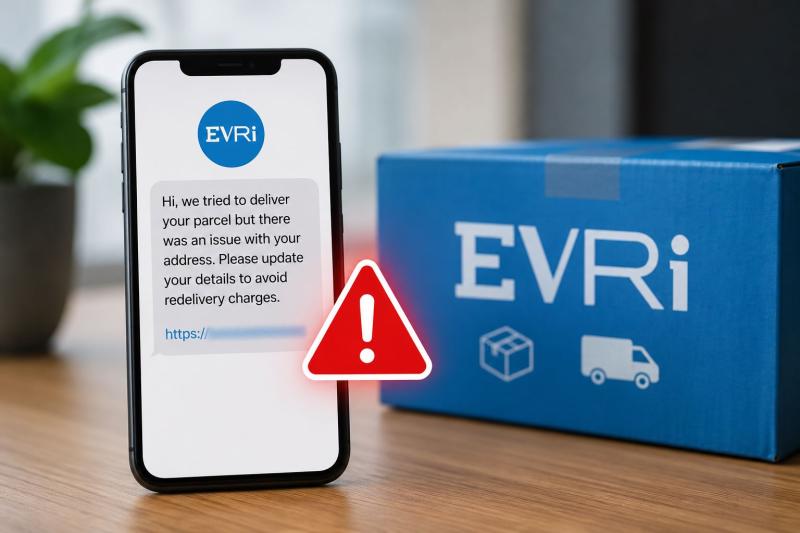
Have you received a text message claiming to be from Evri saying that your parcel could not be delivered, your address needs to be updated, or you must pay a small fee for redelivery? Be careful. The Evri parcel delivery text scam is an impersonation scam, while Evri is a legitimate and major UK parcel delivery company, formerly known as Hermes.
Scammers use the trusted Evri name to send fake missed delivery, redelivery, and payment text messages containing phishing links. Consumers should never click unexpected links or provide personal or financial details in response to these texts. Instead, check parcel information directly through the official Evri website and report suspicious messages.
The following are examples of text messages that have been reported by people who received them. The wording, sender number, and links can vary, but they show some of the common tactics used in Evri impersonation scams.
Example 1:
"EVRl: Sorry! Our courier missed you this morning. Please book a redelivery slot via. (suspicious link)"
Example:2
"EVRl: Unfortunately, you missed your SHIPMENT today. Rebook via: (Suppicious link)".
The above examples demonstrates the complete scam journey, from the missed delivery message to the request for personal information and payment.
The scam usually begins with an unexpected text message that seems to come from Evri. The message may claim that:
The message normally includes a phishing link. When clicked, it can take you to a fake Evri website designed to look legitimate. The phishing website may then ask for your name, address, phone number, email address, bank details, or card information. If submitted, this information could be used fraudulently by criminals.
Some reported versions have also asked recipients to reply "Y" or "YES" before opening a tracking link. This is another tactic scammers may use to make the message look legitimate or bypass some mobile provider protections.
There are several warning signs to watch for which include:
A common warning sign is a request for payment. The message may claim that you need to pay a small re-delivery fee, shipping charge, customs fee, or outstanding balance before your parcel can be delivered.
Unexpected payment requests received through text should be treated with caution. Legitimate delivery updates should not pressure you into making a payment through a link in an SMS.
Scammers may claim that a delivery attempt was unsuccessful and ask you to click a link to arrange another delivery. Other versions may say that your address is incomplete or incorrect and needs to be updated.
These requests are designed to make the message appear connected to a real parcel while directing you to a phishing website.
The link is often the most important warning sign. A fake text may contain a web address that looks similar to a genuine delivery website but actually leads to a fraudulent page.
The website may copy the company's logo, colors, and layout to appear genuine. It can then ask for your name, address, phone number, email address, bank details, or card information.
Another warning sign is receiving the message from an ordinary mobile number rather than a verified sender name. For example, 07394194403 has been reported in connection with this type of Evri parcel delivery scam. However, scammers can change telephone numbers frequently, so the sender number should not be the only factor you consider.
Fake delivery messages often try to create a sense of urgency. They may use phrases such as “Action Required,” “Final Notice,” or claim that your parcel will soon be returned. This pressure is intended to make you click the link before you have time to check whether the message is genuine.
Spelling mistakes, unusual wording, generic greetings, or unclear parcel details can be signs that a message is not genuine. If a message contains several of these warning signs, it is best to avoid clicking any links or providing any information.
A genuine Evri message may provide information about a parcel that is actually moving through its delivery network and can include tracking information. However, there are important differences:
Legitimate Evri: Delivers actual packages you or someone else ordered. They will only use text messages to provide free tracking updates or delivery windows. They:
Scam impersonators: Send unexpected texts claiming your delivery failed, a fee is due, or you need to reschedule. They will always include a link to a fake website designed to steal your bank details. They:
For official guidance on identifying genuine and suspicious messages, see the Evri warning about text and email messages.
If you receive a suspicious Evri text message, do not interact with it or provide any personal information. Instead, follow these steps:
If you have already clicked the link or entered your personal or financial information, take the following steps as soon as possible:
Remember that information submitted to a phishing website may be used by criminals in later fraud attempts.
The Evri Parcel Delivery, Miss Delivery & Redelivery Text Messages Scam is a reminder that scammers can easily copy the name, branding, and appearance of a legitimate company. The fact that you are expecting a parcel does not automatically make a delivery text genuine.
The most important warning signs are unexpected messages, payment requests, re-delivery fees, requests to update your address, unusual links, mobile number senders, urgency, and requests for personal or financial information.
When in doubt, do not use the link or contact details provided in the message. Check your parcel directly through the official Evri website (evri.com) instead.
Disclaimer: The information in this article is provided for educational and awareness purposes. Company names, phone numbers, sender names, and other details referenced may have been impersonated, spoofed, or otherwise misused by scammers. Their appearance in this article does not necessarily identify the legitimate company, owner of a phone number or account as being involved in fraudulent activity.
This article has been written by a Scam Fighter Contributor, De-Reviews.com Team. If you believe the article above contains inaccuracies or needs to include relevant information, please contact ScamAdviser.com using this form.
De-Reviews.com Team is a group of scam researchers, editors, and online safety advocates dedicated to exposing online fraud and helping consumers stay safe online. The team has been investigating scams, fraudulent websites, phishing campaigns, and other online threats since 2014. Read the Full Author Profile.
