
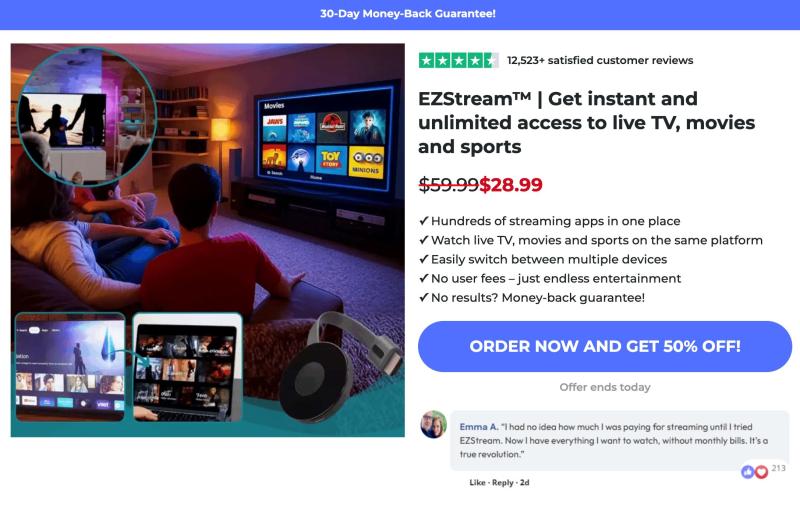
EZStream is promoted as a simple way to get unlimited access to live TV, movies, sports, and premium entertainment without paying monthly subscription fees. However, a closer look at its marketing pages, sales funnels, product claims, and legal disclosures reveals several points that consumers should consider before purchasing.
The main concerns include inconsistent marketing stories across different countries, unclear claims about access to premium content, aggressive sales tactics, unverifiable review numbers, mismatched contact details, and a possible recurring membership charge.
EZStream is presented as a wireless device that connects to a television and allows users to stream or mirror content from a phone or tablet. Its advertising, however, goes much further. The sales pages suggest that customers can get instant, unlimited access to live TV, movies, and sports and watch almost every premium pay TV channel and streaming platform without ongoing monthly payments.
This creates an important question: what exactly does the device provide?
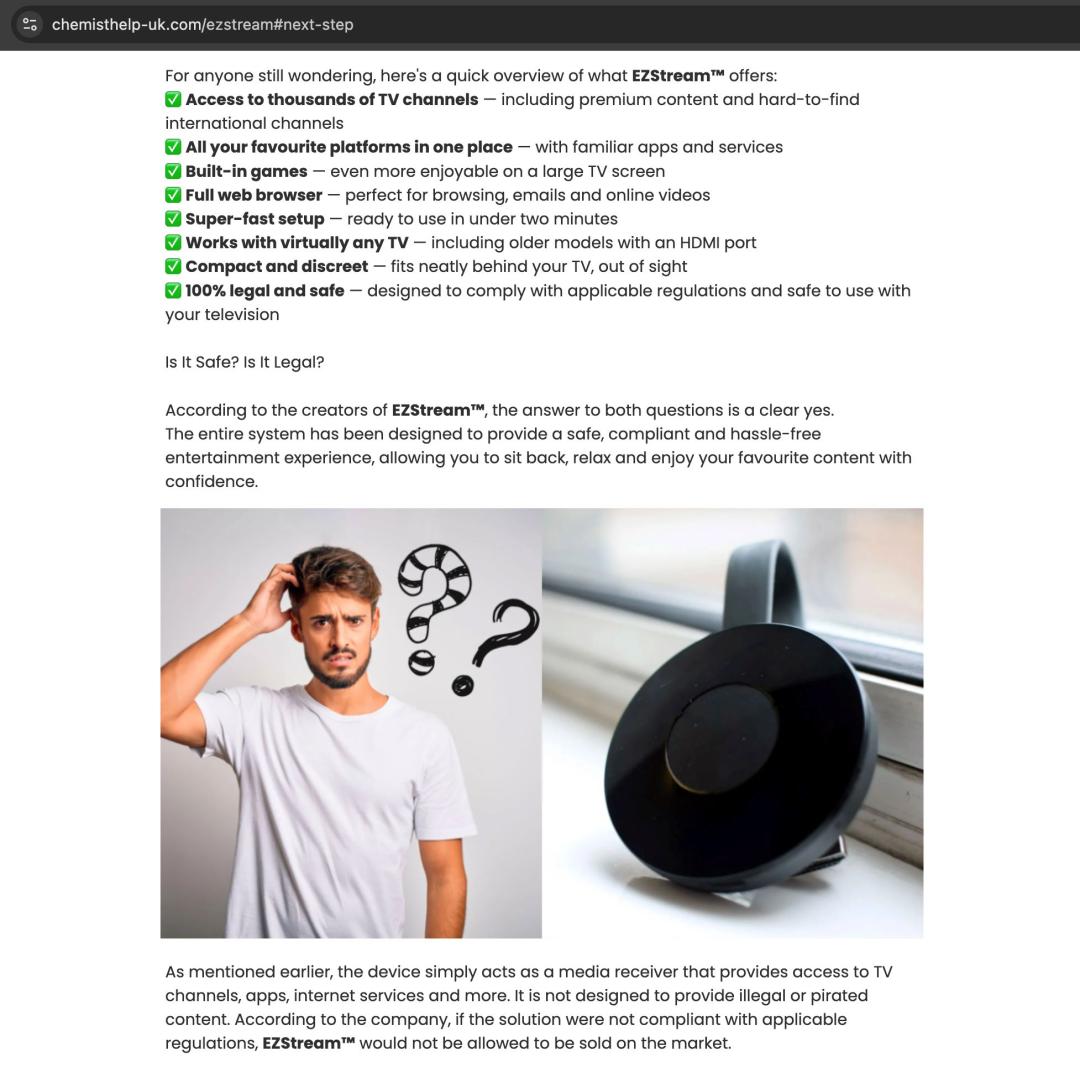
According to the legal information on the same promotional pages, EZStream is described as a media receiver and is not designed to provide pirated content. The device is also described as complying with applicable regulations.
These statements do not clearly explain how the device could provide free access to premium services that normally require individual paid subscriptions.
One of the clearest warning signs is the difference between EZStream's international marketing websites.
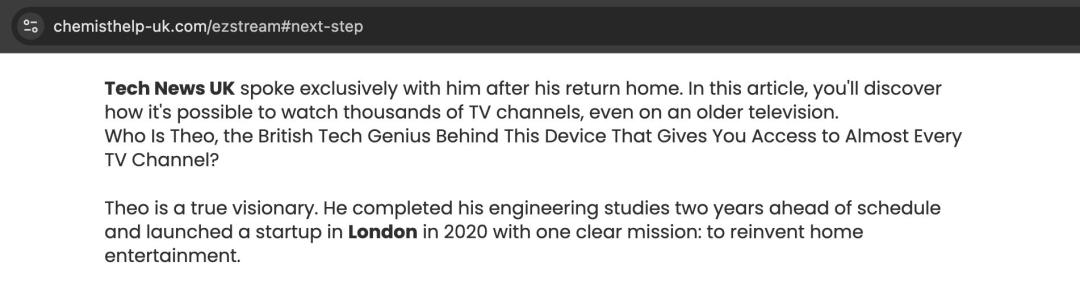
The UK campaign, hosted through chemisthelp-uk.com, presents the device as the invention of "Theo, the British Tech Genius." The story says Theo is based in London and that the product has become successful in London and Manchester.
The US campaign, using inovirahome.com, follows almost the exact same structure and wording. However, the story is changed to describe Theo as "Theo, the American tech prodigy" who has found success in New York, Texas, and Boston.
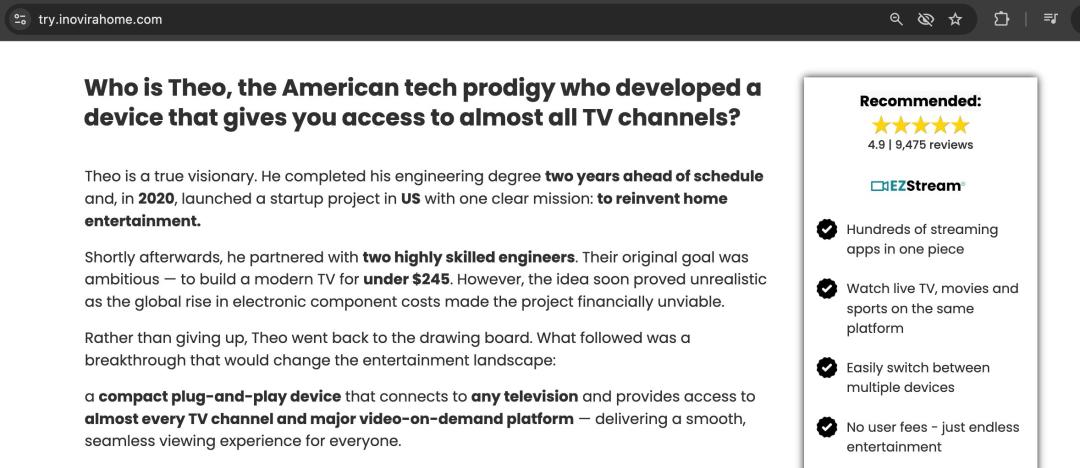
The problem is not simply that the story is localized. The underlying marketing template remains almost identical while the inventor's identity and locations are changed.
There is also an editing inconsistency on the US page. Although it describes Theo as an American inventor and mentions success in Boston, the final paragraph still says the device is becoming a standard feature in "millions of UK homes."
This indicates that the websites are mass-duplicated templates rather than authentic, localized journalistic reporting.
EZStream's advertising makes strong claims about access to entertainment content. The promotional material suggests customers can watch live TV, movies, sports, premium pay-TV channels, and content from major streaming platforms without paying the normal monthly fees. At the same time, the legal section says that EZStream is simply a media receiver and does not provide pirated content and complies with all regulations.
These two descriptions raise questions about how the advertised access would actually work. Premium streaming services and pay TV channels generally require an active subscription or account to access their content. A basic HDMI connected receiver cannot normally remove those subscription requirements.
Therefore, consumers should carefully consider what "unlimited access" actually means before purchasing. If the device only mirrors content from a phone or tablet, it would not by itself provide free access to paid services. If the advertising suggests otherwise, the wording could give buyers an impression that the hardware offers more than it actually does.
The EZStream sales pages also use strong urgency based marketing. For example, checkout pages promote a 50% discount. Such offers can encourage consumers to make a quick decision instead of taking time to research the product and the company behind it.
EZStream's websites claim to have more than 12,523 satisfied customer reviews, with an average rating of 4.7 out of 5. However, these figures appear as static information on the sales websites and are not connected to recognized independent review platforms such as Trustpilot or Google Reviews.
This makes difficult for a potential customer to independently confirm the number of reviews, identify individual reviewers, or see feedback that exists outside the company's own sales pages.
Customer testimonials can be useful when they are independently verifiable. When review numbers are presented only on the seller's own website, consumers should consider them marketing claims rather than independently confirmed customer data.
Another issue appears in the footer of the UK checkout page. Instead of using a support address that clearly matches the EZStream or home entertainment business, the page lists: info@unitedkingdom-health.com. The domain name refers to a completely different type of business and does not seem connected to home entertainment electronics.
A mismatched support email is an important detail for consumers to notice. Buyers should know exactly which company they are dealing with and where customer support requests are being directed.
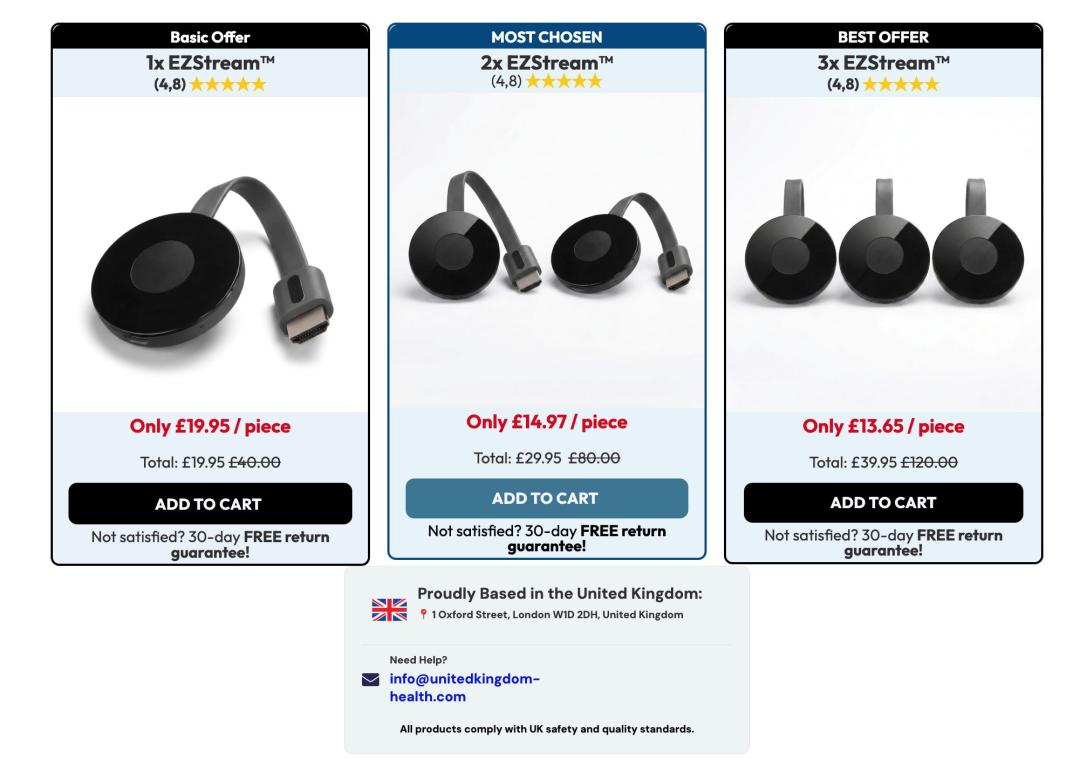
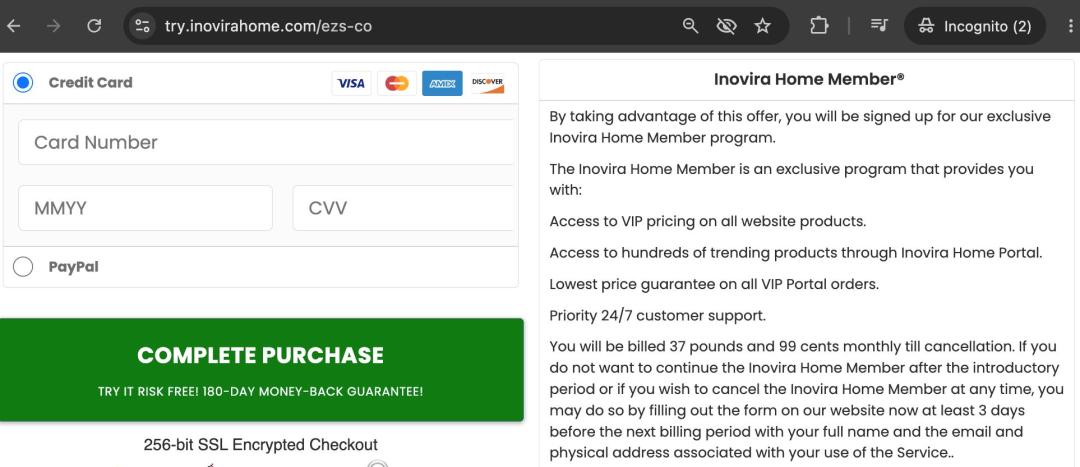
Perhaps the most important detail to check before completing an EZStream purchase is the payment structure. Depending on the sales funnel a customer reaches, purchasing the product may also involve enrollment in a recurring membership program.
The legal documentation refers to an Inovira Home Member or standard membership continuity program. According to the stated terms, buyers may be charged £37.99 per month until cancellation.
The cancellation terms also state that customers must submit a cancellation request between 3 and 48 hours before the next billing cycle, depending on the applicable process.
This is particularly important because a customer who believes they are making a one-time hardware purchase may not expect a continuing monthly payment.
Before submitting payment details, consumers should therefore read the checkout terms carefully and check whether a membership or continuity program is included with the purchase.
Based on the available product description, EZStream appears to function primarily as a wireless display receiver or screen mirroring device. In practical terms, this means the device can be used with a phone or tablet to send or mirror compatible content to a television.
That is different from providing unlimited, free access to premium television channels and paid streaming platforms. The distinction is important because consumers should understand what the physical hardware does separately from what the advertising suggests it can provide.
Based on the information reviewed, EZStream appears to function as a wireless display receiver, similar to a standard screen mirroring dongle. It relies on a phone or tablet to cast compatible content to a TV rather than providing independent access to paid streaming services.
Consumers should therefore carefully compare its actual functionality and pricing with established streaming hardware before making a purchase.
The information provided in this article is for general informational, educational, and consumer awareness purposes only. This review represents an independent analysis of publicly available marketing materials, website structures, and promotional claims as of the date of publication. All conclusions, assessments, and interpretations regarding the product's value, functionality, and marketing tactics constitute the opinion of the author. Brand names, logos, and trademarks referenced herein remain the property of their respective owners and are used strictly under fair use guidelines for identification and commentary. This platform does not provide legal advice, and readers are encouraged to perform their own due diligence before making financial or purchasing decisions.
This article has been written by a Scam Fighter Contributor, De-Reviews.com Team. If you believe the article above contains inaccuracies or needs to include relevant information, please contact ScamAdviser.com using this form.
De-Reviews.com Team is a group of scam researchers, editors, and online safety advocates dedicated to exposing online fraud and helping consumers stay safe online. The team has been investigating scams, fraudulent websites, phishing campaigns, and other online threats since 2014. Read the Full Author Profile.
