
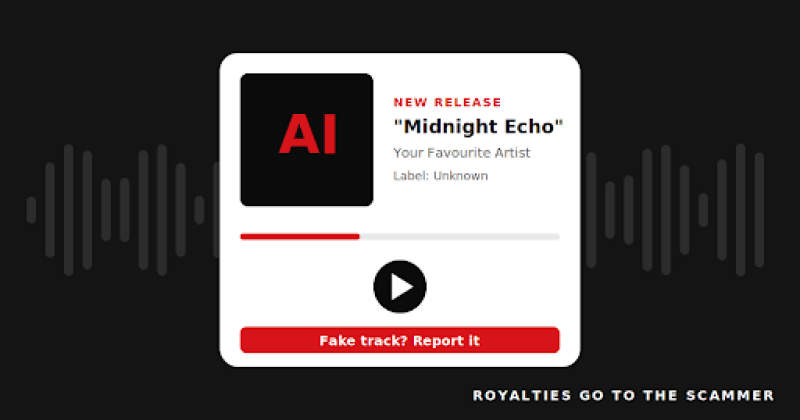
A surprise new drop from your favorite musician might not be their work at all. Cybercriminals are utilizing generative AI tools to generate songs, render synthetic cover art, and upload tracks to Spotify, Apple Music, and Amazon Music under the names of legitimate recording artists to siphon streaming royalties.
According to security researcher Benjamin Lloyd in a report published by Panda Security, this scheme exploits persistent verification gaps in commercial digital music distribution. Fraudsters generate audio using generative music engines, register the files with third-party digital music distributors claiming artist ownership, and rely on automated ingestion pipelines to distribute the counterfeit tracks directly to verified artist discographies.
The turnaround is remarkably fast. Testing conducted by investigative outlet 404 Media demonstrated that uploading an AI-generated track under the profile of an active indie band took just five minutes. Within days, the fraudulent track was syndicated and indexed across major streaming networks, including Spotify, Apple Music, Tidal, and Amazon Music.
The motivation behind streaming identity theft is direct financial extraction. Streaming royalties are disbursed to the account that distributed the track, leaving the impersonated artist with nothing while the scammer collects monthly payouts.
Co-opting an established artist profile provides immediate advantages:
The fraud impacts fans as well. Synthetic tracks corrupt algorithmic recommendation profiles and listening histories. Furthermore, researchers warn that malicious actors can place phishing URLs or deceptive promotions in song descriptions, lyrics metadata, or canvas video links to distribute malware or credential harvesting schemes.
While streaming providers continue deploying updated fraud filters and beta testing pre-release catalog verification tools, music fans can protect their accounts by watching for key red flags:
If you come across a suspected spoofed release, do not save or add it to personal playlists, as this feeds platform recommendation engines. Use the in-app reporting tool (typically found under the track settings menu) to flag the song for impersonation, and alert the artist’s management team through their official social media handles.
Never follow external links found in suspicious track descriptions promising unreleased albums, free merchandise, or early tour presales. If an external link directs you to an unfamiliar ticketing or download portal, verify its registration age and security status using ScamAdviser's Website Checker before entering personal details. For real-time defense against malicious redirect links on your device, download the ScamAdviser Mobile App, and report fraudulent platforms directly via ScamAdviser's Report a Scam portal.
Source: Benjamin Lloyd, "An unexpected release by your favorite artist? It could be a scam…," Panda Security Mediacenter, October 19, 2026, citing research by 404 Media.
