
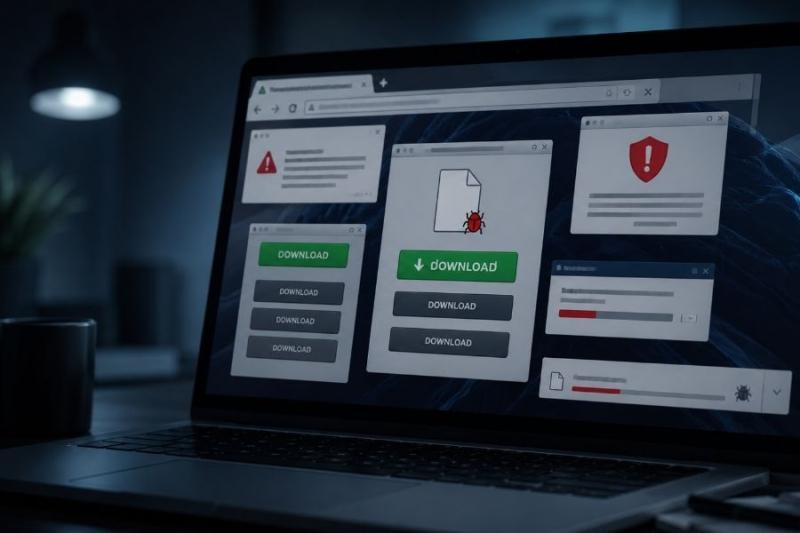
You may be looking for a loan and come across a website promising quick approval. The rates look reasonable, the application takes a few minutes, and everything seems professional enough. Then the form asks for your ID, bank account details, or a payment before the money can be released.
That is the point where you need to slow down and check who you are actually dealing with. Fake loan websites can look very similar to genuine lender websites. Some are built to collect upfront fees. Others are mainly interested in the personal and financial information you enter into the application.
Quick Summary
A fake loan website usually tries to make everything feel normal. You may find it through a Google result, an online advert, a Facebook post, or a message sent directly to your phone. Once you arrive, you see the kind of things you would expect from a lender: loan amounts, repayment periods, interest rates, and an application form.
That familiarity is what makes a loan scam difficult to spot.
The European Consumer Centre Germany has warned about fake lenders using websites, social media, WhatsApp, and online advertising to reach people looking for credit. In some cases, victims even receive paperwork that looks like a real loan contract before any money is requested.
The application can also be the scam itself. You may fill in your name, address, employer, income, bank information, or upload a copy of your ID without paying anything. The scammer still walks away with information that can be useful for other types of fraud.
The FTC warned about this type of tactic in January 2026. Fake loan texts told people they were already “pre-approved” or that an application had been started in their name, then directed them toward forms asking for sensitive information.
You do not need to become a financial investigator every time you look for a loan. A few checks can tell you a lot before you press Submit.
Start with the domain itself.
You can check the website before you apply and look at signals such as how long the domain has existed, whether it has been reported before, and whether other technical details raise concerns.
Do not stop just because the website looks expensive or professionally designed. A convincing design is relatively easy to copy.
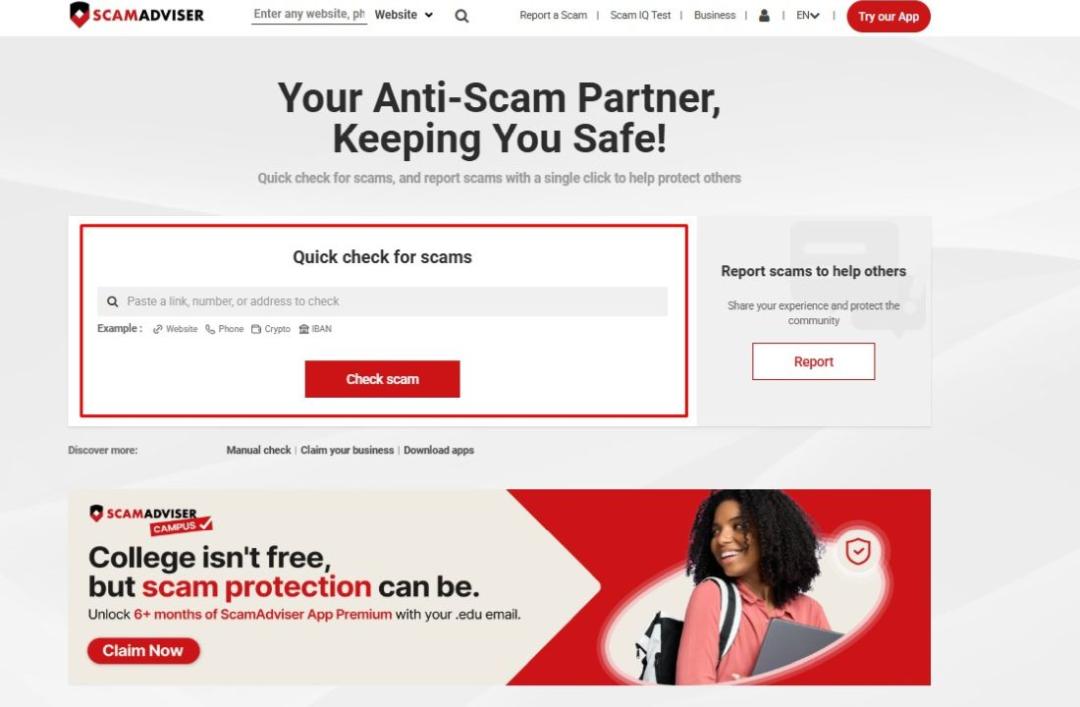
Put the website link in the ScamAdviser Scam Checker tool and check the Trust Score rating (Image Credit: ScamAdviser)
If you check a website on ScamAdviser, look beyond the number.
Understanding how the ScamAdviser Trust Score works gives you more context about why a site received that score. A Trust Score is a risk indicator, so use it together with the other checks below rather than treating it as a guarantee.
Next, leave the lender's website and find the financial regulator for your country yourself.
Search the official register for the company name. Check whether the company is actually allowed to provide the type of loan or credit service it is advertising.
This matters because scammers can write “regulated,” “licensed,” or “authorised” on a website without proving anything. The FCA, for example, tells UK consumers to check its Financial Services Register before dealing with a lender.
This is where many fake loan websites give themselves away.
You may search the company name and find that it really exists. That sounds reassuring, but now compare the details carefully.
Does the website address match? What about the phone number? Is the email domain the same? Does the registered address match what you see on the loan website?
The FCA regularly warns about “clone firms.” These scammers copy information from genuine authorised companies, including company names, registration numbers, and addresses. They then use their own website, email address, or phone number to contact victims.
So finding a real company with the same name does not automatically end the check.
See what other people and independent sources say about the lender.
Search the company name together with words such as “scam,” “complaint,” or “review.” Then search the exact domain and phone number separately.
This is especially useful when someone has copied the identity of a real financial company. Complaints about the fake domain may appear even though the genuine company has a perfectly good reputation.
Also pay attention to the information the application requests. A lender may reasonably need identity and income information. Requests for your card PIN, online banking password, one-time security code, or remote access to your device are very different.
You may not notice anything suspicious when you first land on the site. The warning signs often appear once you start the application.
You may see phrases such as “100% approval,” “everyone accepted,” or “bad credit guaranteed.”
Be careful with those promises.
A legitimate lender normally needs to assess your application before making a final lending decision. The FTC specifically warns that scammers may promise or guarantee a loan before properly checking whether you qualify.
Pre-qualification can be legitimate. A guarantee before any meaningful assessment is different.
Sometimes the loan comes looking for you.
You may receive a text saying, “Your £8,000 loan has been approved,” even though you never submitted an application. Another version may say that someone has started an application using your details and you need to follow a link to cancel it.
The FTC said that messages like these may be phishing attempts designed to collect bank or identity information.
This is one of the most common patterns in an advance fee loan scam.
You are told the loan has been approved. Then, before the money reaches you, another payment suddenly appears.
It may be described as “insurance,” a “processing fee,” a “security deposit,” or some other requirement needed to release the funds.
The FCA says victims of loan fee fraud report an average loss of £255. It also warns about scammers asking for payments through unusual methods, including vouchers and cryptocurrency.
An upfront fee does not automatically make a lender fraudulent. Genuine lenders or brokers can sometimes charge properly disclosed fees. The bigger warning sign is a payment that appears after “approval” and supposedly guarantees or unlocks the loan.
If you paid a fee, you may never receive the promised loan. In some cases, the scammer comes back with another reason why you need to pay again.
The European Consumer Centre Germany has described cases where fake lenders continued asking victims for more money after the first payment.
Money is only one part of the risk.
If you shared bank information, card details, or identity documents, keep watching for activity you do not recognise. The information collected through a fake loan application may later be used for impersonation, phishing, or attempts to access other accounts.
You may also start receiving more convincing scam messages because the person contacting you now knows your name, financial situation, or the fact that you were recently looking for a loan.
What you should do next depends on what you shared.
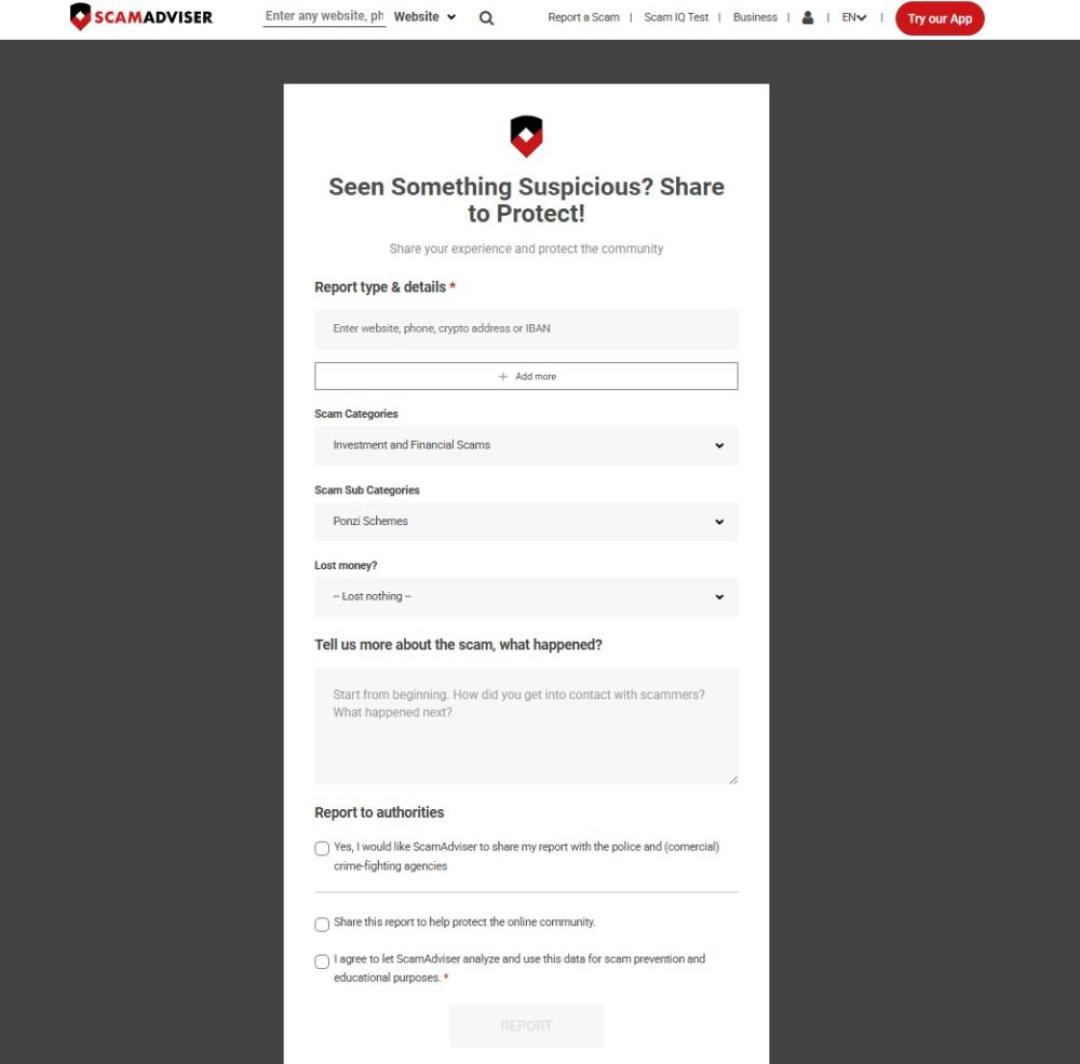
You can always report a scam on ScamAdviser. Thişs way, you will allow us to investigate the website and help others who could fall victim to the same scam (Image Credit: ScamAdviser)
If money has already left your account, you can also follow the available steps for getting money back from a scammer. Acting quickly gives your bank or payment provider more options.
Be ready for follow-up contact as well. Someone who already knows you were looking for credit can send very convincing emails or texts later, so learn how to recognize follow-up phishing attempts before clicking another link.
Check Legitimate Lender Fake Loan Website Approval Reviews your application May promise guaranteed approval Company Status Can be independently verified May be missing, false, or copied Contact Details Match official records May use unrelated details Fees Clearly disclosed when applicable May suddenly appear after approval Payment Uses normal business payment methods May request vouchers, crypto, or unusual transfersFake loan websites work because they copy parts of a real borrowing process. That means you should check more than the company name before sharing bank details or uploading your ID. Verify the lender, verify the exact domain, and make sure the details actually belong together.
How can I check whether a loan website is legitimate?
Check the exact domain, search the lender in the relevant financial register, and compare the website's contact details with the official record.
Can a real lender guarantee loan approval?
A real lender may provide pre-qualification, but final approval normally depends on an assessment of your application.
Why is a loan company asking me to pay before I receive the money?
Some legitimate lenders or brokers may charge disclosed fees, but a payment that appears after approval and supposedly releases or guarantees the loan deserves extra scrutiny.
What should I do if I gave a fake loan website my bank details?
Contact your bank as soon as possible, explain exactly what information you shared, and follow its instructions for protecting the account.
Can scammers use my ID after a fake loan application?
Yes, stolen identity information may be used for impersonation or other fraud, so take protective steps for the document you shared.
Can a fake lender copy a real loan company?
Yes, clone firms can copy the name and registration details of genuine lenders while using different websites, emails, or phone numbers.
Author: Jamie James
