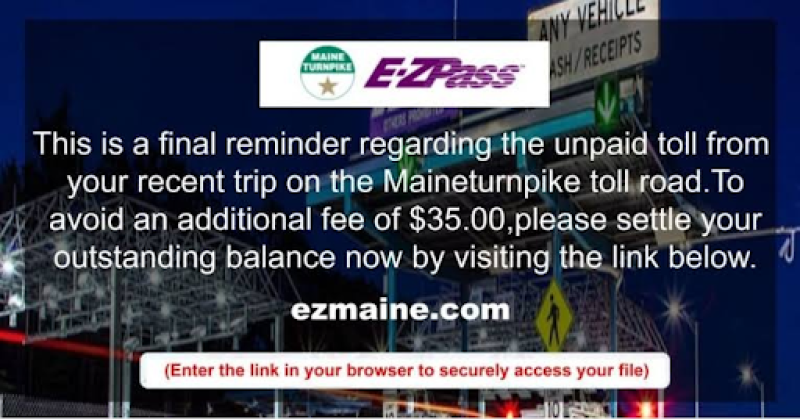
Scam alert: The Maine Turnpike Authority is warning drivers about a nationwide scam in which emails that look like they're from E-ZPass claim you have unpaid tolls. The amounts are small and the threats feel official, so many people pay without checking. That's exactly what the scammers are counting on. Maine E-ZPass says it will never email you asking for toll payments.
The Warning
On November 8, 2026, the Maine Turnpike Authority posted on social media that fake E-ZPass emails were going around claiming drivers owed tolls that had to be paid immediately. It urged drivers not to click links or open attachments, and to delete the emails.
This is the latest wave of a scam that has been hitting drivers for years. Earlier versions arrived as text messages, often called "smishing." One version seen in Maine warned it was a "final reminder" about an unpaid toll and threatened an extra $35 fee unless the balance was paid through a link. The FBI's Internet Crime Complaint Center has received thousands of complaints about toll scam texts from across the US, with the fake links changed to match whichever state is being targeted.
How the Fake Toll Scam Works
- The message. You get an email or text that looks like it's from E-ZPass or your state's toll agency, with a logo and official-sounding language.
- The small debt. It says you owe a modest amount, often just a few dollars, for a recent trip.
- The threat. Pay now or face a late fee, a fine, or even a suspended license or registration.
- The link. It sends you to a fake payment site that copies the real toll website.
- The real goal. The small toll isn't the point. The site collects your card number, name, address and sometimes more, which can then be used for much larger fraud or sold on.
The scam works because it's believable. Lots of people drive on toll roads, few remember every trip, and paying a few dollars feels easier than arguing. Even people who suspect it's fake may pay "just in case."
Red Flags
- An email or text about unpaid tolls when you normally get toll notices by mail
- A link to pay, especially one with an odd web address that isn't your toll agency's official site
- Threats of extra fees, fines or a suspended license if you don't pay today
- A generic greeting with no account number, plate number or trip details
- A sender address or phone number that has nothing to do with the toll agency
How to Check If You Really Owe a Toll
- Don't click the link. Type your toll agency's website into your browser yourself. In Maine, that's ezpassmaineturnpike.com.
- Log in to your account to see any posted tolls or balances.
- Call customer service using the number on the official website, not one from the message.
- Remember how real notices arrive. The Maine Turnpike Authority says it doesn't use texts to collect tolls and sends violation notices by mail.
What to Do If You Get One
- Delete it. Don't reply, click links or open attachments.
- Report it to the FTC or the FBI's IC3. Include the sender and the website link in your report.
- If you've already paid or entered card details, contact your bank immediately to block the card and dispute the charge, and watch your statements for other unfamiliar charges.
- If you entered other personal information, consider a fraud alert or credit freeze with the credit bureaus.
Adam Collins is a cybersecurity researcher at ScamAdviser who operates under a pseudonym for privacy and security. With over four years on the digital frontlines, he specialises in translating complex threats into actionable advice. His mission: exposing red flags so you can navigate the web with confidence.
See Full Bio