
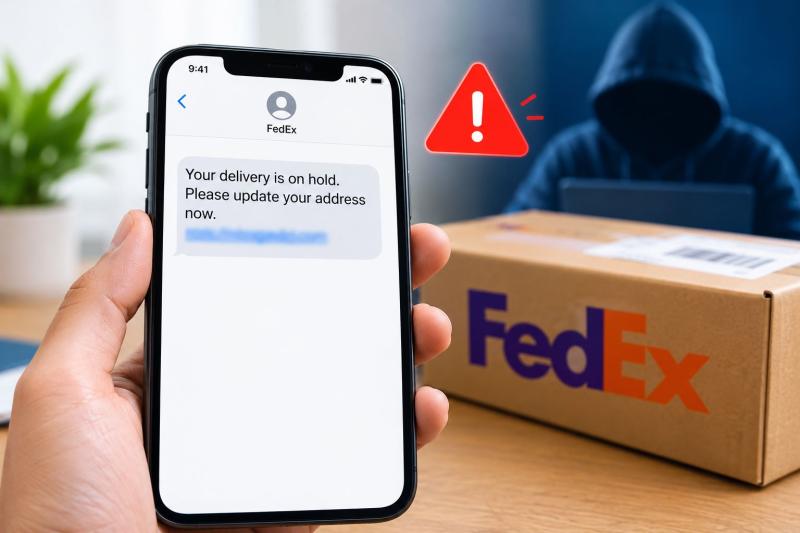
Unsolicited text messages claiming there is a problem with your FedEx delivery are a scam. This type of fraud is commonly known as "smishing," or SMS phishing, and it uses the trusted FedEx name to make a fake delivery problem appear legitimate. The goal is usually to make you panic, click a link, and provide personal or financial information.
According to data compiled by ScamAdviser, package delivery hoaxes are among the most common text scams in the world. Cybercriminals send these messages to large numbers of people because many consumers are regularly waiting for online shopping orders. That makes a message about a delayed or incomplete delivery seem believable.
It is important to understand that FedEx is a legitimate delivery company. The scam involves criminals impersonating FedEx and using its name, branding, or delivery services as part of the deception.
The basic approach is simple. You receive an unexpected text claiming that something has gone wrong with a package.
The message may say:
"FedEx: Your delivery could not be completed. Confirm your address immediately."
Or:
"Final Notice: Your FedEx package is being held. Pay a small fee to avoid return."
The message then provides a link and encourages you to act quickly. That link is the important part of the trap. Instead of taking you to a genuine FedEx service, it may send you to a fraudulent website designed to collect your information, payment details, or account credentials.
Scammers also change the wording and story regularly. This helps them avoid automatic spam filters and gives them different ways to approach potential victims.
The success of this type of scam comes from combining several familiar things.
You may actually be waiting for a package. The message uses the name of a company you recognize. It gives you a believable delivery problem. Then it provides an easy solution: "Just click here."
That combination can make a fraudulent message feel legitimate within seconds.
For example, imagine ordering shoes online on Monday. On Wednesday, you receive a text saying your FedEx delivery has an address problem.
You might immediately think, "That must be my shoes."
But the message could still be fraudulent. So, the safest approach is to check your original order and independently verify the tracking information instead of assuming the text is connected to your purchase.
The Story: You receive a message saying that a package is waiting for you, but you need to click a link to set your delivery preferences or update your drop-off address.
For example:
"FedEx Delivery: Your package is waiting. Please update your delivery preferences to arrange delivery."
Because the message sounds like a normal delivery notification, someone expecting an online order may click without thinking twice.
The Catch: The link may not lead to FedEx at all.
In some versions, it takes you to a fake customer survey, sometimes impersonating another recognizable brand such as Amazon. You may then be told that you have won a free prize, such as a smartwatch.
The prize appears free, but the website asks for your credit card number to cover a small shipping fee.
The real problem comes next. After entering your payment information, you may unknowingly be signed up for expensive recurring subscriptions or other unwanted charges. So what started as a supposed FedEx delivery update can turn into a payment trap.
The Story: This version claims that a courier attempted to deliver your package but could not find your house or complete the delivery because your address was incomplete.
For example:
"FedEx: We were unable to deliver your package due to incomplete address information. Update your address now."
The message may provide a link to correct the information.
The Catch: The link can open a spoofed website designed to look like an official FedEx portal.
The fake page may ask for your:
Once criminals collect this information, it can potentially be used for identity theft, additional phishing attempts, or attacks against other accounts. The page may look professional, contain FedEx-style branding, and even display familiar delivery language. That does not make it genuine.
The Story: The message says your package has been held at a local warehouse and will be returned to the sender unless you pay a small amount immediately.
The requested amount may be something like $1.50 or $2.00, supposedly for customs, handling, or another delivery related charge.
For example:
"Your FedEx package is on hold. Pay $1.50 customs fee today to prevent return."
The small amount is intentional. A person might think, "It is only $1.50," and decide it is not worth investigating.
The Catch: The payment page can be completely fake.
The purpose is to capture your credit card number and other payment information as soon as you enter it. Unexpected payment requests through a text message should therefore be treated with extreme caution.
You can often identify a fake FedEx text by looking for several warning signs.
One of the biggest warning signs is the website address. Real FedEx text notifications will direct users to official FedEx services, so carefully examine the domain before entering information.
Scammers may use look-alike addresses such as:
A website can contain the word “FedEx” and still have nothing to do with the real company. Do not judge a link simply by looking at the first word. Check the actual domain.
Be suspicious when an unexpected message suddenly demands money to release a package.
The story may involve:
The message may make the payment sound urgent and unavoidable. Instead of using the payment link in the text, verify the shipment independently through an official FedEx source.
Scammers do not want you to stop and investigate. That is why these messages often use phrases such as:
The exact wording may change, but the goal is the same: create enough fear that you click before thinking.
Pay close attention to how the message is written.
Some fraudulent texts contain:
For example, a scammer might use a zero instead of the letter "O" or make other small changes to avoid automatic spam filters. One spelling mistake does not automatically prove a message is fake, but several unusual features together should raise suspicion.
Some scam texts include a tracking number to make the message look authentic.
You may see something like:
"FedEx Tracking: 7834XXXXXX. Delivery attempt failed. Confirm your information."
If you do not recognize the tracking number or were not expecting a delivery, do not click the link simply because a tracking number appears. A tracking number inside a text message does not prove that the message came from FedEx.
If you receive a suspicious FedEx text, take a moment before doing anything.
Do Not Click the Link:
Never tap links or download attachments from unexpected messages. A fraudulent link may take you to a fake login page, payment form, survey, or other website designed to collect information.
In some cases, malicious software may also be involved. The safest approach is to avoid interacting with the link altogether.
Verify the Delivery Yourself:
If you are genuinely expecting a package, do not use the link provided in the text. Instead, open your web browser manually and type the official FedEx website address yourself: fedex.com
Then enter your original tracking number directly into the official system and check the actual delivery status.
You can also check your original shopping order or contact the seller through the website or app you normally use. This is much safer than trusting an unexpected message.
Report the Suspicious Text:
If you clicked a suspicious FedEx link, do not panic, but take the situation seriously.
A FedEx delivery problem mentioned in an unexpected text should never be accepted at face value.
Remember these simple rules:
The FedEx Delivery Issue Text Scam uses the trusted FedEx name to make fraudulent messages appear genuine. The story may involve an address problem, delivery preferences, an unpaid customs or handling fee, a fake tracking number, or an urgent warning that your package will be returned.
The details can change, but the objective remains the same: get you to click, provide information, or make a payment.
The best protection is simple. Do not click the link in an unexpected message. If you are expecting a package, verify the delivery independently by visiting the official FedEx website and checking your tracking number yourself.
And remember: FedEx is the legitimate company being impersonated here. The scam is the fraudulent message and the criminals behind it.
When a text tells you to act immediately, slow down instead. Pause, ignore the suspicious link, verify the information through the official source, and only then decide what to do.
The information in this article is provided for educational and awareness purposes. Company names, phone numbers, sender names, and other details referenced may have been impersonated, spoofed, or otherwise misused by scammers. Their appearance in this article does not necessarily identify the legitimate company, owner of a phone number or account as being involved in fraudulent activity.
This article has been written by a Scam Fighter Contributor, De-Reviews.com Team. If you believe the article above contains inaccuracies or needs to include relevant information, please contact ScamAdviser.com using this form.
De-Reviews.com Team is a group of scam researchers, editors, and online safety advocates dedicated to exposing online fraud and helping consumers stay safe online. The team has been investigating scams, fraudulent websites, phishing campaigns, and other online threats since 2014. Read the Full Author Profile.
