
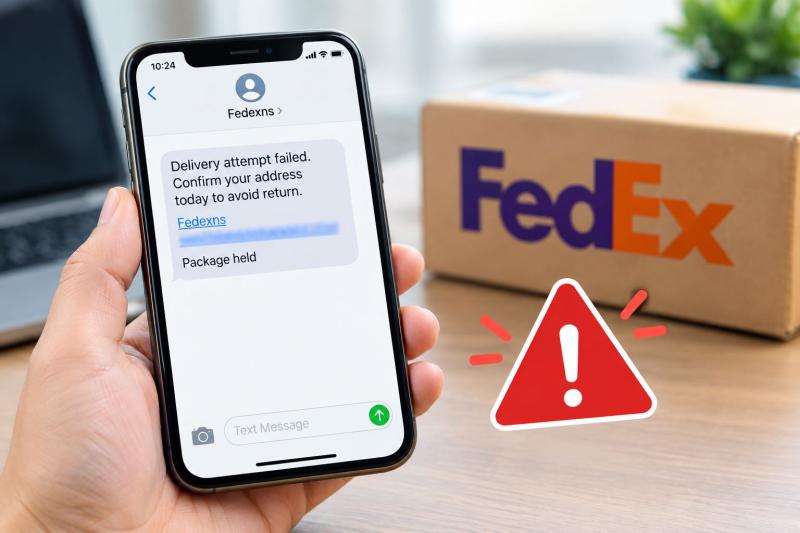
Fedexns text messages are fraudulent and should not be treated as legitimate FedEx delivery notifications. The term "Fedexns" is associated with phishing and smishing messages that impersonate FedEx, a legitimate delivery company. These messages may claim that a delivery attempt failed, your address needs to be confirmed, or a package is being held.
The goal is usually to make you click a link and provide sensitive information, such as your name, address, credit card details, login information, or other personal data. If you received a message mentioning Fedexns, do not click its link or provide any information.
The Fedexns scam is a type of smishing, which means phishing carried out through text messages. Scammers use the name and appearance of a trusted delivery company to make their messages look believable. Because many people regularly receive packages, a message about a missed delivery or an address problem can seem realistic.
A typical message may create a small problem that supposedly needs immediate attention. For example, it may say that:
The message then provides a link. That link may contain the term Fedexns or another altered version of a FedEx related web address (such as a lookalike URL) to bypass automated spam filters.
Here are some examples of the type of messages associated with this scam, the wording can change, but the basic trick is often similar:
Example 1- Package held:
"Delivery attempt failed. Confirm your address today to avoid return.
Fedexns [URL Redacted for Safety}
Package held"
At first glance, this may look like a normal delivery notification. However, the combination of an unexpected delivery problem, urgency, and a suspicious link is a major warning sign.
Example 2 - Address problem:
"We could not deliver your package because your address is incomplete. Click here to update it."
The link may lead to a fake delivery website.
Example 3 - Small redelivery fee:
"Your package is on hold. Pay $1.99 to schedule another delivery."
The small amount is intended to make the request seem harmless. However, the payment page may be designed to collect your card information.
Example 4 - Package return warning:
"Your parcel will be returned to the sender today. Confirm your delivery information immediately."
The threat of losing a package creates pressure to click without thinking.
Example 4 - Fake tracking notification:
"FedEx: Your shipment cannot be delivered. Track and update your preferences here."
Even if the message includes a tracking number, that does not automatically prove that it is genuine.
The scam generally follows simple processes such as:
You receive an unexpected message:
The text claims that there is a problem with a FedEx delivery. You may not even remember ordering anything, but scammers rely on the fact that people may have several online purchases or deliveries happening at the same time.
The message creates urgency:
The scammer may tell you that your package will be returned, held, or delayed unless you act immediately. This is designed to make you react before checking whether the message is genuine.
You are directed to a link:
The message contains a web address that may use a suspicious or altered name such as Fedexns. A fraudulent website can be designed to look similar to a legitimate FedEx page.
The fake website asks for information:
The page may ask you to enter information such as:
It may also ask for a small payment described as a delivery, redelivery, customs, or handling fee.
Your information may be collected:
If you submit the requested information, it can potentially be captured by the people operating the fraudulent website. The information could then be misused for financial fraud, identity theft, account takeover attempts, or additional phishing attacks.
Several warning signs can help you recognize this type of scam which include:
FedEx is a legitimate global delivery company. But, scammers commonly impersonate well known companies like FedEx because people are more likely to trust a familiar name.
FedEx itself publishes warnings about phishing and fraudulent delivery messages. Its official fraud guidance tells consumers to be cautious about suspicious emails and SMS messages, misspelled web addresses, urgent requests for money, and requests for personal or financial information. FedEx also advises consumers to forward suspicious messages to abuse@fedex.com.
Receiving a FedEx package does not automatically make every delivery message genuine. If you are expecting a package, do not use the link provided in a suspicious text message.
Instead, open your browser yourself and navigate to the official FedEx website. You can then check your shipment using the tracking information you already have. Another safe option is to check the order confirmation or shipping information from the retailer where you purchased the item.
For example, suppose you recently bought a pair of shoes online and receive a message saying:
"Your FedEx package is waiting. Confirm your address now."
Instead of clicking the message, go back to the retailer's website or the official FedEx website and check the shipment independently.
The safest approach is simple:
You can also report unwanted scam texts through your mobile carrier by forwarding the message to 7726 (SPAM) where that reporting service is supported, and you can report scams to the appropriate consumer-protection authorities.
Do not panic, but take action quickly. If you only opened the page and did not enter information, close it and avoid interacting with it further.
If you entered your credit or debit card information, contact your bank or card provider as soon as possible. Explain that your information may have been submitted to a phishing website and ask what protective steps are appropriate.
If you entered a password, change it through the legitimate website or app. If you reused that password elsewhere, change it there too. Also monitor your financial accounts and other important accounts for unusual activity.
One of the biggest mistakes is assuming that a message is legitimate simply because you are expecting a package. Another mistake is clicking first and checking later.
You should also avoid judging a website only by how professional it looks. A fraudulent website can copy the appearance, colors, logos, and layout of a real company.
Finally, do not assume that a small payment request is harmless. A request for a small amount can still be part of a larger attempt to obtain your payment information.
Fedexns text messages should be treated as a phishing scam, not as legitimate FedEx notifications. The use of a familiar delivery company name, an urgent package problem, and a suspicious link are common tactics used to get people to reveal personal or financial information.
Remember: FedEx is a legitimate company, but scammers can impersonate FedEx or any other legit companies.
If a text message tells you that your package is held, your address needs updating, or a small fee must be paid, stop before clicking. Verify the delivery independently through an official FedEx channel instead.
The information in this article is provided for educational and awareness purposes. Company names, phone numbers, sender names, and other details referenced may have been impersonated, spoofed, or otherwise misused by scammers. Their appearance in this article does not necessarily identify the legitimate company, owner of a phone number or account as being involved in fraudulent activity.
This article has been written by a Scam Fighter Contributor, De-Reviews.com Team. If you believe the article above contains inaccuracies or needs to include relevant information, please contact ScamAdviser.com using this form.
De-Reviews.com Team is a group of scam researchers, editors, and online safety advocates dedicated to exposing online fraud and helping consumers stay safe online. The team has been investigating scams, fraudulent websites, phishing campaigns, and other online threats since 2014. Read the Full Author Profile.
