
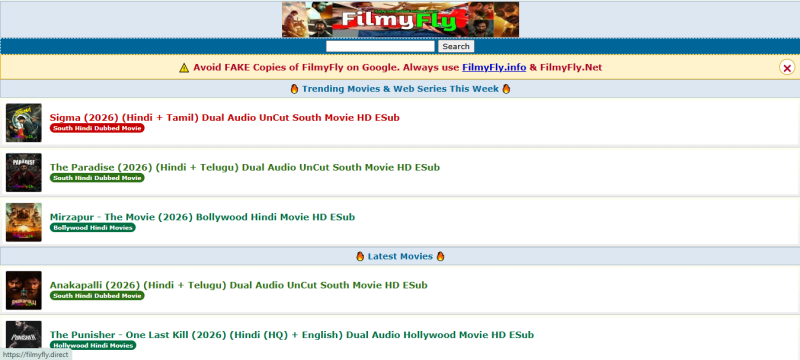
Quick Answer: Filmyfly.church and filmyfly.direct are the latest addresses in the ever-changing FilmyFly network of movie sites. The name stays the same; only the domain ending changes. Sites in this network are widely associated with unauthorised movie downloads and streams, and their habit of hopping from one domain to the next, combined with aggressive ads and little transparency, makes them risky to use. For watching films safely, licensed streaming services remain the better choice.
Both sites carry the FilmyFly name, a brand that has become well known among people searching for free Bollywood, Hollywood, South Indian and Hindi-dubbed movies, along with web series and TV shows. Depending on which version you land on, a FilmyFly site may show:
The .church and .direct versions follow the same idea and the same layout as earlier FilmyFly sites. To a visitor, they look like the same website. The only real difference is the address in the browser bar.
Filmyfly.church and filmyfly.direct are not new projects. They are the newest stops in a long chain of FilmyFly addresses. ScamAdviser has previously seen versions such as filmyfly.faith and filmyfly.cafe, as well as close spin-offs like FilmyFiy and Filmy4wap, which we covered in our Filmy4wap review.
The pattern is easy to recognise. One domain goes quiet, and another with almost identical content appears under a new extension. Sites operating in a legal grey area often switch addresses when an old one is blocked by internet providers, receives copyright complaints, drops out of search results or is simply abandoned. Instead of building one trusted brand, the operators keep moving.
That creates real problems for visitors:
FilmyFly sites have described themselves as entertainment information pages for movie fans, covering search terms around Bollywood, Hollywood, South Indian and dubbed films. Some also display a DMCA or copyright page.
A disclaimer is easy to add, though. What matters is what the site actually does. If its main draw is that visitors can find newly released films for free, and buttons point to unauthorised downloads or streams, a polite description does not change the risks. Frequent domain changes are often a sign that complaints and blocks are catching up with the previous address.
1. A Moving Target
Genuine entertainment brands invest in one recognisable website. A brand that keeps changing its address, from .faith to .cafe to .church to .direct, makes it hard to build any trust, and often signals an effort to stay one step ahead of blocks and takedowns.
2. Aggressive Advertising
Free movie sites usually pay their bills with heavy advertising. Pop-ups, pop-unders and fake "Download" or "Play" buttons are common, and some ads lead to:
3. Malware Disguised as Movies
Download pages are a favourite way to spread malware. A file labelled as a new film may turn out to be an installer, and "video player" or "codec" prompts can push unwanted apps and browser extensions onto your device.
4. Your Data, Unknown Hands
Requests to allow notifications, create an account or enter an email address are common on sites like these. With no named operator, there is no way to know how that information is stored or who it is shared with.
It depends on what a particular version offers and where you live. Publishing movie news, reviews and trailers is generally fine. Distributing or linking to copyrighted films without permission is not, and authorities in many countries have blocked or acted against sites that do. If you cannot tell whether a site has the rights to a film, assume it probably does not.
Licensed streaming services cost money, but they give you proper video quality, no suspicious downloads, better privacy and real customer support. They also pay the studios and creators behind the films. See our list of 18 legit streaming and OTT platforms for options.
Before opening an unfamiliar movie site, take a minute to check it. ScamAdviser's free website checker shows a site's trust score, how old its domain is, whether its owner is hidden and what other users have reported. The ScamAdviser app and browser extension can flag risky sites while you browse. A good score does not make a site legal, but it can help you spot obvious warning signs before you click.
If a movie site has led you to malware, fake charges or a stolen account, run a security scan, change your passwords, contact your bank if needed and Report a Scam to warn others.
Filmyfly.church and filmyfly.direct appear to be the latest mirrors in the FilmyFly network: the same concept, the same layout, just a different URL. Their link to free movie downloads, frequent domain changes and copyright concerns means they are best approached with caution, or avoided altogether. For the latest Bollywood, Hollywood or South Indian films, licensed streaming platforms remain the safest choice.
This article has been written by a scam fighter volunteer. If you believe the article above contains inaccuracies or needs to include relevant information, please contact ScamAdviser.com using this form.
Adam Collins is a cybersecurity researcher at ScamAdviser who operates under a pseudonym for privacy and security. With over four years on the digital frontlines, he specialises in translating complex threats into actionable advice. His mission: exposing red flags so you can navigate the web with confidence.
