
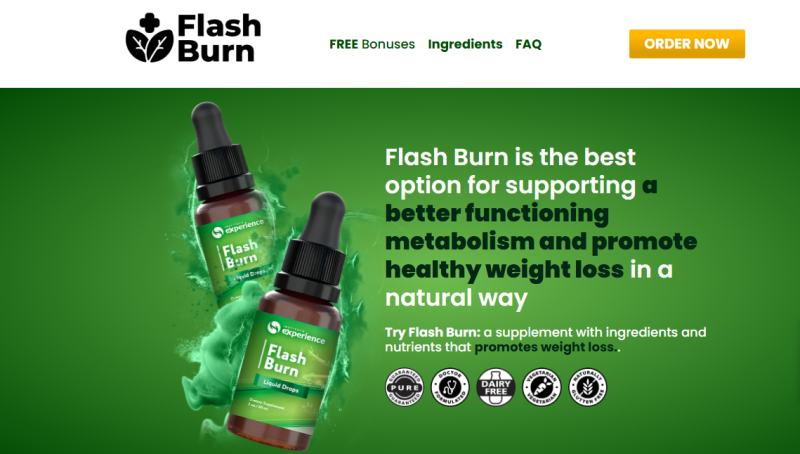
A liquid supplement. No pills. Faster absorption. Stubborn fat, finally gone. Sounds perfect — which is exactly what should make you pause.
In a nutshell — FlashBurn
01 Promises rapid, effortless weight loss with no credible clinical evidence for the product as formulated.
02 Uses scientific language strategically — to create association with credibility, not to make verifiable claims.
03 Relies on influencer testimonials and manufactured urgency to shortcut critical thinking.
04 Fits a documented pattern of supplement marketing designed to sell hope rather than results.
05 Subscription and refund terms carry meaningful financial risk beyond the initial purchase price.
Nobody wakes up looking for a scam. What people look for is something that actually works this time — something that doesn't require six months of discipline and three gym memberships. FlashBurn knows this. Its entire pitch is built on that very human moment of wanting a shortcut that doesn't feel embarrassing to want.
The product is sold as a liquid weight loss supplement — drops, not pills. According to its marketing, the liquid format means faster absorption, which means faster results, which means the metabolism boost and appetite control you've been chasing arrives quicker than anything in capsule form. It's a neat logical chain. It's also almost entirely unsupported.
Here's what we found when we looked past the landing page.
The claims are familiar once you've seen a few of these products. FlashBurn positions itself around a handful of core ideas: boosted metabolism, appetite suppression, and targeted fat burn — especially the "stubborn" kind that won't respond to diet or exercise. The liquid delivery system is the hook that's supposed to separate it from every other supplement on the shelf.
The marketing leans into words like "bioavailable," "rapid absorption," and "clinically studied ingredients." Not "clinically studied FlashBurn" — just the ingredients, in the abstract. That distinction is doing a lot of quiet work. It lets the brand sound scientific without actually making a scientific claim that could be tested or challenged.
The pitch is clean. The branding is clean. The language feels informed. And that's the point.
"It lets the brand sound scientific without actually making a scientific claim that could be tested or challenged."
FlashBurn does several things that make skeptical people lower their guard. It references well-known scientific sources — publications like Nature get name-dropped in proximity to ingredient discussions, creating an association without an actual citation. The ingredient list includes real compounds: things like green tea extract, chromium, African mango. These aren't invented. Some have been studied. That legitimate core makes the rest of the packaging feel solid.
Add influencer promotion — before-and-after content, enthusiastic testimonials, transformation stories that feel personal and unscripted — and you have something that reads more like peer recommendation than advertising. People trust other people more than brands. FlashBurn's marketing understands this deeply.
The "natural" positioning also carries weight in 2026. Liquid. Plant-based. No artificial fillers. These words trigger a sense of safety that keeps people from asking harder questions about what the product actually does in a body at the doses provided.
Once you start looking for the clinical evidence — not ingredient studies, but evidence that FlashBurn specifically, at its specific formulation and dose, produces the results it advertises — you find very little. The brand's materials gesture toward science. The science doesn't gesture back.
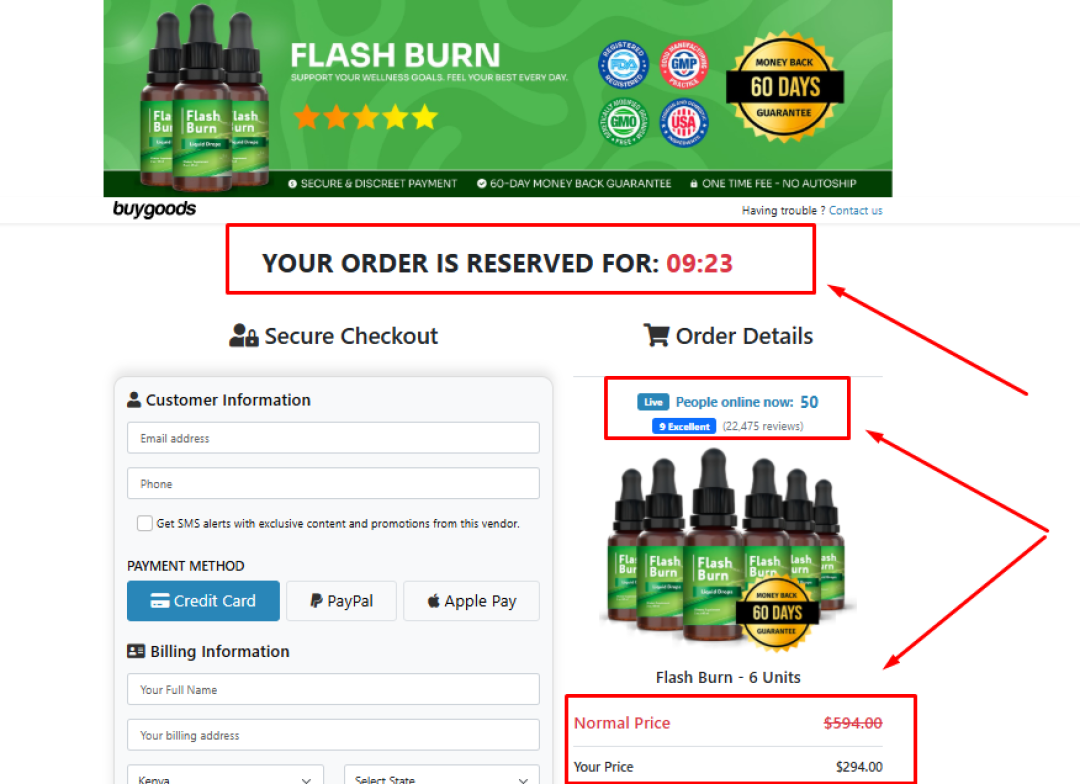
The marketing mechanics are also worth noticing. Limited-stock banners. Countdown timers. "Today only" pricing. These aren't just sales tactics — they're pressure tools designed to move you past the moment when you'd naturally stop and ask questions. Urgency is manufactured specifically to prevent due diligence.
High-pressure countdown timers and false scarcity messaging. Vague "clinically studied" language without verifiable trial links. Influencer testimonials with no independent verification. Promised results ("effortless weight loss," "rapid fat burn") that no supplement has been shown to deliver alone.
The testimonials themselves — polished before-and-afters, five-star reviews with no verified purchase tag — follow a template seen across dozens of similar products. They're not provably fake. But they're also not provable at all, which is the problem.
FlashBurn isn't unusual. That's the more important thing to understand. It fits a very well-established supplement marketing playbook that shows up repeatedly under different product names, different bottles, different influencers.
Common Supplement Scam Markers
The liquid-drops format is newer, but the underlying structure is the same as capsule-based metabolism boosters from five years ago. The delivery mechanism rotates. The promise stays the same.
Read about our other weight loss & drug Reviews;
For most people, nothing noticeable. Not dramatic harm — just no meaningful change in weight, appetite, or energy that couldn't be attributed to placebo effect or the dietary changes people often make when they start taking something new.
The more concrete problems tend to be financial. Subscription charges that weren't clearly disclosed at checkout. A refund process that requires email chains, reference numbers, and response windows that conveniently expire. A customer service operation that seems to exist during the purchase phase and becomes much harder to reach afterward.
Some users report difficulty canceling recurring billing even after multiple attempts. Bank intervention — disputing the charge as unauthorized — becomes the practical solution more often than the company's own refund process.
What to check before buying any weight loss drops
The scrutiny that FlashBurn deserves applies to any supplement in this category. Before you spend money on a liquid weight loss product, these are the questions worth asking:
Contact your bank or card provider immediately to understand whether a recurring charge has been authorized. Request a chargeback if the product doesn't match what was advertised. Avoid re-engaging with the product's website — additional clicks can sometimes be used to argue that you continued consenting to their terms.
Document everything: screenshots of the order page, confirmation emails, any communication with customer support. You'll need it if you escalate through your card provider or a consumer protection authority.
These products don't just sell weight loss. They sell the idea that this time, it'll finally be easy. That's the actual product — the feeling that the hard part has been figured out. FlashBurn is selling that feeling in a very well-designed bottle. The drops are almost beside the point.
This article has been written by a scam fighter volunteer. If you believe the article above contains inaccuracies or needs to include relevant information, please contact ScamAdviser.com using this form.
Adam Collins is a cybersecurity researcher at ScamAdviser who operates under a pseudonym for privacy and security. With over four years on the digital frontlines and 1,500+ days spent deconstructing thousands of fraud schemes, he specialises in translating complex threats into actionable advice. His mission: exposing red flags so you can navigate the web with confidence
