
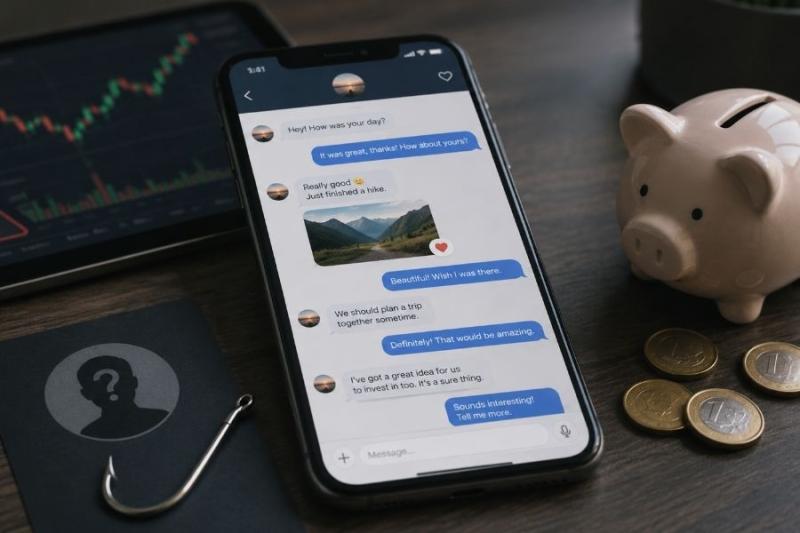
This article was updated by Jamie James on June 15. 2026, based on the latest reports submitted by real users to ScamAdviser, using the reporting function.
Friendship scams often start with a warm message with someone contacting you by “mistake.” They apologize at first, but keep the conversation going, because that first message wasn’t really a mistake, was it?
The danger is that the scam does not always look romantic at first. The person may act like a friend, mentor, business contact, or casual online companion. They may never ask for money directly. Instead, they may offer “investment advice,” introduce a “safe” crypto platform, or tell you about a “private opportunity” that supposedly changed their life.
ScamAdviser user reports submitted between September 2025 and March 2026 show why this overlap matters. Across 32,151 reports, 1,357 included romance as a scam type, 5,919 included investing, 1,663 mentioned crypto, 1,073 mentioned WhatsApp, and 802 mentioned Telegram. These numbers do not mean every case was a friendship scam, but they show a pattern we see often: trust starts in a chat, then the conversation moves toward money.
Quick Summary
A friendship scam is online fraud where someone builds a fake personal bond with you before guiding you toward money, gift cards, crypto, or a fake investment platform.
The scammer may act like a new friend, a supportive stranger, a successful investor, or someone who shares your hobbies. The relationship can feel normal because the first weeks may contain no financial request at all. You may talk about family, food, travel, work, pets, or daily life.
This is what makes friendship scams so effective. The person does not need to say “I love you” to gain influence over you. They only need to become familiar, patient, and useful
In 2024–2026, financial crime researchers and cybersecurity organizations documented a massive surge in friendship-based fraud. You likely grew up being warned about the romance scam, where a stranger uses a stolen photo to profess their undying love and then begs for money for an emergency surgery. While those scams still exist, they are no longer the primary threat to your bank account.
The new generation of fraud is far more sophisticated and patient. These criminals do not want to be your lover; they want to be your best friend, your confidant, or your mentor. This shift is deliberate because scammers have realized that romantic love triggers immediate red flags for your family and your bank.
If you have been trained to spot a catfish by looking for inappropriate declarations of love or requests for "help with a plane ticket," you are currently vulnerable. What happens when the person on the other side of the screen never says "I love you" at all? You are forced to navigate a relationship where trust is built on shared interests and consistent support, making the eventual betrayal feel impossible to predict.
According to our own user reports, romance, investment, crypto, and messaging platforms often appear in the same risk area.
In the report between September 2025 and March 2026, investing appeared as a scam type 5,919 times, romance appeared 1,357 times, and crypto appeared in broader report text 1,663 times. WhatsApp appeared in 1,073 reports, while Telegram appeared in 802.
The loss data also shows why these scams deserve attention. Among reports that mentioned romance, investing, crypto, WhatsApp, Telegram, pig butchering, friendship, dating, or love-related signals, 760 reports involved losses of more than 10k. Another 532 involved losses between 1k and 5k, and 264 involved losses between 5.1k and 10k.
Investment-related categories were also prominent in the same report set. ScamAdviser received 882 reports categorized as Ponzi schemes, 331 as fake investment opportunities, 264 as cryptocurrency scams, and 71 as recovery scams. That last category matters because victims of friendship and crypto romance scams often get targeted again by people who claim they can recover the lost money.
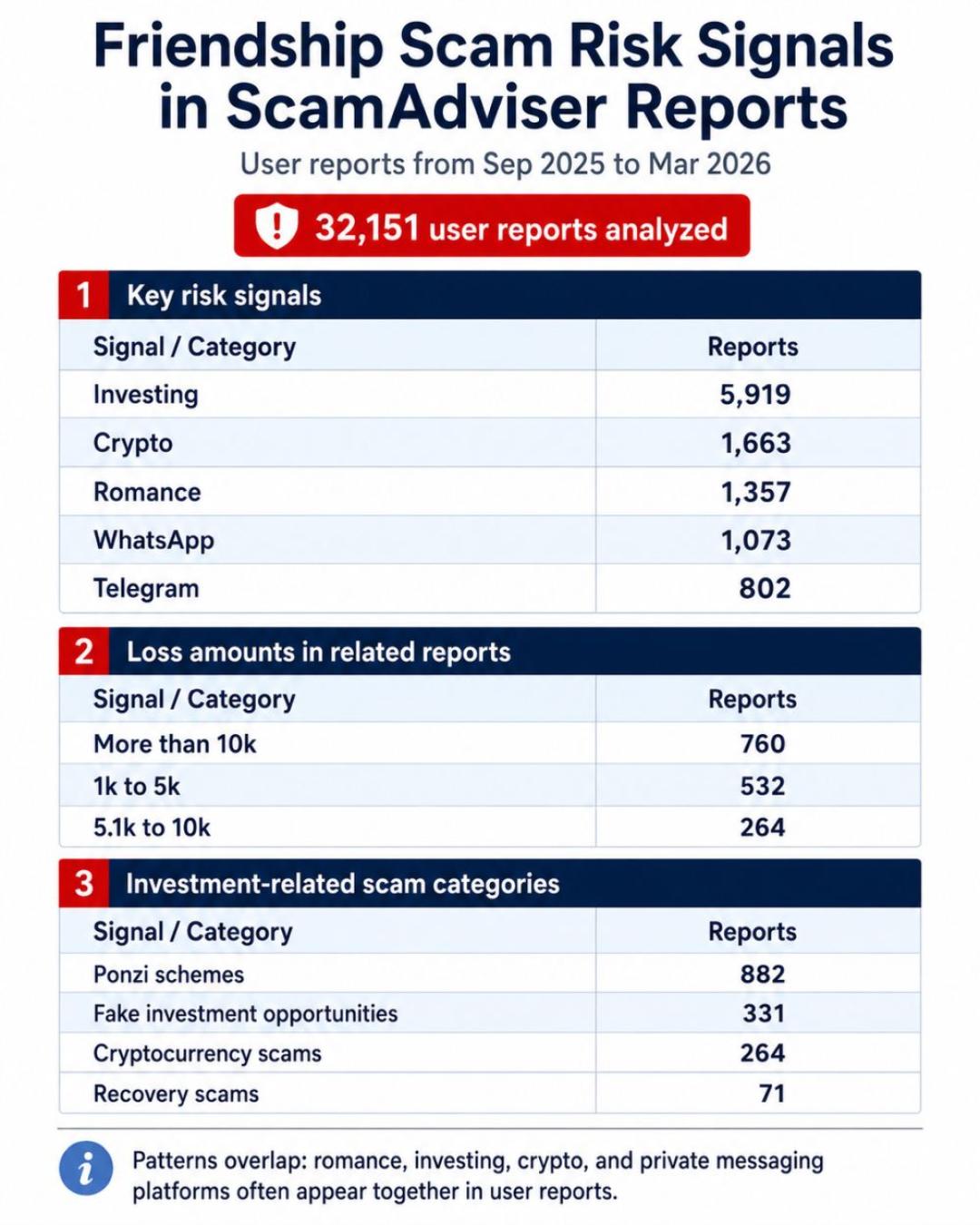
Here is a closer look at the numbers from our database (Image Credit: ScamAdviser)
The "chaperone effect" is the primary reason scammers are moving away from romance. When you tell your adult children or your best friend that you have met a new romantic partner online, they immediately become protective and skeptical. A new "boyfriend" triggers an interrogation; a new "friend" who shares your hobby of photography or gardening triggers almost no scrutiny at all.
In a friendship scam, the financial ask is never presented as a request for charity. Friends do not ask for "help"; they give "advice." The scammer will eventually mention a "financial opportunity" or a "side project" that has changed their life, positioning it as something they want to share with you for your benefit. This bypasses your self-protection instinct because you do not feel like you are giving money away — you feel like you are making a smart move for your future.
The slow build of these relationships is their most dangerous weapon. A romance scammer often rushes the timeline because they need the "love" to cloud your judgment quickly. A friendship scammer is willing to wait three to six months, checking in on you daily and remembering details about your family, before they ever mention a cent of money.
The term "pig butchering" refers to the practice of fattening a victim's trust before slaughtering their savings. The scam often moves slowly, which makes it hard to spot.
You receive a message on WhatsApp or LinkedIn that seems like a mistake. When you correct them, they send a warm apology and compliment your kindness.
The interaction feels perfectly normal. You talk about pets, retirement plans, travel, or daily life. The "friend" shares photos of meals or their office and never asks for a single favour.
Your friend mentions they are having a "great day" because their investment portfolio hit a new milestone. They do not ask you to join. They wait until you ask how it works.
They offer to "show you the ropes" and guide you to a fake cryptocurrency app or fraudulent trading website. It looks professional and may show "live" market data.
You start with a small amount, perhaps $500. The app shows a profit, and you may even withdraw a small amount to your real bank account.
Your friend encourages you to "go big" so you can both retire early or travel together. The app shows your balance rising into a much larger amount.
When you try to withdraw the bulk of the money, the platform demands a "tax fee" or an "authentication deposit." Your friend insists you must pay to save your investment, then disappears.
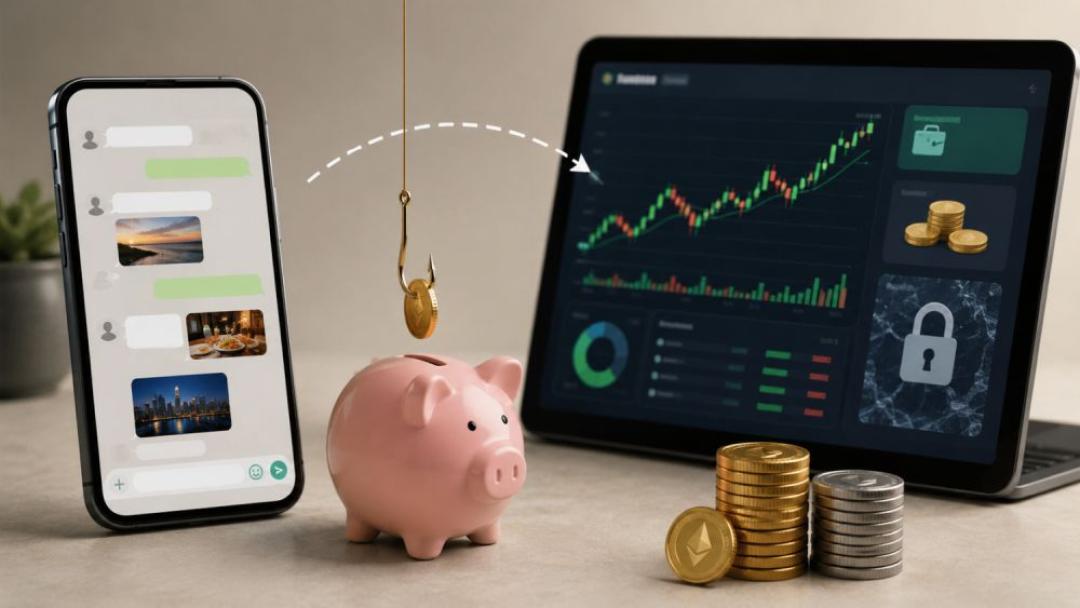
A pig butchering scam is a long-term confidence scam where a criminal “fattens” trust before taking money through a fake investment.
The term is harsh, and many victim-support groups now prefer language such as relationship investment fraud or romance baiting. The mechanics still matter. The scammer builds trust over weeks or months, introduces a fake platform, shows fake profits, and pushes the victim toward larger deposits.
Our report data from September 2025 and March 2026 included 137 reports that mentioned “pig” and 109 that mentioned “butcher” in broader report text. The data also included 34 reports categorized specifically as pig butchering scams. These figures do not capture the full scale of the problem, but they show that users are reporting this scam pattern directly.
The most common version now mixes friendship, romance, and investing. The relationship may begin as friendly chat, turn into daily emotional support, and end with a fake crypto platform.
A friendship scam red flag is any moment where emotional trust starts to guide a financial decision.
Watch for these signs:
The strongest warning sign is not always a direct money request. It is the moment a private online relationship starts making financial decisions for you.
You do not need to investigate like a police officer. You only need to slow the situation down and verify the parts that affect your money.
Start with the person. Ask for a live video call at a normal time. Search their photos with reverse image search. Check whether their story, job, city, and social profiles make sense across different platforms.
Then check the platform. Search the website on ScamAdviser before you create an account or deposit money. Look at the Trust Score, domain age, ownership details, user reviews, and warning signs linked to the site.
You should also report the incident to your national fraud authority. In the United States, file a report with the FBI's Internet Crime Complaint Center (IC3) at ic3.gov. In the United Kingdom, contact Action Fraud at actionfraud.police.uk. In Kenya and much more broadly across Africa, you can report to your national Communications Authority or cybercrime unit.
Most importantly, ask someone offline to review the situation. A real friend will not be offended if you verify an investment. A fake friend may treat your caution as betrayal.
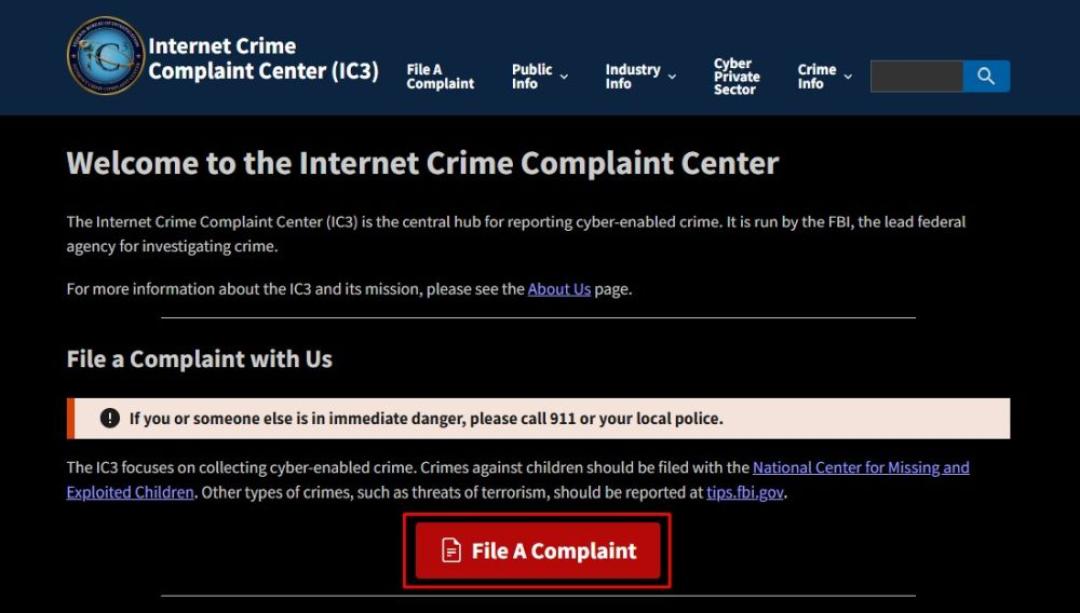
If you are in the United States, go to the ic3.gov page and click “File a Complaint,” as seen in the image (Image Credit: ScamAdviser)
ScamAdviser has been fighting online scams since 2012. Its database includes more than 30 million sites and more than 2.6 million scam websites. More than 4.5 million consumers use ScamAdviser each month, and the system analyzes more than 1 million new sites monthly.
For users, the website checker can give a fast risk signal before you trust a platform. For organizations, ScamAdviser also provides a Domain Trust Score API, scam and phishing data feeds, Domain Analyzer, Scam & Brand Alerts, and domain blocking support.
When you check a website linked by an online friend, pay attention to:
A low Trust Score does not replace a police report or bank review, but it can stop you before you send money to a risky site. Also, don’t forget to report a scam if you ever encounter one!
Are friendship scams the same as romance scams?
Friendship scams and romance scams often overlap, but friendship scams can stay platonic and use trust instead of romantic pressure.
Why do friendship scams often involve crypto?
Crypto payments are hard to reverse, and fake crypto platforms can show false profits that make the scam look real.
What should I do if an online friend sends me an investment link?
Do not deposit money, check the website independently, search official financial registers, and ask someone you trust offline to review it.
Can I get money back after a friendship scam?
Recovery depends on the payment method, speed, and available evidence, so contact your bank or payment provider as soon as possible.
Should I confront the person if I suspect a friendship scam?
Do not confront them before you save evidence and secure your accounts, because they may delete chats, block you, or pressure you harder.
How can I help a parent or friend who trusts an online stranger?
Ask calm questions, offer to verify the platform together, and focus on pausing payments before you challenge the relationship directly.
