
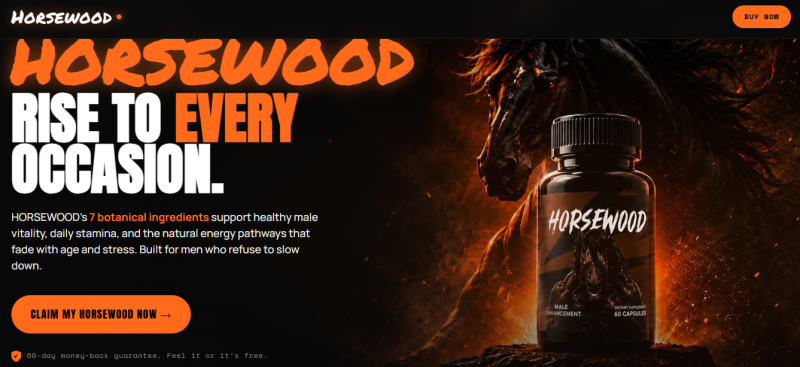
If you're wondering is this website legit before buying HorseWood, the short answer is no, not based on what ScamAdviser found. Horsewood.us carries a Trust Score of 0 and the label "Very Likely Unsafe." Here's the full breakdown, along with what HorseWood actually claims to do.
In a Nutshell
ScamAdviser puts Horsewood.us at a Trust Score of 0, landing in the "Very Likely Unsafe" bracket. The summary is blunt: after scanning the domain, ScamAdviser believes the website may be a scam and recommends exercising extreme caution.
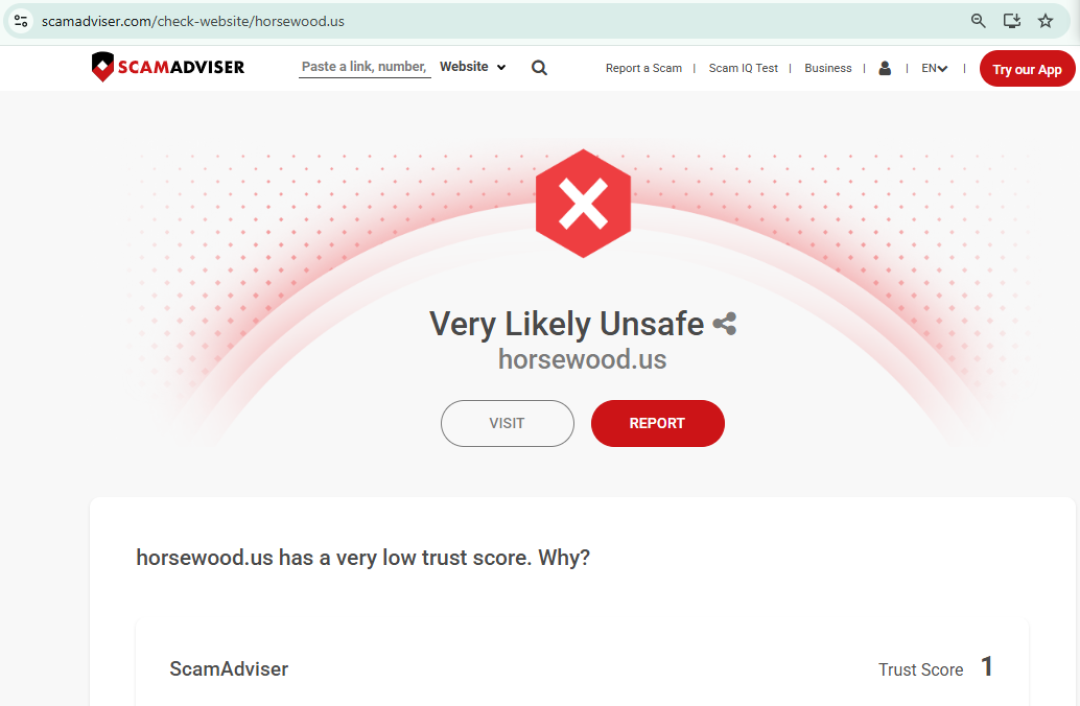
A few specifics drove that score down. ScamAdviser found that the contact email, the technical contact email, and the administrator's email are all free addresses rather than something tied to the HorseWood domain. That's unusual for a site selling a health product and presenting itself as a real company. The domain is also brand new, registered only three months ago, and gets very little traffic according to ScamAdviser's ranking data.
If you're trying to figure out how to tell if a site is legit before you buy anything HorseWood related, this is exactly the kind of detail a quick check turns up in seconds. Free email addresses tied to a health company's official contacts, a site barely out of its first quarter, and a rock-bottom trust score aren't proof of fraud on their own, but stacked together they paint a clear picture.
HorseWood's marketing says its seven botanical ingredients support healthy male vitality, daily stamina, and the natural energy pathways that fade with age and stress, built for men who refuse to slow down. The formula is described as Saw Palmetto, Wild Yam Root, Sarsaparilla, Nettle Leaf, Boron, Tongkat Ali, and Horny Goat Weed, positioned to support male sexual performance, stamina, virility, and natural energy.
Some of these ingredients show up in small, limited studies for related purposes, but there's no solid clinical evidence that this specific combination, at whatever doses HorseWood uses, delivers the results the ad copy promises.
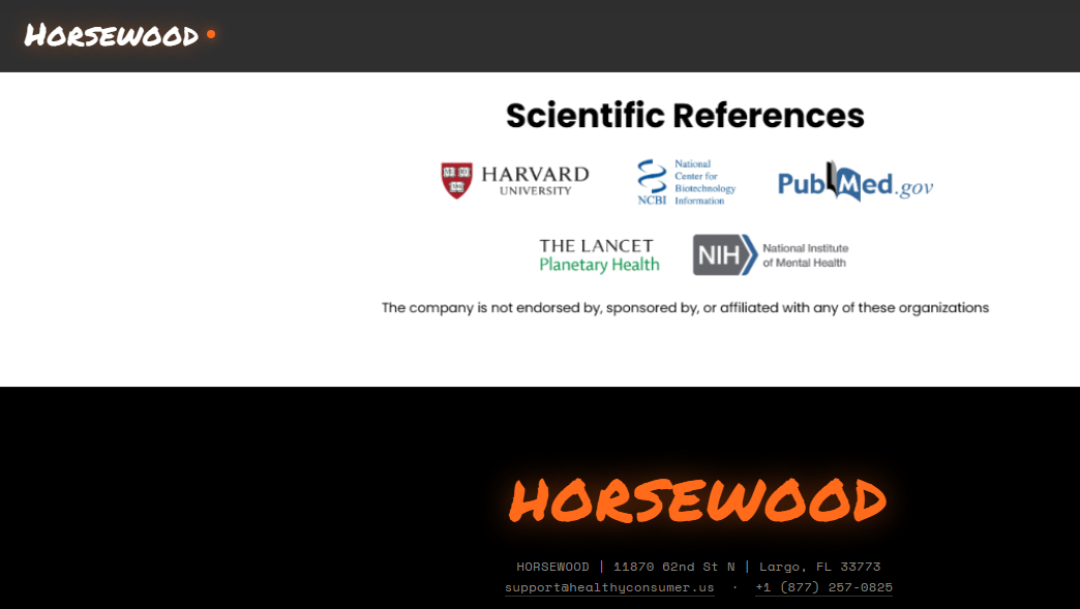
HorseWood's page references Harvard University, PubMed.gov, and other respected scientific sources. Neither Harvard nor PubMed endorses supplement brands. PubMed is simply a public database of medical research abstracts, anyone can find a study there that mentions an ingredient in passing. Dropping these names next to a product creates an impression of scientific backing that the brand hasn't actually earned. It borrows trust rather than building it.
HorseWood offers bigger discounts the more bottles you buy. Buying in bulk to save money isn't inherently shady, but paired with everything else here, it looks less like a loyalty reward and more like a way to get a bigger charge through before a customer has any real experience with the product.
Check the domain age. A site only a few months old, selling a health product with bold claims, deserves a slower look before you buy.
Run the domain through a website safety checker such as ScamAdviser and read the written breakdown, not just the number. It usually explains exactly what dragged the score down.
Look up the listed contact emails. If the official, technical, and administrative contacts are all free Gmail or Outlook addresses instead of something on the company's own domain, treat that as a real flag.
Search for the specific studies referenced on the page rather than trusting the name-drop. A mention of PubMed or a university name means nothing without a direct link to a study that actually tested the product.
FAQs
Is HorseWood a scam?
ScamAdviser rates Horsewood.us at 0 and labels it "Very Likely Unsafe." The site's contact emails are all free addresses unrelated to its own domain, and it's only three months old.
Does HorseWood actually improve male vitality?
There's no clinical evidence for this specific formula or blend. Some individual ingredients have limited research behind them for related uses, but that doesn't mean the combination works as advertised.
Why does HorseWood mention Harvard and PubMed?
Referencing respected institutions creates an impression of scientific backing. Neither Harvard nor PubMed endorses HorseWood, and PubMed is simply a public research database anyone can search.
Is Horsewood.us safe to enter payment details on?
Given the 0 Trust Score, the free contact emails, and the brand-new domain, this site does not currently look safe for entering card information.
How can I check if a site like this is safe before I order?
Run the domain through a website safety check tool, look at how old the domain is, and check whether the listed contact email matches the company's own website rather than a free email provider.
See more interesting articles:
This article has been written by a scam fighter volunteer. If you believe the article above contains inaccuracies or needs to include relevant information, please contact ScamAdviser.com using this form.
Adam Collins is a cybersecurity researcher at ScamAdviser who operates under a pseudonym for privacy and security. With over four years on the digital frontlines, he specialises in translating complex threats into actionable advice. His mission: exposing red flags so you can navigate the web with confidence.
