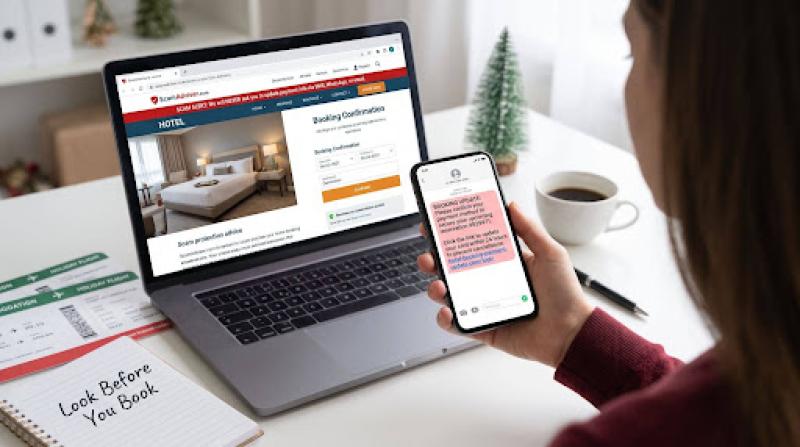
Scam alert: With Thanksgiving, Christmas, and New Year's trips being booked right now, the American Hotel and Lodging Association (AHLA) is warning travelers about fake hotel booking sites. These sites copy real hotel websites and lure people in with misleading prices, then add hidden fees or take payment for reservations that don't exist. At the same time, a newer scam is using real booking details to trick guests who booked through legitimate channels.
Why Now?
The weeks between Thanksgiving and New Year's are among the busiest travel periods of the year in the US. More bookings mean more targets, and travelers rushing to lock in a room before prices rise are less likely to check who they're really paying.
The AHLA, which represents hotel chains, independent hotels, and B&Bs, released new survey findings showing just how convincing these traps have become: nearly 50% of travelers mistook deceptive booking sites for official hotel websites.
How Fake Booking Sites Work
Scam booking sites usually follow the same playbook:
- Copycat websites. They copy the hotel's name, logo, and photos, often on a web address with a small misspelling or an extra word.
- Paid search ads. They buy ads so they appear above the real hotel in search results. The first result is not always the official site.
- Misleading prices. A room appears far cheaper than elsewhere, and the real total only shows up at the final step, padded with "service," "booking," or "resort" fees.
- Fake reservations. You get a confirmation email, but the hotel has no record of you when you arrive.
- Pressure tactics. Countdown timers and "only 1 room left" warnings push you to pay before you think.
The New Twist: Scams That Know Your Booking
Even if you booked the right way, you can still be targeted. Researchers at Gen, the company behind Norton, call it the Reservation Hijack Scam.
You get a message—by email, text, WhatsApp, or even inside a booking platform's own chat—that names your hotel, your check-in date, and sometimes your reservation number. It says there is a problem with your payment and asks you to re-enter your card details through a link, or the booking will be cancelled.
It isn't the hotel. Criminals often get these details by sending phishing emails to hotel staff, then reading reservations once they're inside the hotel's systems. Norton found at least 350 hotels, rentals, motels, and guesthouses in 50 countries caught up in these scams. In April 2026, Booking.com also warned that unauthorized parties had accessed some customers' booking information.
Because the message fits your trip perfectly, the usual warning signs—like bad spelling or a generic greeting—are missing. And because you approved the payment, your travel insurance or bank may be less willing to cover the loss.
Red Flags to Watch For
- A web address that is slightly off from the hotel's real one, with typos or extra words
- A price much lower than on the hotel's own site or other major platforms
- Fees that appear only at checkout
- Requests to pay by bank transfer, gift card, crypto, or a payment app
- Messages saying your booking will be cancelled unless you pay or confirm card details through a link
- A phone number or link given in a message, rather than one you looked up yourself
How to Book Safely
The AHLA's "Look Before You Book" campaign ([ahla.com/booksafe](https://ahla.com/booksafe)), plus a few extra steps:
- Book direct. Use the hotel's official website, app, or reservation line, or a booking platform you already know and trust.
- Don't trust the top search result. It may be an ad. Check the web address carefully before entering any details.
- Check the website first. Run any unfamiliar booking site through ScamAdviser before you pay.
- Confirm with the hotel. Call the number on the hotel's official website to check your reservation exists, and save your confirmation.
- Read the fine print. Look at cancellation, change, and refund rules before paying.
- Pay by credit card. It gives you stronger options to dispute a charge than a debit card or bank transfer. A virtual card number adds another layer.
- Never pay through a link in a message. Even if it quotes your booking number, log in through the official app or website yourself to check for any real payment request.
- Skip public QR codes. Fake codes stuck over real ones at airports and hotels can lead to fake payment pages.
What to Do If You've Been Scammed
- Contact your card issuer. Call your bank or card provider right away to stop the card and dispute the charge.
- Verify your stay. Contact the hotel directly using an official number to check whether you have a real reservation.
Lock down your logins. Change any passwords you entered on the fake site (plus your email password if reused), and turn on two-factor authentication.
- Report the fraud. File a report with the FTC at ReportFraud.ftc.gov, the FBI's IC3 at ic3.gov, and the AHLA's booking fraud portal. If you booked through a travel platform, report it to them too.
Adam Collins is a cybersecurity researcher at ScamAdviser who operates under a pseudonym for privacy and security. With over four years on the digital frontlines, he specialises in translating complex threats into actionable advice. His mission: exposing red flags so you can navigate the web with confidence.
See Full Bio