
In a Nutshell
In 2024, consumers reported losing over $212 million to gift card and prepaid card scams, according to the Federal Trade Commission (FTC). While this number is staggering, experts estimate it is just the "tip of the iceberg," as only about 4.8% of victims report these crimes.
Today, you might see this play out as an AI-powered "tech support agent" from a major brand or a "grandchild" whose voice has been cloned to sound exactly like yours calling from a foreign jail. Whether the caller claims to be from the IRS or a local utility company, the trap is set the moment they ask for a plastic card instead of a bank transfer. You are being targeted because once that card number is shared, the money is gone forever.
Gift cards function like digital cash—they are nearly impossible to trace and lack the "chargeback" protections found with credit cards. You should treat every request for a gift card payment as a definitive red flag. Once you read the numbers over the phone or text a photo of the back, the scammer drains the balance in seconds.
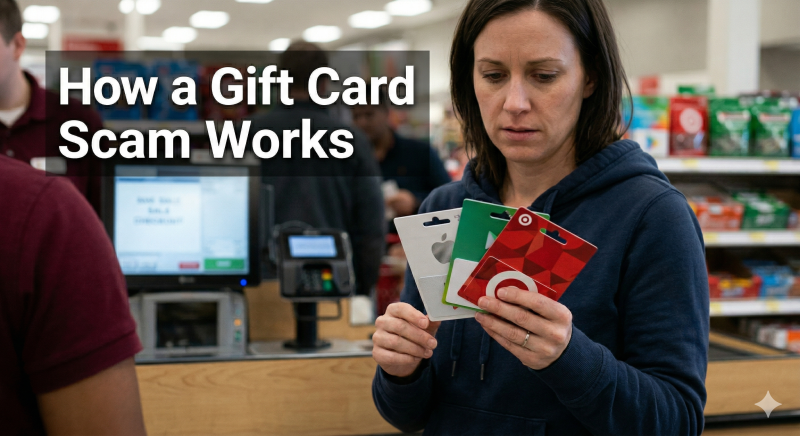
The primary mechanic involves "social engineering"—a psychological manipulation technique. In 2026, scammers have become more aggressive, telling victims their electricity will be "cut off in minutes" or that there is an "active warrant" for their arrest. The scammer insists you stay on the line while you drive to a store like Walmart or Target. This constant contact prevents you from talking to friends or family who might point out the fraud.
Common gift card scams aren't always digital. In a trend known as "card draining," criminals record the numbers and CVV codes from unsold cards on store racks and wait for a customer to activate them.
Fraudsters frequently use "spoofing" to make it look like a local police department or a legitimate business is calling. You should hang up immediately and call the official number of the organization. Always use a number from an official bill or a verified government website rather than the one the caller provides or one that appears on your screen.
A common tactic on secondary markets like Facebook Marketplace involves a "buyer" asking you to purchase a gift card and send a photo to "verify" you have funds. Never share a photo of a card. Advanced software can now reconstruct a full claim code from just the barcode or a few visible digits.
Retailers are more aware of these tactics than ever. If a cashier asks why you are buying a high-value card, be honest; they are trained to spot victims under duress. You should also enable two-factor authentication (2FA) on your retail accounts to prevent scammers from using stolen credentials to buy digital cards with your saved payment methods.
Being skeptical does not make you paranoid; it makes you a difficult target. If you have been targeted, report the incident immediately:
Adam Collins is a cybersecurity researcher at ScamAdviser who operates under a pseudonym for privacy and security. With over four years on the digital frontlines and 1,500+ days spent deconstructing thousands of fraud schemes, he specialises in translating complex threats into actionable advice. His mission: exposing red flags so you can navigate the web with confidence.
