
In a Nutshell
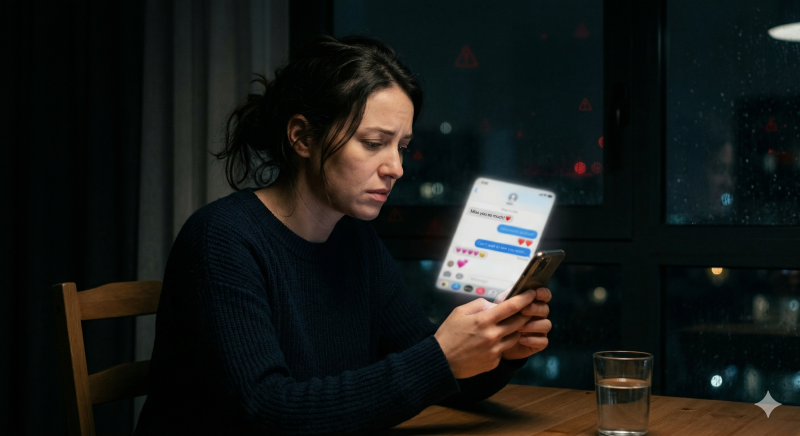
In recent reports, the FTC found that consumers lost over $1.16 billion to romance scams annually, with median individual losses reaching record highs. From the "lonely widower" on social media to the "high-flying crypto trader" on dating apps, these criminals specialize in manufacturing artificial intimacy to drain your bank account. You are reading this because a new online connection feels a little too perfect, or they have just asked for a "small favor" that involves your wallet.
Scammers often use synthetic or stolen faces; they utilize AI-generated images or high-quality photos from influencers and professional models to create an aspirational persona. You should look for profiles that lack candid, "everyday" photos or those that feature inconsistent details between the bio and the imagery. A profile showing a "struggling student" who only wears designer watches is a clear sign of a deceptive setup.
The grooming cycle is a psychological process where the scammer systematically builds your trust before the "ask" for money occurs. It begins with "love bombing"—a period of intense, constant communication where they mirror your interests and profess deep love far too quickly. They want to create an emotional dependency that makes you feel "guilty" if you later question their intentions.
Authentic people are generally happy to prove who they are, whereas scammers rely on "technical difficulties" or AI-driven excuses to remain anonymous. You should insist on a live video call early in the relationship and ask them to perform a specific, random action (like holding up three fingers) to ensure you aren't seeing a deepfake. If they claim their "camera is broken" or their "internet is restricted" by the military, you are almost certainly talking to a fraudster.
Criminals use specific personas like "military officers," "international doctors," or "offshore engineers" because these jobs provide a built-in excuse for why they cannot meet you. This "geographic distance"—the physical gap between you and the person—is a calculated tool used to maintain the illusion without physical contact. If their story involves being stuck in a remote location with no access to their own funds, it is a script, not a reality.
The "crisis" is the moment the scammer converts your emotional investment into cash. They will share "sob stories" about a sick relative, a "frozen bank account," or a sudden legal problem that requires immediate payment. They often create a sense of urgency, insisting you act "only today" to prevent a catastrophe that doesn't actually exist.
Scammers demand payment through methods that are "irreversible"—meaning once the money is sent, it cannot be recovered by your bank. You should be immediately suspicious if anyone asks for "gift cards," "wire transfers," or "crypto assets" like Bitcoin. No legitimate romantic partner or professional organization will ever ask you to pay a medical bill or travel fee using a Steam or Amazon gift card.
This technical tool cross-references an image against billions of other files on the internet to find its original source. You can use "Google Lens" or "TinEye" by uploading the person's profile picture to see if it appears on other websites under different names. If the person you are talking to as "Mark from Chicago" also appears on a stock photo site as "Smiling Businessman," the profile is a lie.
If you begin to ask logical questions about their story, a scammer will often use "gaslighting"—a form of manipulation intended to make you doubt your own sanity or memory. They may get "angry" or "hurt" that you don't trust them, using your own empathy against you to shut down your investigation. A real person who cares for you will understand your need for safety and will not pressure you into silence.
Frequently Asked Questions
What is the most common lie romance scammers tell?
Scammers most frequently claim they need money for a medical emergency or to pay for travel to finally meet you in person.
Is it safe to send a small amount of money first?
Sending even a small amount of money signals to the scammer that you are a "paying lead," which often leads to more aggressive and expensive demands.
Where should I report a suspected romance scam?
You should immediately report the profile to the dating app and file an official report with the FBI’s Internet Crime Complaint Center at ic3.gov.
Skepticism in the world of online dating is not paranoia; it is a necessary layer of digital self-defense that protects your life savings. Your money is never safer than when it stays in your own account, regardless of the "love" promised on the other side of the screen.
Adam Collins is a cybersecurity researcher at ScamAdviser who operates under a pseudonym for privacy and security. With over four years on the digital frontlines and 1,500+ days spent deconstructing thousands of fraud schemes, he specialises in translating complex threats into actionable advice. His mission: exposing red flags so you can navigate the web with confidence.
