
In a Nutshell
The financial cost of digital deception is reaching staggering levels. According to research from SurfShark, $1.1 billion was lost globally to deepfake scams in 2025 alone. While technology has made it easier for fraudsters to manipulate footage, these videos are not perfect. High-profile figures like Elon Musk, MrBeast, and Martin Lewis are frequently impersonated to sell fake crypto platforms or "guaranteed" investment schemes. If you have stumbled across a video of a famous billionaire or a trusted financial expert promising you a shortcut to wealth, you are likely looking at a deepfake celebrity investment video.
Scammers use these familiar faces because they capitalize on established trust and the "authority" of a public figure. As Euronews reported following a recent wave of Martin Lewis deepfakes, even the most recognizable voices can be cloned to sound eerily realistic. However, you do not need to be a software engineer to protect your savings. By applying a few simple checks, you can spot the seams where the AI-generated imagery begins to pull apart.
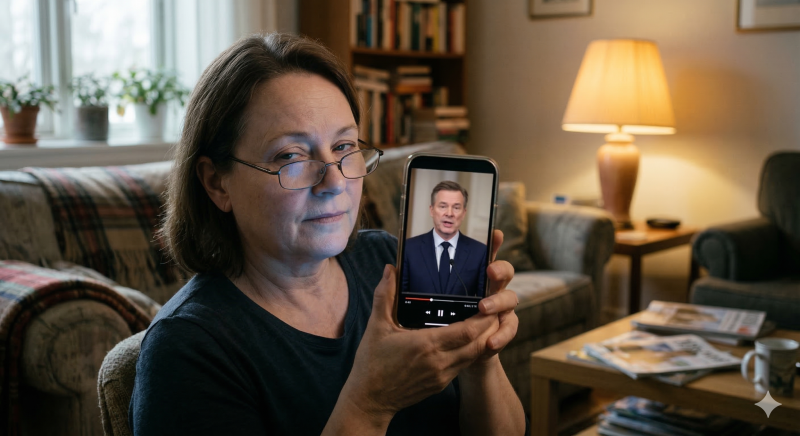
Creating a realistic face is easy for AI, but simulating the complex movements of speech is much harder. When watching a suspicious video, ignore the eyes and focus entirely on the mouth, tongue, and jawline. AI often struggles to render individual teeth correctly; they may appear as a solid white block or seem to shift and "melt" as the person speaks. If the celebrity’s chin or jawline becomes blurry or flickers whenever they turn their head, it is a clear sign of a fake investment video. To see these glitches more clearly, pause the video and use the progress bar to scrub through the frames slowly.
Deepfake audio is frequently synthesized separately from the video, leading to a disconnect between what you see and what you hear. Listen closely to the "cadence"—the rhythm and flow of the speech. A celebrity crypto scam video often features audio that sounds slightly "clipped" at the end of sentences or lacks the natural pauses and breaths of a real human. If the voice sounds like a high-quality GPS navigation system—clear but lacking emotional nuance—or if the lip movements lag even half a second behind the sound, you are dealing with a synthetic impersonation.
Legitimate investment opportunities are never launched via autoplay social media ads or "breaking news" style videos on TikTok. If a video claims Elon Musk is giving away Bitcoin or that a politician has endorsed a new trading bot, navigate away from the ad and go directly to the celebrity’s verified social media profiles (look for the checkmark) or their official website. You can also perform a reverse-video search or a quick Google search for the celebrity's name alongside the word "scam." If the video is real, it will be reported by major financial news outlets like Bloomberg or Reuters, not just a random account with a handful of followers.
Scammers rely on an emotional cocktail of FOMO (Fear Of Missing Out) and urgency to bypass your critical thinking. Real, regulated financial products do not use countdown timers or claim that there are "only 50 spots left" for investors. If the video uses phrases like "only today," "limited access," or "withdraw your profits in 24 hours," these are scam mechanics, not investment mechanics. A deepfake celebrity investment video will always try to rush you into making a decision before you have the chance to perform the other three tests mentioned above.
Your skepticism is your best defense against the evolving world of AI-driven fraud. If a video feels too good to be true, it almost certainly is. If you encounter a video you believe is a deepfake, report it immediately to the platform where you saw it to help prevent others from being targeted. If you have already interacted with a suspicious scheme, contact your bank and your national financial regulator or consumer protection body, such as Action Fraud in the UK or the FTC in the US.
Remember: no legitimate billionaire is using social media ads to help you get rich overnight.
Adam Collins is a cybersecurity researcher at ScamAdviser who operates under a pseudonym for privacy and security. With over four years on the digital frontlines and 1,500+ days spent deconstructing thousands of fraud schemes, he specializes in translating complex threats into actionable advice. Adam’s mission is simple: exposing red flags so you can navigate the web with confidence.
