
Crypto transactions can't be reversed, making verification your strongest defense against fraud. Before sending any cryptocurrency, take a few minutes to confirm both the wallet address and the platform are legitimate.
In a Nutshell
Before sending a large amount, test with a small transaction first, never share your seed phrase or private keys, and ignore anyone asking you to send crypto to receive more back.
Cryptocurrency fraud is the fastest-growing and most financially devastating category of online scams. According to Chainalysis's 2026 Crypto Crime Report, an estimated $17 billion was stolen through crypto scams and fraud in 2025. The average scam payment grew 253% year-over-year, reaching $2,764 per victim. AI-enabled scams were 4.5 times more profitable than traditional ones.
The specific danger with crypto is irreversibility. Once funds leave your wallet to a fraudulent address, there is no chargeback, no dispute process, and no bank to call. Verification before sending is the only protection that matters.
Critical insight: Impersonation scams grew 1,400% year-over-year in 2025, with fraudsters posing as legitimate exchanges, wallet providers, and government agencies. The wallet address you were given by someone claiming to be "Coinbase Support" is almost certainly not Coinbase.
"Verifying a crypto wallet" means two different things depending on context:
Both require different checks. Most victims conflate them and verify neither.
Before sending any cryptocurrency to an address, run it through a blockchain intelligence check. Several free tools allow you to cross-reference a wallet address against reported scam databases:
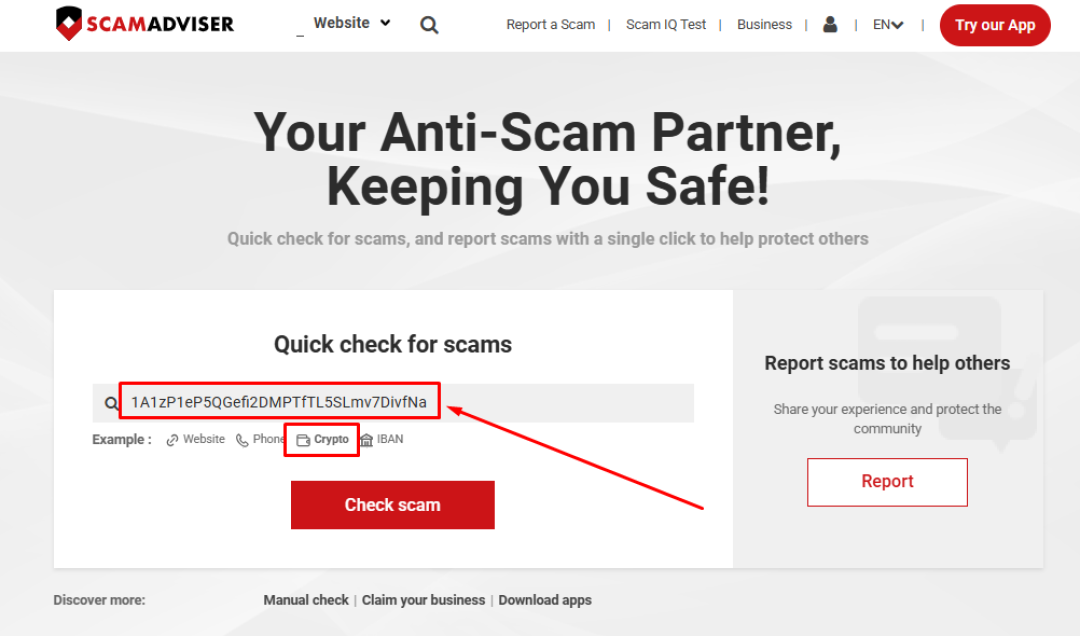
What a flagged address means: If a wallet address has been linked to prior scam activity, do not send funds regardless of how convincing the request sounds. Scammers reuse infrastructure.
What a clean result means: A wallet address with no flags is not automatically safe. New scam wallets are created constantly. A clean result reduces risk but does not eliminate it.
Fake exchange websites and wallet apps are among the most common crypto fraud vectors. They are built to pass visual inspection — copied logos, realistic-looking trading dashboards, and fabricated account balances.
Follow this verification sequence for any platform before depositing funds:
Knowing the playbook fraudsters use is as important as knowing the verification steps.
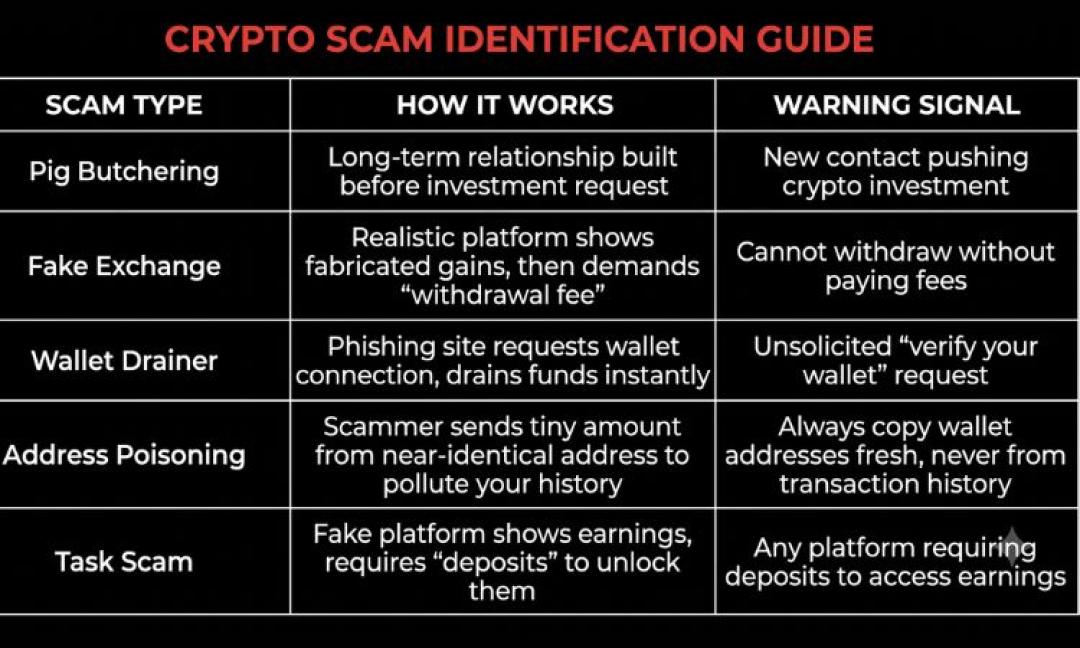
According to TRM Labs, investment-related schemes accounted for 62% of 2025 fraud inflows, with pig butchering and pyramid/Ponzi schemes as the dominant subtypes. Task/work-from-home scams emerged as a fast-growing secondary category.
For any transfer above a few hundred dollars, treat the first transaction as a test:
One pattern that should always stop you cold: Any platform or person that asks you to send crypto in order to receive more crypto back is running a fraud scheme. There is no legitimate financial instrument that works this way.
Verification is not only about checking others. Keeping your own wallet secure prevents it from being used as a fraud vector or emptied by attackers.
See more interesting articles from ScamAdviser:
Adam Collins is a cybersecurity researcher at ScamAdviser who operates under a pseudonym for privacy and security. With over four years on the digital frontlines, he specialises in translating complex threats into actionable advice. His mission: exposing red flags so you can navigate the web with confidence.
