
In a Nutshell
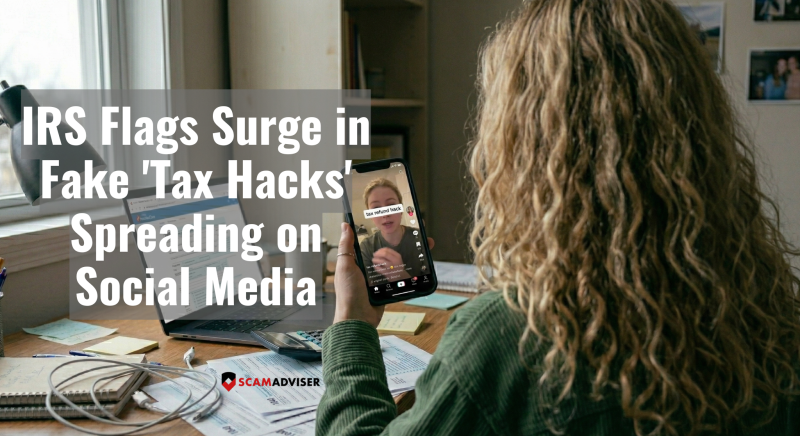
The IRS officially placed misleading "tax hacks" and viral social media content at #4 on its annual Dirty Dozen list for 2026. You may have seen these videos on TikTok, Instagram, and YouTube where creators claim to reveal "hidden" tricks to inflate your refund. As the IRS Warns of Viral 'Tax Hacks' Scam, following this unverified advice can lead you directly into an IRS audit or potential criminal prosecution.
This warning arrived on March 5, 2026, to coincide with National Slam the Scam Day. The alert is a coordinated effort between the IRS, state tax agencies, and the national tax industry under the Security Summit initiative. Together with the Coalition Against Scam and Scheme Threats (CASST), these authorities are tracking a surge in fraudulent returns triggered by influencer-led misinformation.
You are the one legally responsible for everything on your tax return, regardless of who suggested the "hack." While a video might have millions of views, the IRS uses advanced automated systems to flag the specific inconsistencies these videos encourage. If you fall for these schemes, you risk losing your entire refund, paying heavy civil penalties, and facing permanent damage to your credit.
Scammers and misinformed creators use a specific psychological "hook" to get your attention. They frame their advice as insider knowledge that "the IRS doesn't want you to know" or claims that professional tax preparers are "hiding" these tricks from you. You should recognize this language as a red flag designed to build false trust and bypass your skepticism.
You must remember that legitimate tax law is public and documented in detail on official government websites. If a creator urges you to file immediately without verifying their claims against official guidance, they are likely leading you into a trap. These accounts often belong to unverified users rather than licensed tax professionals—CPAs or Enrolled Agents—who carry legal liability for their advice.
The IRS Warns of Viral 'Tax Hacks' Scam often involves "guaranteed" refund amounts that seem too good to be true. Real tax professionals cannot guarantee a specific refund amount until they have thoroughly reviewed your actual financial documents. Any content promising a massive, fixed "boost" to your taxes is almost certainly fraudulent.
The most common tactic currently circulating involves fabricating household employee wages to claim non-existent deductions. Viral videos suggest that you can list your children—or even your family pets—as employees of your "home business" to lower your tax liability. You are being told that these are "loopholes," but the IRS classifies this as intentional tax evasion.
To claim a household employee, that person must perform actual, documented work at a fair market wage. Listing a pet as a worker is a blatant fraud that triggers immediate red flags in IRS processing centers. When you submit these claims, you are providing the government with a written confession of filing a false return.
You might see creators showing "proof" of their own large refunds as evidence that the hack works. In reality, the IRS may issue a refund initially but follow up months later with an audit once their systems verify the data. Receiving the money now does not mean you are in the clear; it often means the IRS will come back later to collect the money plus interest and penalties.
Filing a fraudulent return carries consequences that far outweigh the temporary benefit of a larger refund. The IRS and CASST emphasize that taxpayers who knowingly submit false information face a 75% civil fraud penalty on the underpaid tax. You could also face criminal charges, which may lead to a prison sentence and a permanent criminal record.
The IRS Warns of Viral 'Tax Hacks' Scam is particularly dangerous because it targets younger filers who may not understand the long-term risks. An audit can stay on your record for years, making it more difficult to secure loans, mortgages, or professional licenses in the future. The agency has significantly increased its data-sharing with state agencies to catch these discrepancies across all levels of government.
If your return is flagged for fraud, your entire refund will be frozen while the IRS investigates. This delay can last for months or even years, leaving you without the funds you may have been counting on for essential expenses. You are also liable for any "frivolous return" penalties, which currently stand at $5,000 per filing
If you have already filed a return based on a social media "hack," you must act quickly to mitigate the damage. You should file an amended return using Form 1040-X—a document used to correct errors on a previously filed tax return. Filing this form before the IRS contacts you can sometimes help demonstrate that you did not intend to commit willful fraud.
You can report suspicious tax-related social media content directly to the IRS by emailing phishing@irs.gov. If you shared your Social Security number or other personal data with an unverified "expert" online, contact the IRS Identity Protection Specialized Unit immediately. They can help you place a fraud alert on your account to prevent further unauthorized filings in your name.
Always consult a licensed tax professional—such as a CPA or an attorney—if you are unsure about a specific credit or deduction. Use only official IRS.gov resources or trusted software providers to prepare your taxes. Protecting your financial health requires ignoring the "viral" noise and sticking to the established rules of the tax code.
Your skepticism is your best defense against influencers who trade your financial security for likes and views. If a tax tip sounds like a secret loophole, it is almost certainly a one-way ticket to an IRS audit.
Adam Collins is a cybersecurity researcher at ScamAdviser who operates under a pseudonym for privacy and security. With over four years on the digital frontlines and 1,500+ days spent deconstructing thousands of fraud schemes, he specialises in translating complex threats into actionable advice. His mission: exposing red flags so you can navigate the web with confidence.
