

Someone shared a link with you, or you saw a comment pointing to 901xy.com with a promise of a viral TikTok, Instagram, Snapchat or Facebook video you couldn't find anywhere else. Now you're on the site, or thinking about clicking through, and you want to know one thing: is it safe to actually watch anything here.
Short answer: no. Here's what's really going on.
The homepage presents itself as a hub for viral clips pulled from different social platforms. The layout looks like a video site at first glance, with thumbnails and titles that sound exactly like whatever clip made the rounds that week. But there's no working search, no real video library behind it, and no way to confirm any of the content exists before you click something.
This is the part that matters. Tap a thumbnail or a play button and you don't get a video. You get sent to another page, and often a third one after that. Depending on your phone or browser, that chain can end at a fake antivirus warning, a "you've won a prize" popup, a prompt to install an app, or an ad network with nothing to do with the video you were promised.
This is called a redirect chain, and the site makes money from it. Every visitor who gets bounced through those pages generates ad revenue for whoever runs 901xy.com, whether or not that visitor ever sees a video. The destination changes often, so what you land on today might not match what someone else sees tomorrow clicking the same link.
There's nothing to watch. The video promise is the hook, not the product. What you're actually interacting with is an ad funnel dressed up as a streaming page. Nothing on the site delivers what the thumbnail told you it would.
The risk isn't limited to wasted time either. Some of the pages in these redirect chains push fake security alerts designed to scare you into calling a number or downloading software, and some push app installs that have nothing to do with video at all. None of that is something you want to interact with on your phone or laptop.
ScamAdviser's own check on the domain recommends caution.
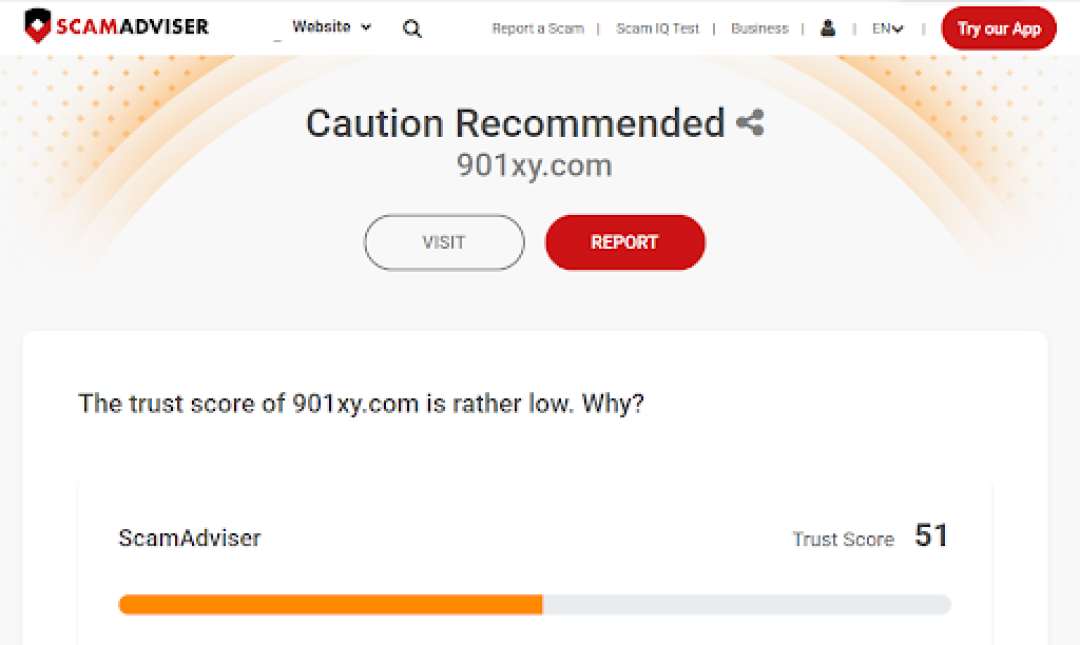
That lines up with the behavior described above. A trust rating like this doesn't necessarily mean the domain itself is running malware, but it reflects a site whose business model depends on redirecting visitors rather than delivering content.
If the name sounds like a random string of letters and numbers before ".com," that's not a coincidence. 901xy.com follows a template used by a long list of near-identical sites, including ones like Fynu, that get flagged and blocked and simply reappear under a new domain name. If you close this one and see the same layout somewhere else next month with a different name, that's the same operation, not a new one.
Download the ScamAdviser app today!

This article has been written by a scam fighter volunteer. If you believe the article above contains inaccuracies or needs to include relevant information, please contact ScamAdviser.com using this form.
Adam Collins is a cybersecurity researcher at ScamAdviser who operates under a pseudonym for privacy and security. With over four years on the digital frontlines, he specialises in translating complex threats into actionable advice. His mission: exposing red flags so you can navigate the web with confidence.
