

Not all porn websites are as harmless as they seem.
PornTrex.com attracts millions of visitors, but could its ads, pop-ups, and redirects expose you to scams, malware, or privacy risks? We investigated what happens beyond the videos.
In a Nutshell
PornTrex.com describes itself as "one of the best 4K video platforms in the industry." With a large content library and no registration requirements for casual browsing, it's easy to see why the site attracts visitors.
At first glance, the experience appears straightforward. Users can browse content without creating an account or providing personal information. However, as with many free content platforms, the real concerns often emerge through the advertising ecosystem surrounding the site rather than the content itself.
The key question is not whether the videos load, but whether users can browse without being exposed to misleading advertisements, redirects, or potentially unsafe third-party websites.
One factor working in PornTrex.com's favor is its longevity.
The domain was registered on March 5, 2015, according to Whois records on ScamAdviser, which means it has been online for more than a decade. Scam websites often disappear within months or frequently change domains to avoid detection, so a long operating history can indicate a degree of stability.
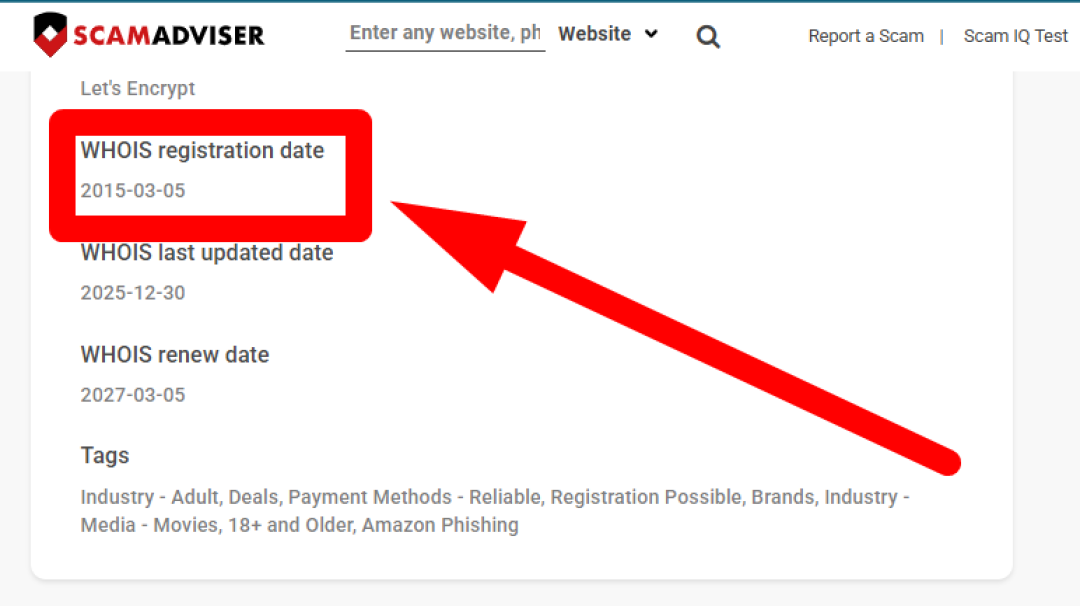
That said, age alone does not guarantee safety. Many older websites still expose users to aggressive advertising, questionable partners, or poor privacy practices. Domain history should therefore be viewed as one factor among many rather than a guarantee of trustworthiness.
One positive aspect is that visitors generally do not need to provide personal details simply to browse content.
Unlike some platforms that immediately request email addresses, payment information, or account creation, PornTrex allows users to access much of its content without registration.
However, users should remember that third-party advertisers may operate under different privacy standards. Clicking advertisements can result in data collection, tracking technologies, or requests for personal information that are not directly controlled by PornTrex itself.
As always, caution is advised when interacting with external websites.
Based on available information, simply visiting PornTrex does not typically result in malware infections.
The larger concern comes from advertisements and redirects. Banner ads, pop-ups, and sponsored links may send users to third-party websites that have different security standards and intentions.
While many advertisements are legitimate, some may use misleading tactics, such as fake software updates, exaggerated security warnings, or deceptive download buttons designed to encourage clicks.
In most cases, the greatest risk comes from leaving the platform and interacting with external websites rather than from the platform itself.
Free websites often depend on advertising revenue, and PornTrex is no exception.
Visitors may encounter banners, pop-ups, and promotional links that redirect them elsewhere. While these redirects are not necessarily malicious, they can make it difficult to distinguish between legitimate navigation and sponsored content.
Users who click quickly without checking where a link leads may end up on unfamiliar websites with weaker security protections.
This creates a browsing environment where caution becomes especially important.
PornTrex appears to be a long-running platform that does not require users to create accounts or submit personal information for basic browsing.
However, the site's heavy reliance on advertising introduces risks that users should not ignore. Redirects, pop-ups, and third-party promotions can expose visitors to misleading websites, aggressive marketing tactics, or unwanted software offers.
For users who choose to visit the platform, avoiding unnecessary clicks and exercising caution around advertisements can significantly reduce potential risks.
Pro Tip: This review is intended for informational and online safety purposes only. Laws regarding adult content vary by country and region. Some jurisdictions restrict or prohibit access to such material, and users are responsible for understanding and complying with local regulations. Always follow applicable laws and use the internet responsibly.
See so interesting articles from ScamAdviser:
This article has been written by a scam fighter volunteer. If you believe the article above contains inaccuracies or needs to include relevant information, please contact ScamAdviser.com using this form.
Adam Collins is a cybersecurity researcher at ScamAdviser who operates under a pseudonym for privacy and security. With over four years on the digital frontlines, he specialises in translating complex threats into actionable advice. His mission: exposing red flags so you can navigate the web with confidence.
