
In a Nutshell
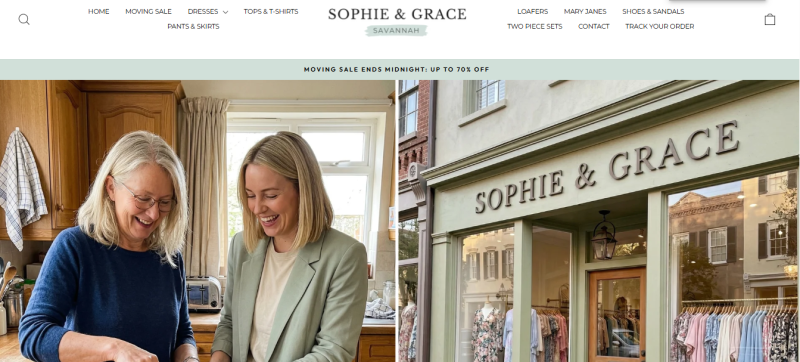
Scroll through social media long enough and you’ll likely see it—a heartfelt post from a “family-owned boutique” announcing a closing sale. Everything must go, huge discounts, emotional backstory. Sophia & Grace Savannah follows this exact script. But when you look beyond the story, the facts tell a very different story.
The domain Sophieandgrace-savannah.com was registered on March 24, 2026. That makes the store only a few weeks old, which directly contradicts its claims of being a long-running boutique now shutting down. This mismatch is the first major red flag.
The idea of a store shutting down creates urgency. It makes you feel like you’re getting a rare deal while supporting a small business in its final days. But this “we are closing” tactic is widely used by short-lived online stores.
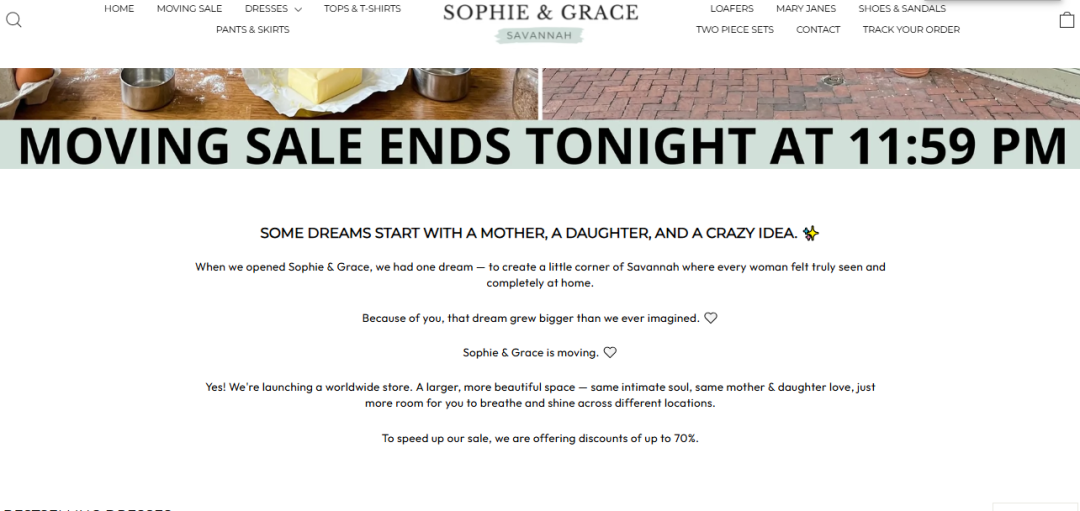
When there’s no verifiable business history and the domain is brand new, the “closing sale” becomes less of a real event and more of a pressure tactic. These sites rely on emotional storytelling to get you to act quickly—before you have time to research.
The pricing strategy raises questions as well. Items are often listed with steep discounts based on “original prices” that can’t be verified anywhere else.
A closer look at product images shows that many appear on mass-market platforms like AliExpress or Temu. This strongly suggests a dropshipping setup, where products are sourced cheaply and resold at a markup.
Customers who buy from similar stores often report receiving items that look very different from the photos—lower quality materials, poor fit, or entirely different products.
Transparency is where legitimate businesses stand out—and where this one falls short. There’s no clear information about a physical store, no verifiable business registration, and limited ways to contact support.
In many cases, communication is restricted to a generic email address, with slow or non-existent responses. This lack of accountability makes it difficult to resolve issues if something goes wrong.
The return policy can also be revealing. Some customers find that returns must be shipped internationally at their own cost, often to overseas warehouses. In practice, this makes returning items too expensive to bother with.
Dropshipping itself isn’t a scam—it’s a common retail model. The issue arises when it’s paired with misleading branding.
Sophia & Grace Savannah presents itself as a curated, family-owned boutique. In reality, it likely sources generic products from third-party suppliers and ships them directly to customers. The brand story is used to justify higher prices and build trust that hasn’t been earned.
You’re not just buying a product—you’re buying into a story that may not exist.
If you’re considering a purchase, take a moment to verify what you’re seeing. Reverse image searching product photos can quickly reveal whether the same items are sold elsewhere for much less.
If you’ve already placed an order and something feels off—whether it’s delayed shipping or poor product quality—contact your payment provider as soon as possible to explore a chargeback.
Overall, we have doubts about Sophieandgrace-savannah.com. Here is why;
Sophia & Grace Savannah shows many of the classic signs of a short-term online store built around urgency and storytelling rather than genuine retail value. When the story doesn’t match the data, it’s usually worth trusting the data.
This article has been written by a scam fighter volunteer. If you believe the article above contains inaccuracies or needs to include relevant information, please contact ScamAdviser.com using this form.
Adam Collins is a cybersecurity researcher at ScamAdviser who operates under a pseudonym for privacy and security. With over four years on the digital frontlines and 1,500+ days spent deconstructing thousands of fraud schemes, he specialises in translating complex threats into actionable advice. His mission: exposing red flags so you can navigate the web with confidence.
