
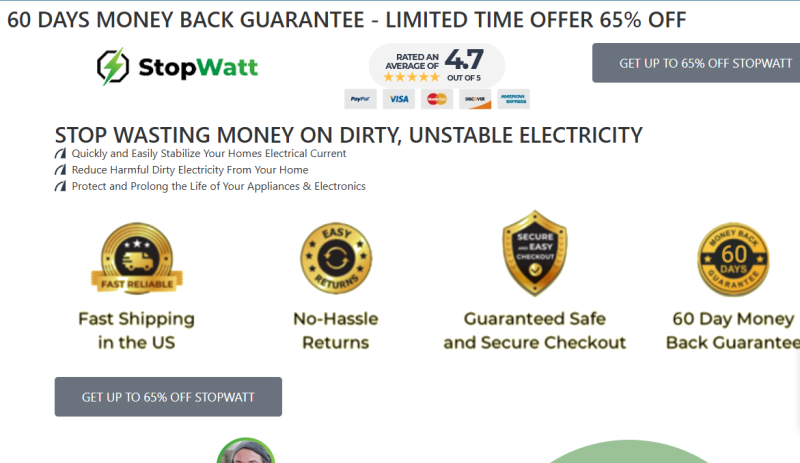
StopWatt is sold as a small plug-in device that eliminates electricity wastage and lowers your power bill just by sitting in an outlet. That's a big promise for a device the size of a phone charger, and it's worth checking before you pay for one.
In a Nutshell
There's little evidence to show it works. The device is marketed using terms like power factor correction and dirty electricity filtering, language that sounds technical but doesn't hold up well when applied to a typical home. Power factor correction matters in industrial settings running large motors, not in a house with a fridge and a few lamps. Independent reviewers who've opened these devices generally find a small circuit board, a capacitor, and an LED, not the kind of hardware that would meaningfully change a utility bill.
This isn't a new device under a new name. Over the years, the same plug-in gadget has been sold as Miracle Watt, Power Saver, and several other names, all using nearly identical packaging and sales copy. Many of these listings claim the product was invented by Elon Musk. He didn't invent it, and he has no connection to any of these listings. When a product needs to borrow a famous name to sound credible, that's worth pausing on.
A popular reviewer based in Maine, USA, reported receiving angry emails from customers who believed he was promoting StopWatt. He wasn't. His name and image had been used without permission to make the marketing look like a trusted recommendation. This kind of impersonation shows up often in this product category and should not be mistaken for an endorsement.
StopWatt sits at 1.4 out of 5 stars on Trustpilot. The complaints follow a consistent pattern.
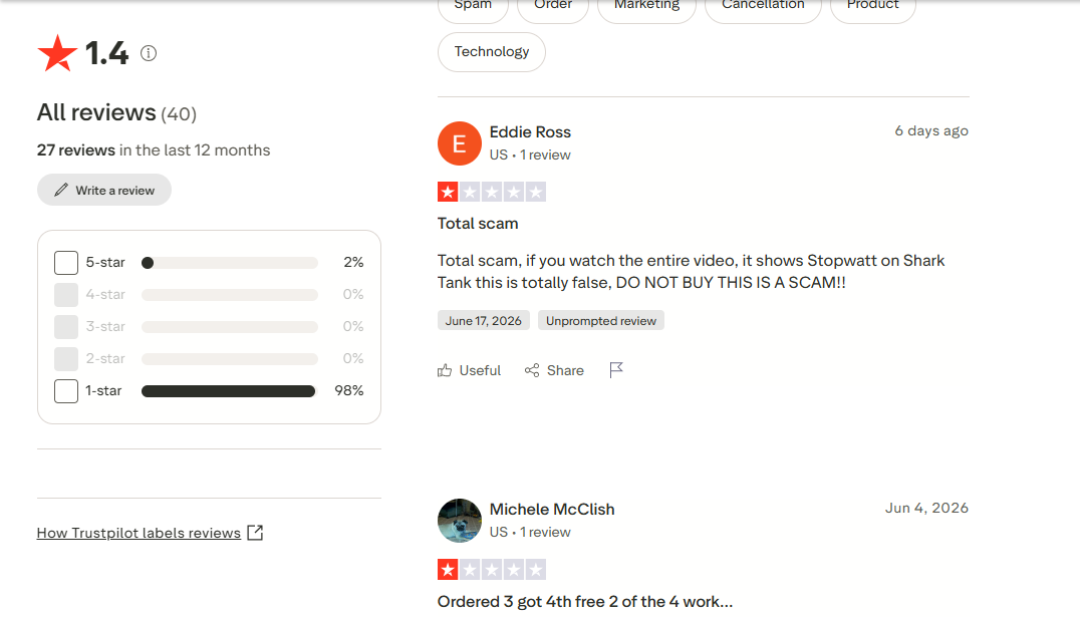
One customer said the ad shows StopWatt being featured on Shark Tank, called that claim totally false, and warned others directly not to buy it.
Another installed three units throughout their home, checked their electric bill afterward, and found it had gone up by $20 instead of dropping. Their recommendation was simple: none.
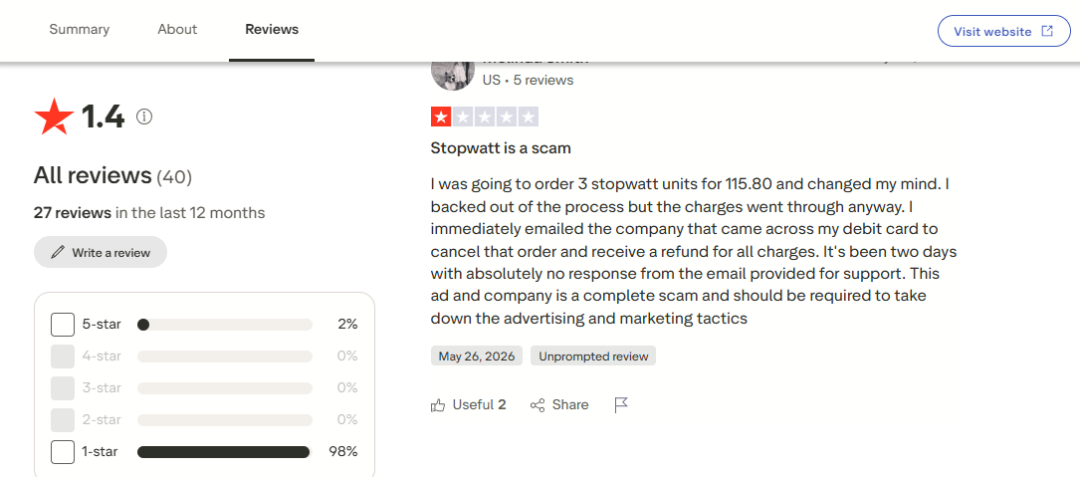
A third customer described backing out of an order for three units priced at $115.80 before completing checkout, only to see the charge go through anyway. After emailing the company for a refund, they got no response for two days and said the ad and the company should be required to take down their marketing.
Should You Buy a StopWatt?
A device riding on a fake celebrity origin story, a cloned reviewer used without consent, a 1.4-star Trustpilot rating, and customers reporting charges going through after they tried to cancel. None of this points toward a product worth your money.
Before buying anything like this, check the seller's Trust Score on ScamAdviser, and review the Federal Trade Commission's guide to shopping online for ways to spot pressure tactics before you pay. The FTC's page on energy-saving device claims and Energy Star's official site are better starting points if you're actually trying to cut your electric bill.
FAQs
Did Elon Musk invent StopWatt?
No. That claim has been attached to several similarly packaged products over the years, including Miracle Watt and Power Saver, and there's no link between Musk and any of them.
Was StopWatt ever featured on Shark Tank?
No. That claim appears in promotional video ads but isn't supported by any actual episode or appearance.
What is StopWatt's Trustpilot rating?
StopWatt holds a 1.4 out of 5 star rating on Trustpilot, with recurring complaints about the product not working and refunds not being issued.
Can I get a refund if I already bought one?
Several customers report contacting StopWatt for a refund and getting no response, or being charged even after canceling. If you paid by card, contact your card issuer about disputing the charge and report the company to the FTC's complaint portal.
Bought a StopWatt or run into something similar? Report it to the FTC's official complaint portal to help other shoppers avoid the same risk.
See some more interesting articles from ScamAdviser:
This article has been written by a scam fighter volunteer. If you believe the article above contains inaccuracies or needs to include relevant information, please contact ScamAdviser.com using this form.
Adam Collins is a cybersecurity researcher at ScamAdviser who operates under a pseudonym for privacy and security. With over four years on the digital frontlines, he specialises in translating complex threats into actionable advice. His mission: exposing red flags so you can navigate the web with confidence.
