
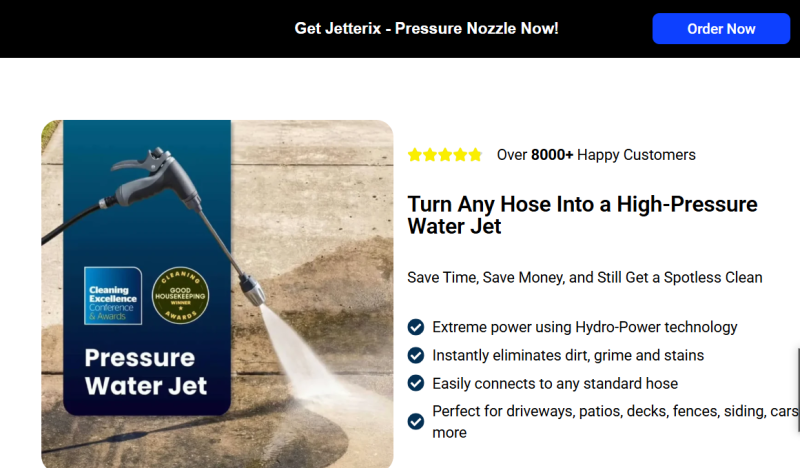
Jetterix markets its product with a bold claim: over 8,000 happy customers. On paper, that sounds reassuring. It suggests a product that has been widely tested, widely loved, and widely used.
But when you try to verify that claim outside of Jetterix’s own website, the story starts to fall apart. There’s very little independent evidence that those customers exist at all. No meaningful reviews. No forum discussions. No unboxing videos. No real footprint.
That gap between marketing and reality is where things get interesting.
In a Nutshell
When a company says thousands of people are satisfied, you expect digital breadcrumbs. A Reddit thread from someone showing results. A YouTube video testing it. A Trustpilot profile with mixed reviews. Even a complaint or two would help prove it’s real.
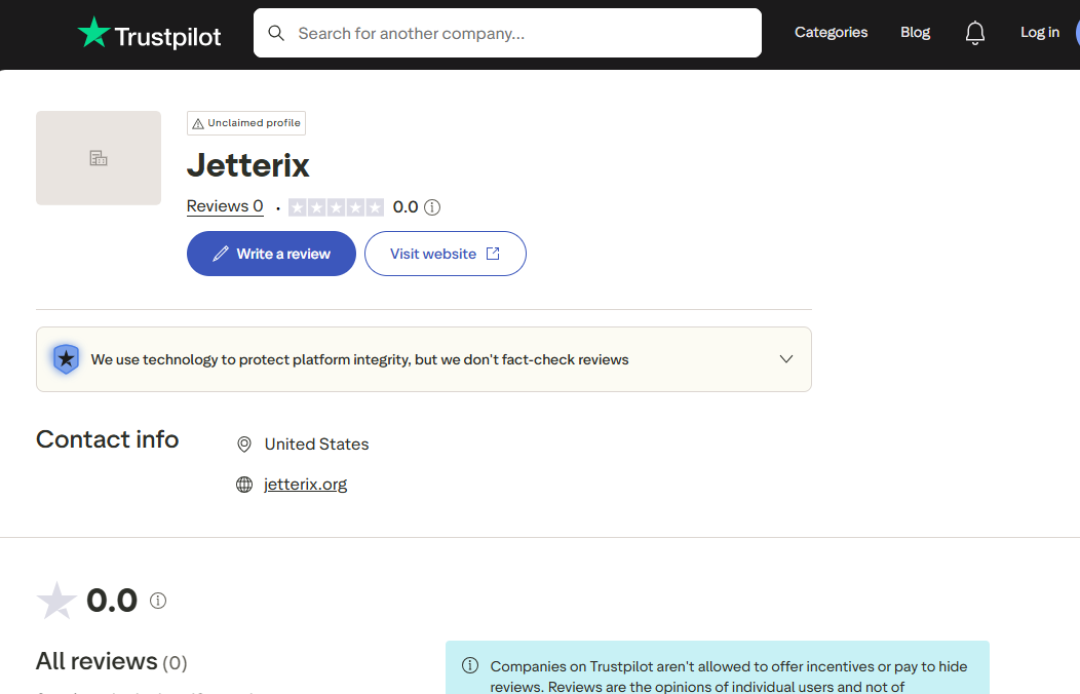
Jetterix doesn’t really show up anywhere outside its own ecosystem.
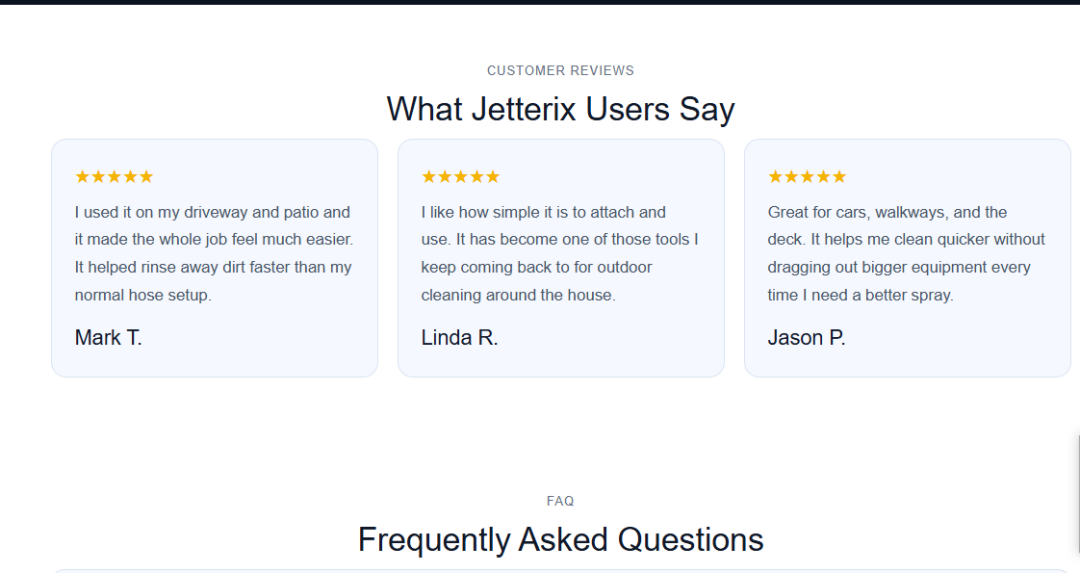
Search third-party review platforms and you’ll find very little. No meaningful discussion. No independent verification of the product’s performance. The only testimonials available are the ones hosted on Jetterix’s own site, where the company controls what appears and what doesn’t.
That matters. Because controlled reviews are not the same as real-world feedback.
And 8,000 customers is not a small number. If even a fraction of that were real buyers, you would expect visible chatter somewhere online. The silence is the most noticeable part.
The moment you land on a Jetterix page, the pressure starts.
“75% OFF FOR A LIMITED TIME ONLY!”
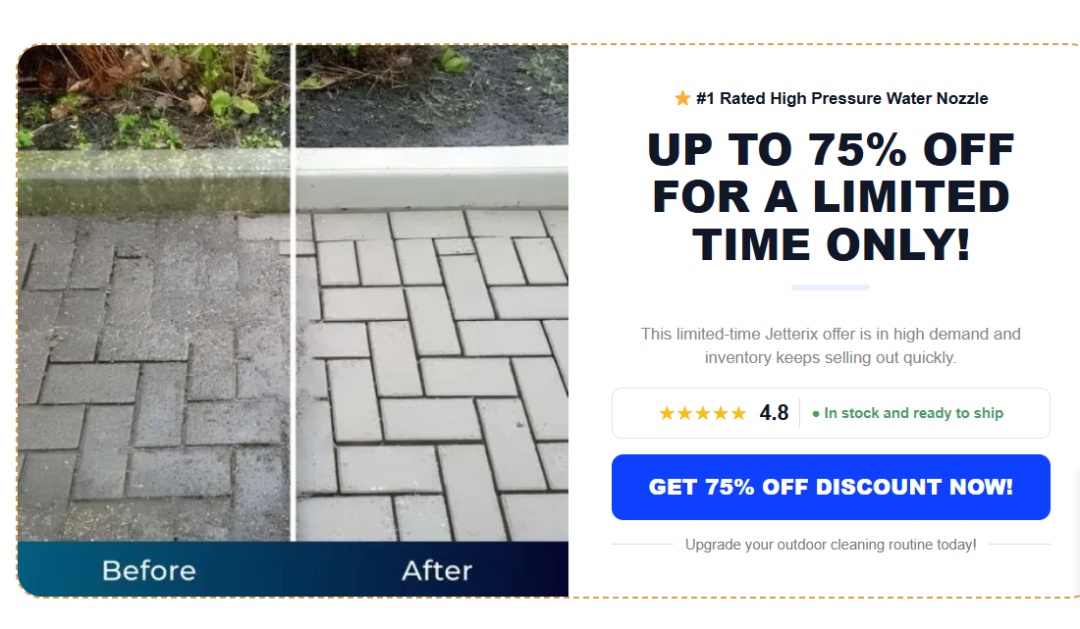
Countdown timers. Flash sales. “Only a few left in stock” warnings.
This is a well-known persuasion pattern used in aggressive direct-to-consumer funnels. The goal is simple: create urgency before you have time to verify anything.
Real discounts don’t need constant countdown clocks. And when you revisit the page and the timer resets or the “limited” deal is still running, it becomes clear the urgency is manufactured, not market-driven.
It’s not about saving you money. It’s about speeding up your decision.
This is the part where expectations and reality tend to diverge sharply.
A real pressure washer is a mechanical device. It uses an electric or petrol motor, a pump, and high-pressure water output measured in PSI. This is what brands like Kärcher, Sun Joe, and Ryobi produce. These machines are built to strip dirt, clean concrete, and handle heavy outdoor cleaning tasks.
What Jetterix appears to sell is not in that category.
It looks much closer to a hose attachment or nozzle that concentrates water flow from a standard garden hose. These products do exist, and they can be useful for light cleaning jobs like rinsing cars or washing patios.
But they are not pressure washers in any real sense.
They do not generate high PSI. They do not have internal pumps. And they cannot deliver the force needed for deep cleaning tasks like stripping paint or blasting hardened grime from concrete.
The marketing language bridges that gap deliberately. It suggests industrial-style performance from a simple attachment. That is where the misrepresentation happens.
Based on what is publicly visible, there is no strong reason to trust it.
The combination of unverifiable customer claims, heavy reliance on urgency tactics, exaggerated performance expectations, and the absence of independent reviews creates a high level of uncertainty.
At best, you may receive a low-cost hose attachment that offers basic water flow control. At worst, you may receive something that does not match the implied performance at all.
The real issue is not just what the product is, but what it is being positioned as.
If you need a real pressure washer, the safer route is to buy from established hardware brands with verified reviews, clear specifications, and straightforward return policies. If you simply need a nozzle for light cleaning, there are inexpensive options available from reputable hardware retailers that do not rely on exaggerated claims.
FAQs
1. Is Jetterix a real pressure washer?
It is more likely a hose attachment than a true high-pressure cleaning machine.
2. Do the 8,000 customer reviews exist?
There is no independent evidence confirming those customers outside the official website.
3. Why does Jetterix use countdown timers?
They are used to create urgency and encourage faster purchase decisions.
4. Should you buy Jetterix?
It is risky due to unclear performance claims and lack of independent verification.
See more interesting articles from ScamAdviser;
This article has been written by a scam fighter volunteer. If you believe the article above contains inaccuracies or needs to include relevant information, please contact ScamAdviser.com using this form.
Adam Collins is a cybersecurity researcher at ScamAdviser who operates under a pseudonym for privacy and security. With over four years on the digital frontlines, he specialises in translating complex threats into actionable advice. His mission: exposing red flags so you can navigate the web with confidence.
