
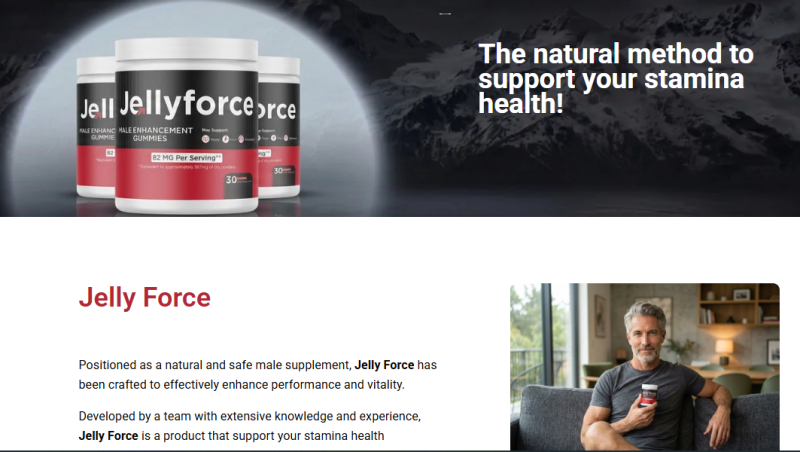
JellyForce is marketed as a natural and safe supplement for men. It's a simple pitch, and simple pitches sell. But when we ran Jellyforce.online through our checks, the website came back flagged, and the marketing around it follows a pattern we've seen fail buyers before. Here's what we found.
In a Nutshell
The site positions JellyForce as a natural and safe supplement built for men's wellness. Beyond that framing, there isn't much specific to go on. "Natural" and "safe" are marketing words rather than claims that can be checked against evidence. A supplement backed by real research usually points to a named study or a specific ingredient with a documented effect, and JellyForce's page doesn't do much of that.
The pricing page offers free shipping on every 3 and 6 bottle order and states that 96% of customers choose the 6 bottle option, calling it the "recommended" choice. Numbers like that are nearly impossible to verify from outside the company, and they're designed to make the largest, most expensive order feel like the popular, sensible one. We've flagged this same tactic across other supplement sites that turned out to be unreliable. A "Made in the USA" badge sits next to the offer too, another detail that shows up again and again on sites using this exact template.
We looked for independent research supporting JellyForce's marketing and found very little. The claims on the site aren't backed by named clinical studies or third-party testing that a buyer could verify. That doesn't mean every ingredient in the product is useless, but it does mean the "it works" claim is coming entirely from the seller, with nothing external to check it against.
Our automated check gives Jellyforce.online a Trust Score of 0, the lowest rating our system assigns. The domain was registered on June 2, 2026, giving it barely a month of history at the time of this review. WHOIS ownership details are hidden, so there's no way to see who actually runs the site. IPQS, one of the security services ScamAdviser draws on, has flagged the domain both for phishing and as suspicious on its own. A young, anonymous domain flagged for phishing is not a combination you want to see on a site asking for your card details.
JellyForce is being pushed through video content like this YouTube upload. Video ads and "reviews" give a product a sense of social proof that a plain sales page can't. But a video doesn't confirm the seller's identity, doesn't confirm the domain's safety, and doesn't offset a phishing flag from a security scanner. Treat the hype separately from the technical checks.
Weigh what's here before ordering. The site is a month old, flagged for phishing, and hides who runs it. The pricing is built to steer buyers toward the biggest bundle rather than a single trial bottle. The health claims aren't supported by evidence you can check independently. Whatever a YouTube video says about the product doesn't change any of that. If you're set on trying a supplement like this, look for a seller with a longer history, a clean security check, and reviews you can verify away from their own site.
Frequently Asked Questions
Is JellyForce a scam?
The site selling it, Jellyforce.online, carries a Trust Score of 0 and has been flagged for phishing by IPQS. Combined with a domain that's barely a month old and hidden ownership details, there's strong reason for caution.
Why does JellyForce push the 6 bottle option so hard?
Claiming that 96% of customers choose the largest bundle, alongside free shipping on bulk orders, is a common way to steer buyers toward the most expensive purchase instead of a smaller trial order.
When was Jellyforce.online registered?
WHOIS records show the domain was registered on June 2, 2026.
Does JellyForce actually work?
There's little independent scientific evidence supporting the claims made on the site. The marketing relies on general wellness language rather than named studies or verifiable ingredient research.
Before entering any payment information on a supplement site, it's worth checking who's actually behind it.
Check the Seller's Reputation
ScamAdviser helps you evaluate a website quickly by showing:
Pro Tip: A domain flagged for phishing by a security scanner is a serious warning sign on its own, regardless of what the product claims to do. Plus having a ScamAdviser app gives protection round the clock.
This article has been written by a scam fighter volunteer. If you believe the article above contains inaccuracies or needs to include relevant information, please contact ScamAdviser.com using this form.
Adam Collins is a cybersecurity researcher at ScamAdviser who operates under a pseudonym for privacy and security. With over four years on the digital frontlines, he specialises in translating complex threats into actionable advice. His mission: exposing red flags so you can navigate the web with confidence.
