
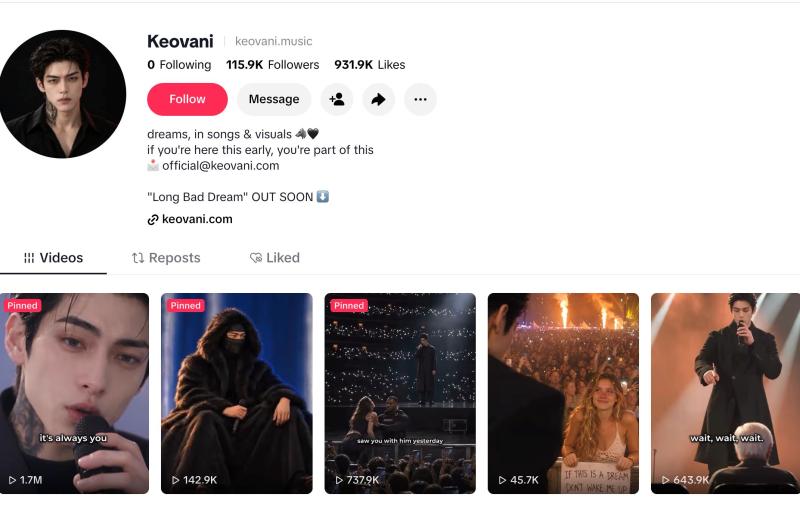
Keovani has recently captured the attention of thousands of music listeners across social media with emotional tracks such as "Does He", "Always You" and "Still Yours". Because the stage clips look remarkably lifelike yet mysterious, many fans have started asking whether Keovani may be a real human singer or an AI-generated virtual artist. Exploring the public details behind this rising online profile helps explain what listeners may actually be watching and hearing on their screens.
Keovani seems to be an independent music project that has built a rapid following across major digital platforms. Listeners can find official updates and short performance videos on the Keovani Facebook page, as well as on TikTok and Instagram under the handle keovani.music, and on YouTube under keovanimusic. Across these official pages, Keovani shares dramatic concert scenes, lyric previews, and new release announcements.
Despite this large online reach, verified biographical details about a real individual behind the name seem to be unavailable, and no live tour dates or personal interviews appear online, leaving fans curious about who manages the project.
When looking closely at the videos shared on the official Keovani accounts, several visual details suggest that the performer shown on screen may not be a real person. In various clips, the singer appears under bright stadium lighting, sometimes wearing a white face mask or showing slightly different facial features across different videos.
More importantly, multiple posts on the official YouTube, Keovani Instagram, TikTok profiles display self-disclosed platform notices, including "AI content" and "Creator labeled as AI-generated". These tags suggest that artificial intelligence tools may have been used to create or shape the visual footage.
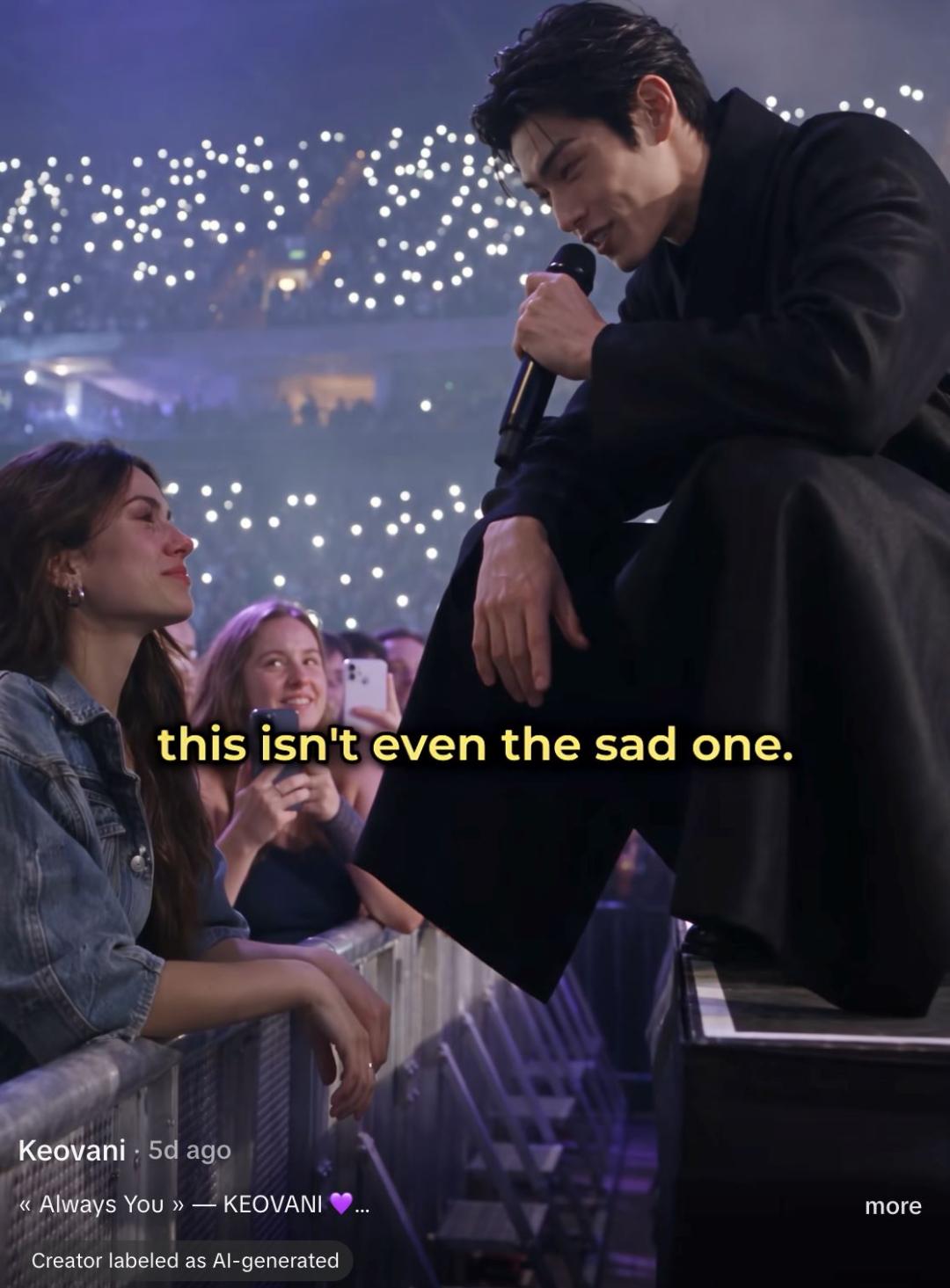
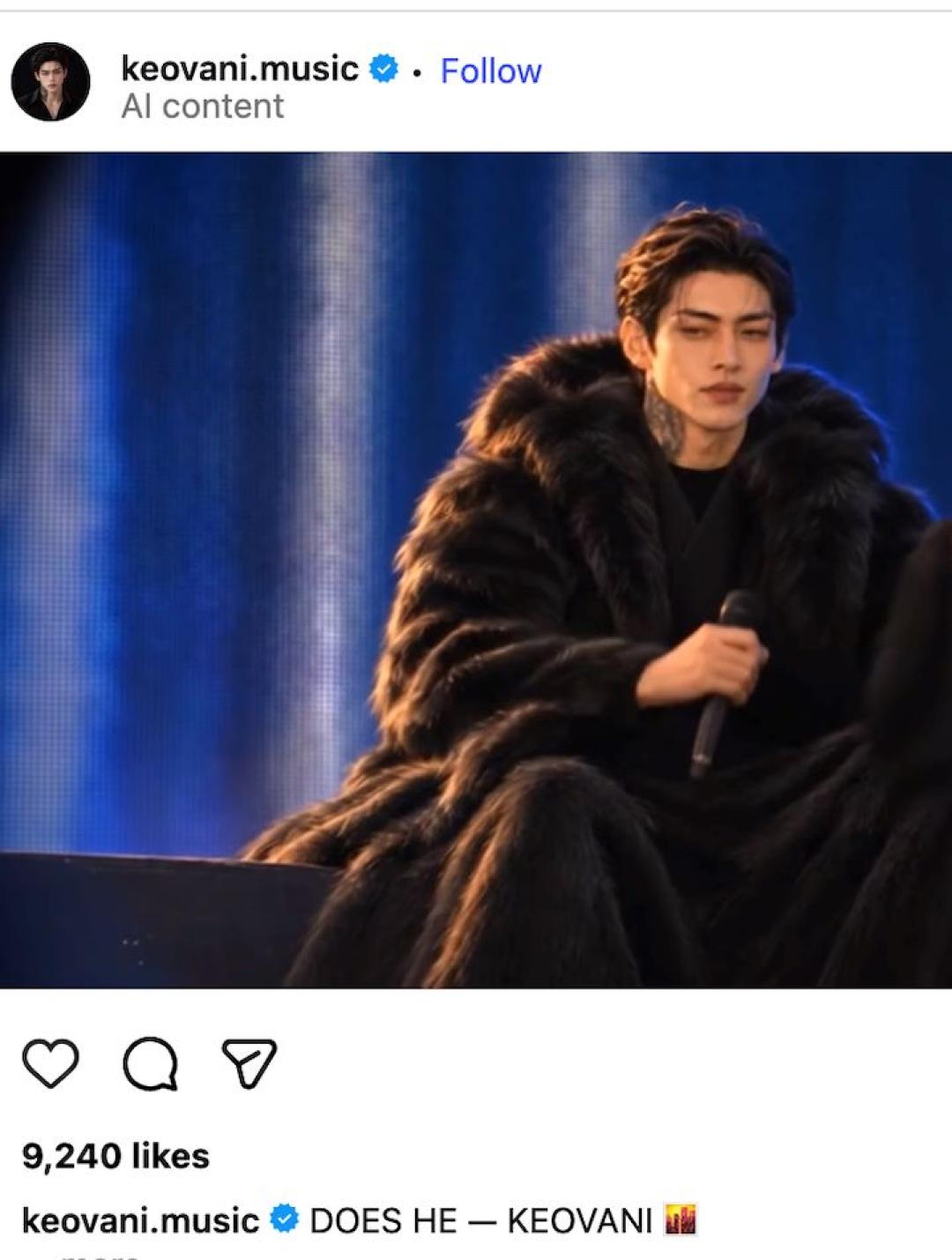
While the visual character of Keovani seems to be built with AI technology, the music creation side may still involve human effort. Posts on the official Keovani social media pages have invited followers to share personal stories for future song ideas. So, the project may be a combined effort where a real songwriter or creator writes the lyrics and music, while using AI voice tools or virtual visuals to present the final track to audiences.
Based on available public details, Keovani seems to be a virtual, AI-assisted music persona rather than a traditional touring singer. The self-applied AI labels on the official Keovani social media accounts strongly suggest that the on-screen performer and concert visuals may be generated through artificial intelligence. At the same time, interactive fan story prompts indicate that real human creativity may still guide the lyrics and direction behind Keovani.
For listeners discovering Keovani on social media, the project appears to represent a modern blend of human songwriting and AI-driven visual storytelling, allowing audiences to enjoy the emotional songs while keeping a realistic perspective on the digital identity behind the music.
The information presented in this article is provided for general informational, commentary, and educational purposes only. All observations regarding Keovani reflect independent analysis of publicly available social media profiles, platform disclosures, and online releases at the time of writing, and should not be taken as definitive statements of fact. This website is not affiliated with, endorsed by, or officially connected to Keovani or its creators.
All trademarks, artist names, song titles, and social media screenshots featured in this article belong to their respective owners. Any screenshots or visual references from public social media posts are used strictly for commentary, news reporting, and critical analysis under fair use principles.
This article has been written by a Scam Fighter Contributor, De-Reviews.com Team. If you believe the article above contains inaccuracies or needs to include relevant information, please contact ScamAdviser.com using this form.
De-Reviews.com Team is a group of scam researchers, editors, and online safety advocates dedicated to exposing online fraud and helping consumers stay safe online. The team has been investigating scams, fraudulent websites, phishing campaigns, and other online threats since 2014. Read the Full Author Profile.
