
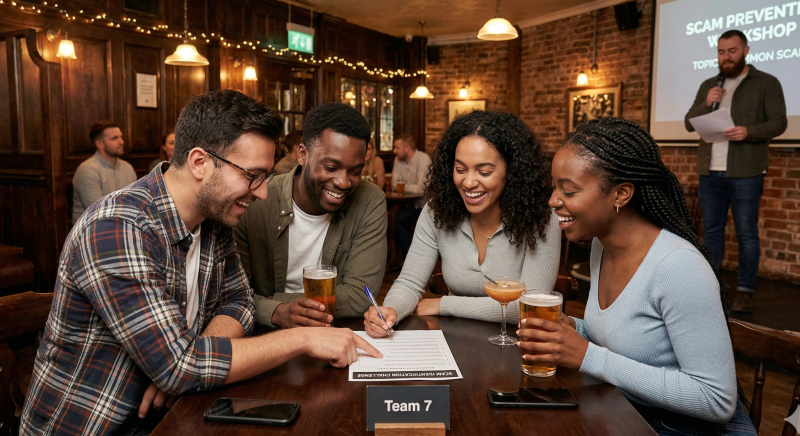
Would you hang up in time?
4 real scam scenarios. Read each one and pick your answer — then hit the button to see how you did.
Q1 · A caller says they're from the immigration department and your visa has an urgent issue. They demand your passport number immediately to avoid deportation. What's the most suspicious sign?
A) They mentioned deportation
B) Cold call + immediate demand for personal info on the spot
C) They knew your name
D) They have an official-sounding department name
Answer: B) Cold call + immediate demand for personal info on the spot
Why: Legit government agencies don’t cold call and pressure you for sensitive details immediately. The urgency + request is the biggest red flag.
Q2 · The caller's voice sounds slightly robotic but very formal. They give you a badge number and say you can verify it online. What do you do?
A) Look up the badge number they provided
B) Hang up and call the agency's official number from their website
C) Ask them to send an email instead
D) Ask for their supervisor
Answer: B) Hang up and call the agency's official number from their website
Why: Scammers can give fake badge numbers and fake verification sites. The only safe move is to independently contact the agency using their official contact details.
Q3 · A "customs officer" says a package in your name was intercepted with illegal items. They need a processing fee to clear your name. This is:
A) A legitimate customs procedure
B) A package interception scam — there is no package
C) A tax compliance issue
D) A delivery rerouting fee
Answer: B) A package interception scam — there is no package
Why: This is a classic scare tactic. There’s no package — just a story to pressure you into paying a “fee” to fix a problem that doesn’t exist.
Q4 · The caller warns you not to tell anyone about the investigation or you'll be arrested. This tactic is designed to:
A) Protect your legal rights
B) Isolate you so no one can warn you it's a scam
C) Comply with data protection law
D) Verify your identity securely
Answer: B) Isolate you so no one can warn you it's a scam
Why: Secrecy is a huge red flag. Scammers want to cut you off from friends or family who might help you realize what’s going on.
For more of this, you can head over to Scam Univeristy
