
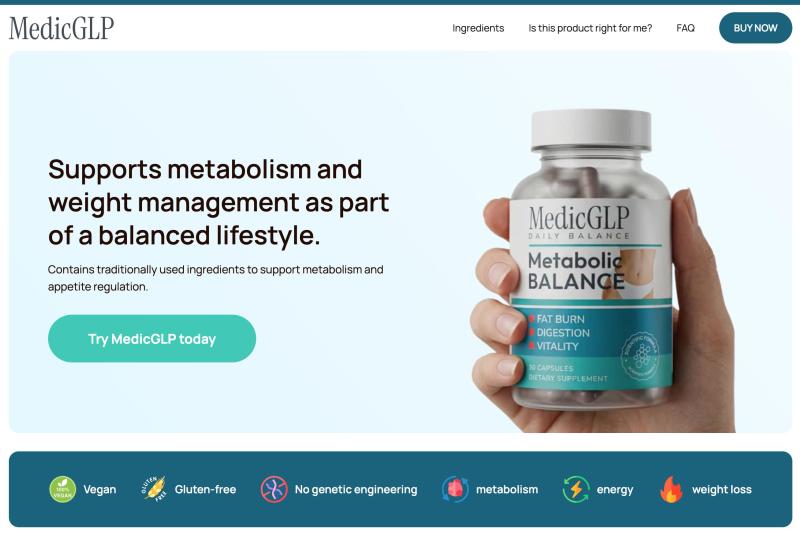
As interest in GLP-1 products, weight loss and wellness market has grown, dietary supplements using similar terms have also gained popularity. MedicGLP Metabolic Balance Supplement is one of them. In this MedicGLP review, we look at what MedicGLP Supplement contains, how it is sold across different markets, and what consumers can realistically expect. The purpose is simply to examine the publicly available information and point out both its pros and cons.
MedicGLP is an over the counter, plant based dietary supplement sold as a once daily capsule. Despite its name, it is not a GLP-1 prescription medicine, injectable treatment, or pharmaceutical product. It also does not contain active pharmaceutical GLP-1 ingredients.
According to the publicly available product information, the formula combines botanical ingredients and nutrients intended to support general metabolic health, blood sugar balance, and natural energy.
That distinction matters because a dietary supplement should not be expected to work like a prescription GLP-1 receptor agonist.
MedicGLP appears across several websites aimed at different international markets rather than relying on one clearly centralized portal.
The domains identified in the available information include:
Having separate websites for different countries is not by itself a problem. However, consumers should check whether the information remains consistent between them.
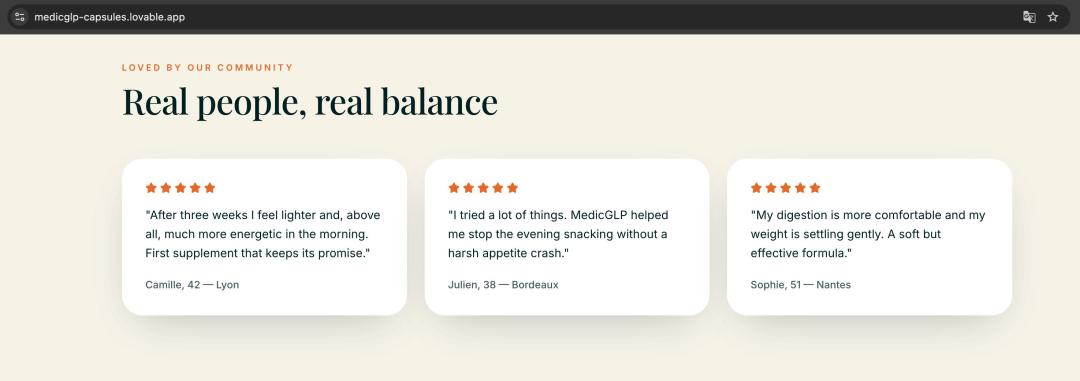
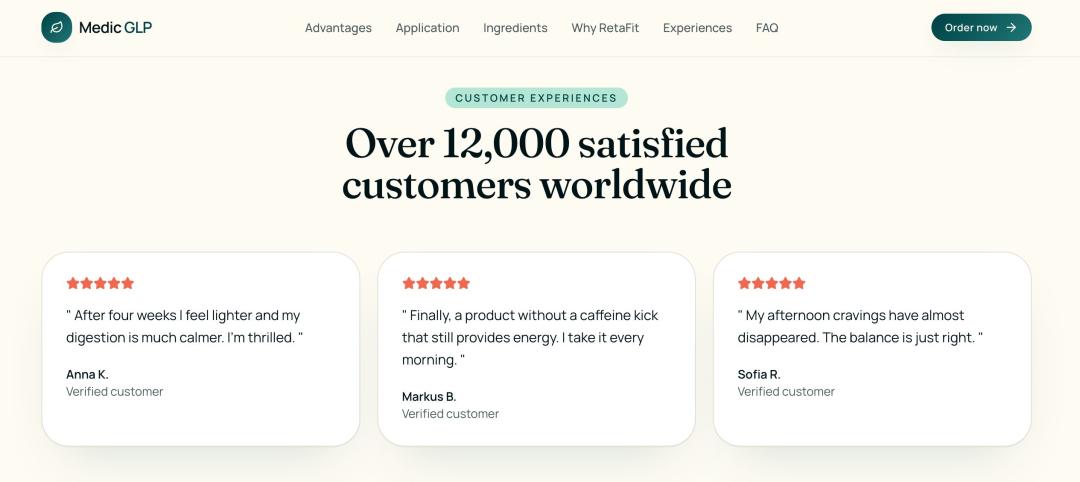
The testimonials also deserve attention. The written feedback on different MedicGLP websites looks very similar, while the names and locations change for the target market.
For example, the French website uses a person such as Camille from Lyon. The German version uses Anna K., while UK material includes names such as Sophie T. and Michael T.
Localized testimonials can be part of international marketing. However, when similar wording appears with different names and locations, consumers should treat these testimonials as promotional website content rather than independent proof of results. It simply means the testimonials themselves do not provide independently verified evidence that MedicGLP produces specific results.

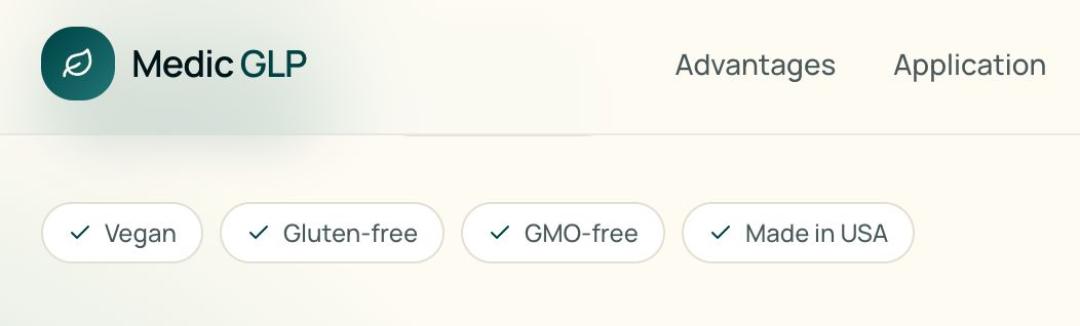
There are also differences in how the product's origin is described. The French targeted website states "Formulated in France". A German/US-facing domain says "Made in USA", while some UK promotional material refers to production in "FDA Approved facilities".
These statements do not provide one consistent explanation of where the formula is made. This may suggest that MedicGLP uses a white-label or third party manufacturer and distributes the product through an international logistics network rather than operating through one clearly identified proprietary laboratory. However, the available information does not allow us to confirm the complete manufacturing structure.


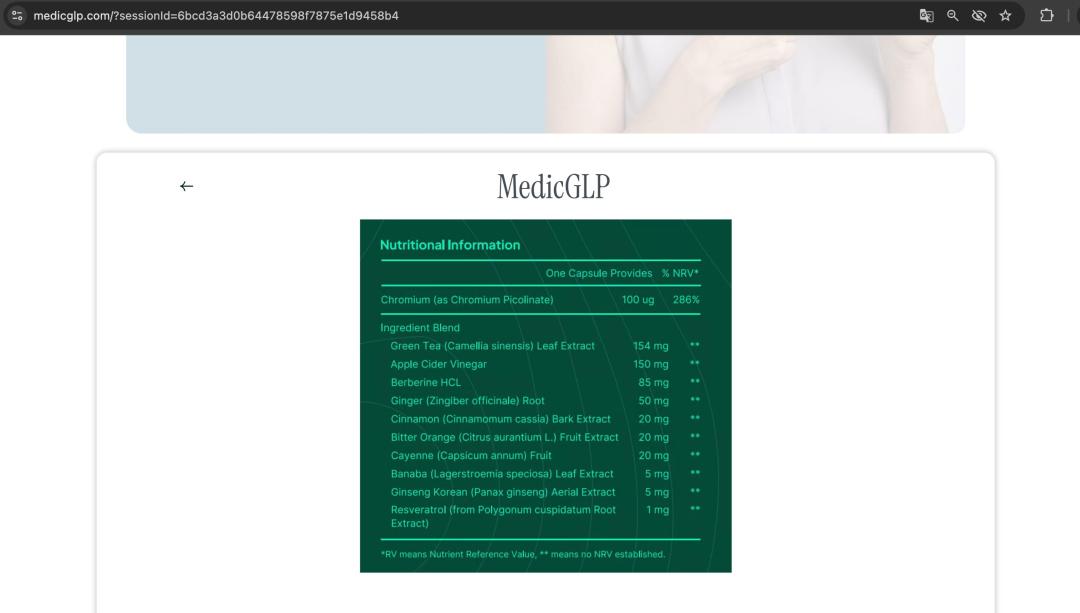
According to the publicly available product label information, MedicGLP Metabolic Balance Supplement contains several familiar nutritional and botanical ingredients:
This is one of the main concerns with the formula. As per publicly available scientific information, the individual ingredients in MedicGLP have been studied for different metabolic and nutritional effects. However, research on an individual ingredient does not automatically prove that the finished MedicGLP product will produce the same results.
The amount of an ingredient also matters. For example, as per publicly available scientific data, Green Tea Leaf Extract is typically studied at around 300–600 mg daily, while MedicGLP provides 154 mg per capsule.
Banaba Leaf Extract has been studied at approximately 32–48 mg daily, according to publicly available information, while the MedicGLP formula provides only 5 mg per serving.
The difference is particularly large with Berberine HCl. As per publicly available research, studies examining berberine for metabolic and insulin-sensitivity effects commonly use approximately 1,000–1,500 mg daily. MedicGLP provides only 85 mg per capsule, which is less than 10% of the lower 1,000 mg amount.
MedicGLP also provides 100 µg of Chromium Picolinate, while some metabolic research and nutritional benchmarks use approximately 200–1,000 µg daily.
These differences do not automatically mean that the smaller amounts have no effect. However, they show why consumers should not assume that MedicGLP will provide the same results reported in studies that used substantially higher ingredient amounts. The research on individual ingredients should not be treated as clinical proof of the effectiveness of the complete MedicGLP formula.
The supplement industry sometimes places popular, highly searched ingredients on labels in small quantities. This can make a formula look impressive even when the actual amount may not match levels used in research. This practice is sometimes called window dressing.
The large gap between several MedicGLP ingredient amounts and amounts used in scientific studies raises a reasonable question about whether some ingredients provide a meaningful metabolic effect or mainly add marketing appeal.
However, without independent laboratory testing, we cannot say that this is definitely the reason these amounts were selected.
A product label tells consumers what the manufacturer says the capsule contains. It does not, by itself, independently verify those claims. Third party laboratory organizations such as NSF, Eurofins and USP can provide testing or certification for applicable products.
Without such independent testing, there is no definitive way to confirm from the label alone that the capsule contains exactly the stated ingredients and amounts. It means consumers should understand the difference between manufacturer provided information and independently verified results.
As per the information provided on sales page, the formula contains recognizable botanical and nutritional ingredients, some of which have a history of nutritional or clinical research. Therefore, MedicGLP may provide general nutritional or metabolic support.
However, consumers should not automatically expect:
A natural botanical blend cannot simply be treated as an alternative to a prescription GLP-1 receptor agonist.
Before making any decision, here are the main points to consider about MedicGLP, including its potential benefits and important concerns.
Potential Pros (as per the information provided on sales page):
Cons and Concerns (based on publicly available information):
The GLP related name and positioning could create expectations that go beyond what a dietary supplement can reasonably demonstrate.
If you are considering MedicGLP, check the terms and conditions before ordering. Look carefully at multi bottle offers and countdown timers, and make sure you understand whether the purchase creates an automatic monthly subscription or recurring payment.
It is also wise comparing the price with individual products containing ingredients such as chromium, berberine and green tea. Compare the actual amount per serving, not simply the number of ingredients on the label.
Finally, speak with a healthcare professional before using concentrated botanical ingredients such as berberine, particularly if you take medication for blood sugar or blood pressure.
MedicGLP Metabolic Balance Supplement contains recognizable botanical ingredients and nutrients, and some of those ingredients have been studied individually for metabolic effects.
However, the available information does not show that the complete MedicGLP formula produces the same results as those studies. More importantly, several key ingredients appear at much lower amounts than those commonly used in the research cited for metabolic effects. The 85 mg of berberine, compared with commonly studied amounts of 1,000–1,500 mg daily, is the clearest example.
There are also concerns about the international sales structure, including several domains, similar localized testimonials, and different statements about where the product is formulated or manufactured.
These points do not by themselves prove that the product is illegitimate. They do mean consumers should examine the information carefully and avoid making assumptions based on its GLP related name.
MedicGLP is a dietary supplement, not a prescription GLP-1 medicine. At most, consumers should approach it as a supplement that may offer some general nutritional or metabolic support. They should not expect it to reproduce the medical effects or dramatic weight loss results associated with prescription GLP-1 treatments.
The most important things to consider are the actual ingredient amounts, evidence for the finished product, manufacturing information, independent verification, seller terms, and realistic expectations.
Berberine Studies: Clinical trials evaluate berberine for its effects on metabolic pathways, often focusing on blood glucose management NCBI PMC8107691.
Green Tea Extract Research: Studies investigate the role of green tea extracts, particularly catechins, in supporting metabolism and body weight management NCBI PMC11762999.
Banaba Leaf Evaluation: Research into Banaba leaf extract (Lagerstroemia speciosa) explores its potential to support glucose regulation and metabolic health NCBI PMC3468018.
Chromium Picolinate Reference: Scientific literature evaluates the trace mineral chromium's role in glucose regulation and insulin sensitivity ScienceDirect.
True GLP-1 Receptor Agonist Mechanisms: A comprehensive pharmacological review distinguishing true, clinically monitored GLP-1 medications can be read at NCBI PMC8085572.
Verification Notice: Please double-check the physical product label of any supplement you purchase to confirm the active ingredients, exact dosages, and allergen warnings match your expectations before consumption.
Disclaimer: Dietary supplements are not regulated by the FDA and can cause dangerous interactions with prescriptions. Consult a doctor before starting any supplements. This review does not diagnose or treat medical conditions, nor does it claim the product fails for everyone. Individual results vary. Studies on individual ingredients do not prove the efficacy of the final blend.
Medical Disclaimer: This information is for general educational purposes only, does not constitute a promotion or endorsement of any product, and does not constitute medical advice, diagnosis, or treatment. Always consult a qualified healthcare professional or physician before starting any new dietary supplement.
This article has been written by a Scam Fighter Contributor, De-Reviews.com Team. If you believe the article above contains inaccuracies or needs to include relevant information, please contact ScamAdviser.com using this form.
De-Reviews.com Team is a group of scam researchers, editors, and online safety advocates dedicated to exposing online fraud and helping consumers stay safe online. The team has been investigating scams, fraudulent websites, phishing campaigns, and other online threats since 2014. Read the Full Author Profile.
