
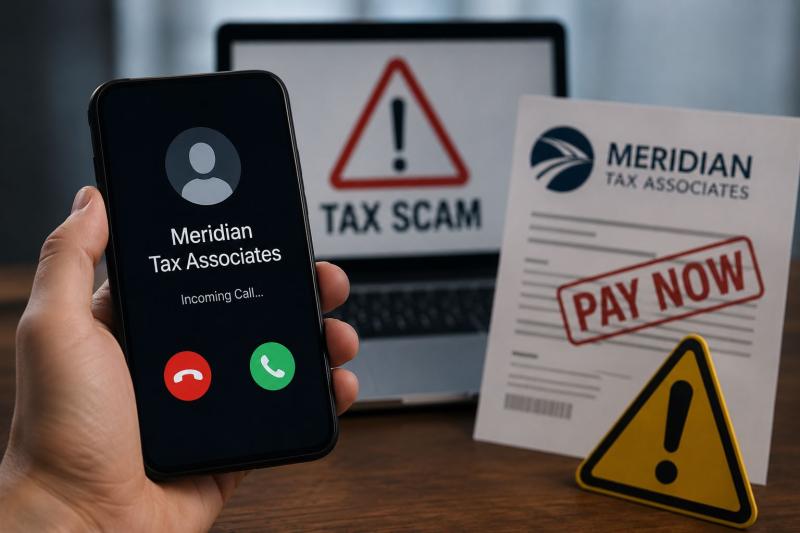
If you receive an unexpected phone call, text message, email, or letter from someone claiming to represent Meridian Tax Associates, you should be cautious. While there are genuine tax and accounting firms with similar names, scammers often use names that sound professional and trustworthy to trick people into sharing personal information or sending money.
The name Meridian Tax Associates may be used by fraudsters to make their messages look legitimate. But actually these contacts are not connected to any real tax preparation business.
There are legitimate accounting firms with similar names, such as Meridian Tax Advisors in California and Meridian Tax and Accounting LLC in Missouri. These are separate local businesses that serve their own clients.
However, legitimate tax professionals generally do not contact random people through unsolicited phone calls, text messages, or aggressive collection letters. They also do not threaten strangers or pressure them into making immediate payments.
Scammers often impersonate real tax companies or create completely fictional business names to look trustworthy. The use of a professional-sounding name does not confirm that the organization is legitimate. Fraudsters frequently choose names that resemble real accounting or tax firms to make their calls, texts, emails or letters look more believable. Always verify the identity of any tax service provider independently before sharing personal information, paying fees, or following their instructions.
Fraudsters use different stories to convince people that they need to act immediately. Below are some of the most common tax related scams.
Fake Tax Relief Offers:
One popular scam involves callers claiming they can eliminate or greatly reduce your tax debt through a special government program, such as the Fresh Start program. They may promise to settle your tax debt for much less than you owe.
In reality, the scammers often demand expensive upfront fees, collect your personal information, and fail to provide any real service.
Fake Back-Tax Collection Threats:
Some scammers pretend to be government officials or tax collection agents. They may claim you owe unpaid taxes and threaten lawsuits, wage garnishment, or even arrest unless you pay immediately.
These threats are designed to create panic so that victims send money without verifying the claim.
Inflated Tax Refund Promises:
Dishonest tax preparers sometimes advertise unusually large tax refunds to attract customers. They may intentionally enter false information on tax returns to increase the refund amount.
While the customer may receive money initially, the IRS can later discover the false information, leaving the taxpayer responsible for repayment, penalties, and possible legal consequences. Meanwhile, the dishonest preparer may disappear after collecting large fees.
Fake Tax Verification Calls:
Another common trick involves callers claiming to work for a tax verification department or tax review office. They may ask you to "confirm" your identity by providing your Social Security Number, date of birth, banking information, or other sensitive details.
Once criminals obtain this information, they may use it for identity theft or financial fraud.
Fake Tax Refund Notifications:
Scammers may send text messages or emails claiming that your tax refund is ready or that additional information is required before your refund can be released. These messages often include links leading to fake websites that steal login credentials and personal information.
Several red flags can indicate that the communication is part of a scam.
How Legitimate Tax Authorities Usually Contact You?
The IRS and most state tax agencies generally begin official communication through mailed letters rather than unsolicited phone calls, text messages, emails, or social media messages.
If someone unexpectedly contacts you through these digital channels and claims to represent a tax authority, you should independently verify the claim before taking any action.
If you receive a suspicious communication claiming to be from Meridian Tax Associates or any similar organization, follow these safety tips:
Reporting Tax Scams:
Reporting tax scams can help protect others from becoming victims. If you receive a suspicious tax related email, you can forward it to phishing@irs.gov for review.
Fraudulent phone calls and similar scams can also be reported through the Federal Trade Commission (FTC) Fraud Report system.
Receiving an unexpected call, text, email, or letter from someone using the name Meridian Tax Associates does not automatically mean the contact is legitimate. Although real accounting firms exist with similar names, scammers frequently use professional sounding business names to gain trust and pressure people into revealing personal information or making unnecessary payments.
Always verify the identity of anyone claiming to represent a tax organization before sharing personal information or sending money.
Disclaimer: The information in this article is provided for educational and awareness purposes. Company names, phone numbers, sender names, and other details referenced may have been impersonated, spoofed, or otherwise misused by scammers. Their appearance in this article does not necessarily identify the legitimate company, owner of a phone number or account as being involved in fraudulent activity.
This article has been written by a Scam Fighter Contributor, De-Reviews.com Team. If you believe the article above contains inaccuracies or needs to include relevant information, please contact ScamAdviser.com using this form.
De-Reviews.com Team is a group of scam researchers, editors, and online safety advocates dedicated to exposing online fraud and helping consumers stay safe online. The team has been investigating scams, fraudulent websites, phishing campaigns, and other online threats since 2014. Read the Full Author Profile.
