
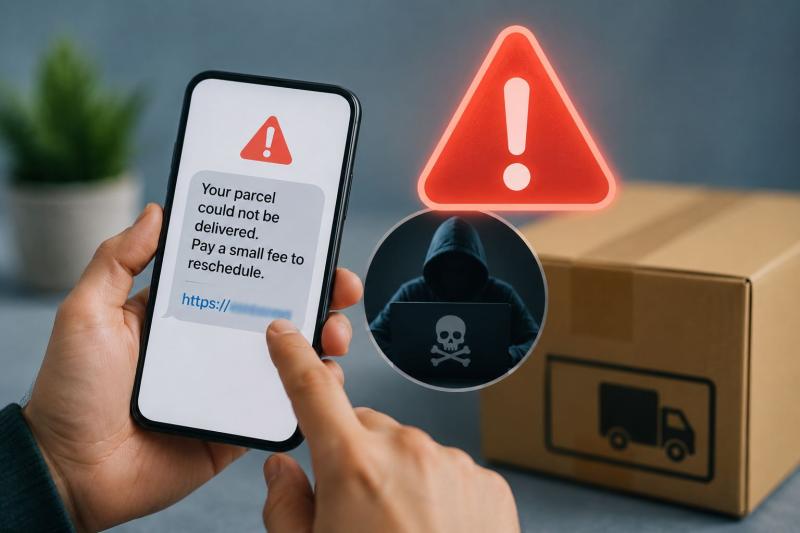
Online shopping has become part of everyday life. With millions of parcels moving around the world, delivery messages are also becoming a useful disguise for cybercriminals. One common example is the “Missed Parcel” delivery scam, also known as smishing, or SMS phishing. The message usually claims that a parcel could not be delivered and that you need to pay a small fee or update your address.
The amount requested may be less than a few dollars, making the message seem harmless. But the small payment is often only the beginning. The real goal can be to collect your card details, personal information, or other credentials.
Understanding how this scam works can help you recognize the warning signs before clicking.
Scammers rely on a predictable blueprint designed to exploit panic, urgency, and simple curiosity. The basic pattern is simple:
Unsolicited Text Message → Fake Rescheduling Fee → Lookalike Website → Financial or Identity Theft
Let's explain the basic pattern in detail.
You may receive a text message or email claiming to be from a well known delivery company such as UPS, FedEx, DHL, Royal Mail, India Post, or Evri.
The message may say that your parcel could not be delivered because of:
For example, a message might say:
"Your parcel could not be delivered due to an incorrect address. Please update your information and pay a small re-delivery fee."
The message is designed to make you think about a real order you may be expecting.
The next step is usually a request to click a link and pay a small fee. This may be described as a:
The amount is deliberately small, often around $0.30 to $3.00.
Why scammer ask for such a small amount?
Because people are more likely to think, "It is only a few dollars," and take the risk. The small payment can lower your normal level of caution.
For example, someone waiting for a $100 online order may not think twice about paying $1 to prevent the parcel from being returned. But the fee itself may not be the main objective.
After clicking the link, you may be taken to a website that looks remarkably similar to the real courier's website.
Scammers can copy:
The fake page may even show a parcel tracking number or delivery status to make the situation look more genuine.
You may then be asked to provide information such as your:
This is where a simple delivery message can turn into a much more serious information security problem.
Once you enter your payment or personal information, it can be collected by the people operating the fake website. The stolen card information may then be used for unauthorized online purchases or other fraudulent activity. Personal information can also potentially be used for identity theft or further targeted attacks.
In some cases, criminals may also attempt to obtain one-time passwords (OTPs) or other authentication information through additional messages or social engineering attempts. This can make the attack more dangerous because victims may believe the request is connected to their original delivery.
So, the $1 fee is not necessarily the real objective. It can simply be the hook used to get you onto the fake website and persuade you to provide more valuable information.
Scammers regularly improve their messages, but several warning signs remain useful.
A legitimate courier may direct customers to its official domain.
For example, the real company domain could be something like ups.com or fedex.com.
A suspicious message may instead use:
Do not assume that a website is genuine simply because it contains the courier's name somewhere in the URL.
Be careful when a text suddenly asks you to pay a small amount to release or reschedule a parcel.
For example: "Pay $1.25 within 12 hours or your parcel will be returned."
The small amount is part of what makes the message convincing.
These messages often try to make you act before you have time to think.
You may be told:
This pressure is intentional. When people feel they have only minutes or hours to act, they are less likely to independently verify the message.
A genuine delivery notification should normally provide useful information about the shipment. A suspicious message may simply say: "Your package" or "Your item."
It may not clearly identify:
If the message provides no meaningful parcel context, stop and verify it independently.
Another warning sign is receiving the message from an unfamiliar personal mobile number. Official notifications may use recognizable company names or approved sender IDs, although sender identification can vary by country and service.
Therefore, the sender name alone should not be treated as proof that a message is genuine. If a supposed courier message comes from an unrelated or unfamiliar number, treat it carefully.
The safest response to an unexpected delivery message is simple: Track, don't tap.
Do Not Click the Link:
Avoid clicking links inside unsolicited delivery messages, even if you are expecting a parcel. The fact that you really are waiting for an order does not make the message genuine.
Check Your Parcel Manually:
If you are expecting a delivery, close the message and check the order yourself. Open your browser or the courier's official app manually. Then enter your tracking number through the official service.
For example, if you are expecting a FedEx parcel, go to the official FedEx website yourself rather than using the link supplied in an unexpected text.
You can also check the order through the retailer where you purchased the item. This removes the fake link from the process entirely.
Check a Suspicious Website:
If you accidentally clicked a link but did not enter any information, do not continue filling out the form. Instead, check its website rating, domain age, and other available safety information before interacting with it further.
Remember that a website can look professional while still being suspicious. Checking the actual domain and its available ratings is therefore more useful than judging a website only by its appearance.
If you entered card details or other sensitive information into a fake delivery website, act quickly.
Contact Your Bank:
Contact your bank or card provider immediately and explain what happened.
Ask them about:
If you see an unfamiliar pending authorization or transaction, report it immediately rather than waiting to see what happens.
Watch for Follow-Up Attacks:
Once criminals have your information, you may receive additional calls, texts, or emails pretending to be your bank, courier, or another company.
For example, someone may claim: "We detected suspicious activity on your card. Please provide the OTP we just sent you."
Do not trust such follow-up messages. Contact the company through an official channel instead.
Report the Suspicious Message:
In countries and mobile networks where it is supported, suspicious SMS messages can be forwarded to 7726 (SPAM). This reporting service is used by participating mobile operators to help investigate and block unwanted messages. Because availability and procedures can vary by country and carrier, check the guidance from your mobile provider if you are unsure.
Report the Website:
You can also report the suspicious website to ScamAdviser. The ScamAdviser Report a Scam form allows users to submit information about suspicious websites and explain what happened. Reporting matters because information from users can help warn others who may encounter the same website or fraud method.
The technique works because it takes advantage of normal online shopping habits. People expect delivery companies to contact them. They may also be worried about missing an important parcel.
The scam combines three powerful triggers: Expectation + Urgency + Small Payment
The victim may think:
"I am expecting a package."
Then:
"I only need to pay a dollar."
And finally:
"I need to do it now."
That combination can make people act before checking whether the message is genuine.
The "Missed Parcel" delivery scam is a good example of how a very small payment request can hide a much bigger threat. The message may look like coming from a familiar company such as UPS, FedEx, DHL, Royal Mail, India Post, or Evri. The website may also look professional. The requested payment may be less than the cost of a cup of coffee. But these details do not make the message trustworthy.
The safest approach is to never rely on the link in an unexpected delivery message. If you are expecting a parcel, check its status through the retailer, courier's official website, or official app. If you accidentally visit a suspicious website, check its domain before entering any information.
And if you have already provided payment or personal details, contact your bank immediately, report the suspicious message and website, and remain alert for follow-up attempts. When a delivery text asks you to pay a small fee, remember: the small fee may be the bait, not the real cost.
The information in this article is provided for educational and awareness purposes. Company names, phone numbers, sender names, and other details referenced may have been impersonated, spoofed, or otherwise misused by scammers. Their appearance in this article does not necessarily identify the legitimate company, owner of a phone number or account as being involved in fraudulent activity.
This article has been written by a Scam Fighter Contributor, De-Reviews.com Team. If you believe the article above contains inaccuracies or needs to include relevant information, please contact ScamAdviser.com using this form.
De-Reviews.com Team is a group of scam researchers, editors, and online safety advocates dedicated to exposing online fraud and helping consumers stay safe online. The team has been investigating scams, fraudulent websites, phishing campaigns, and other online threats since 2014. Read the Full Author Profile.
