
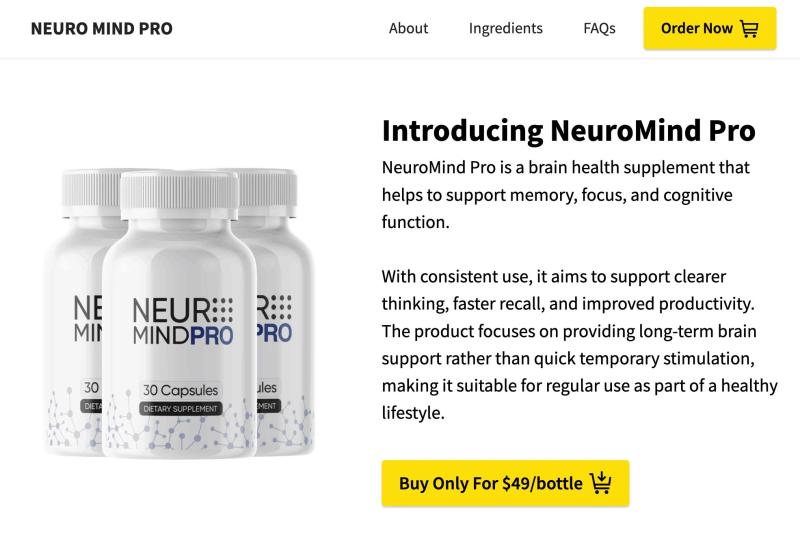
The search for reliable cognitive support has led many individuals to explore dietary supplements, with Neuro Mind Pro emerging as a prominent name across various online storefronts. NeuroMind Pro is marketed as a daily capsule to support memory, mental clarity, and focus, this formula has attracted significant attention from consumers aiming to maintain their sharpest days.
Navigating the online supplement landscape requires a careful look at product consistency, marketing strategies, and verifiable facts. This Neuro Mind Pro review evaluates the available data surrounding Neuro Mind Pro to help consumers make an informed health decision.
When evaluating a dietary supplement, the "Supplement Facts" label serves as the primary source of truth for safety and efficacy. However, documentation collected across multiple retail channels indicates that Neuro Mind Pro may not feature a single, standardized formula. Instead, different bottles sharing the exact same product name appear to contain vastly different ingredients depending on the specific vendor or marketplace.
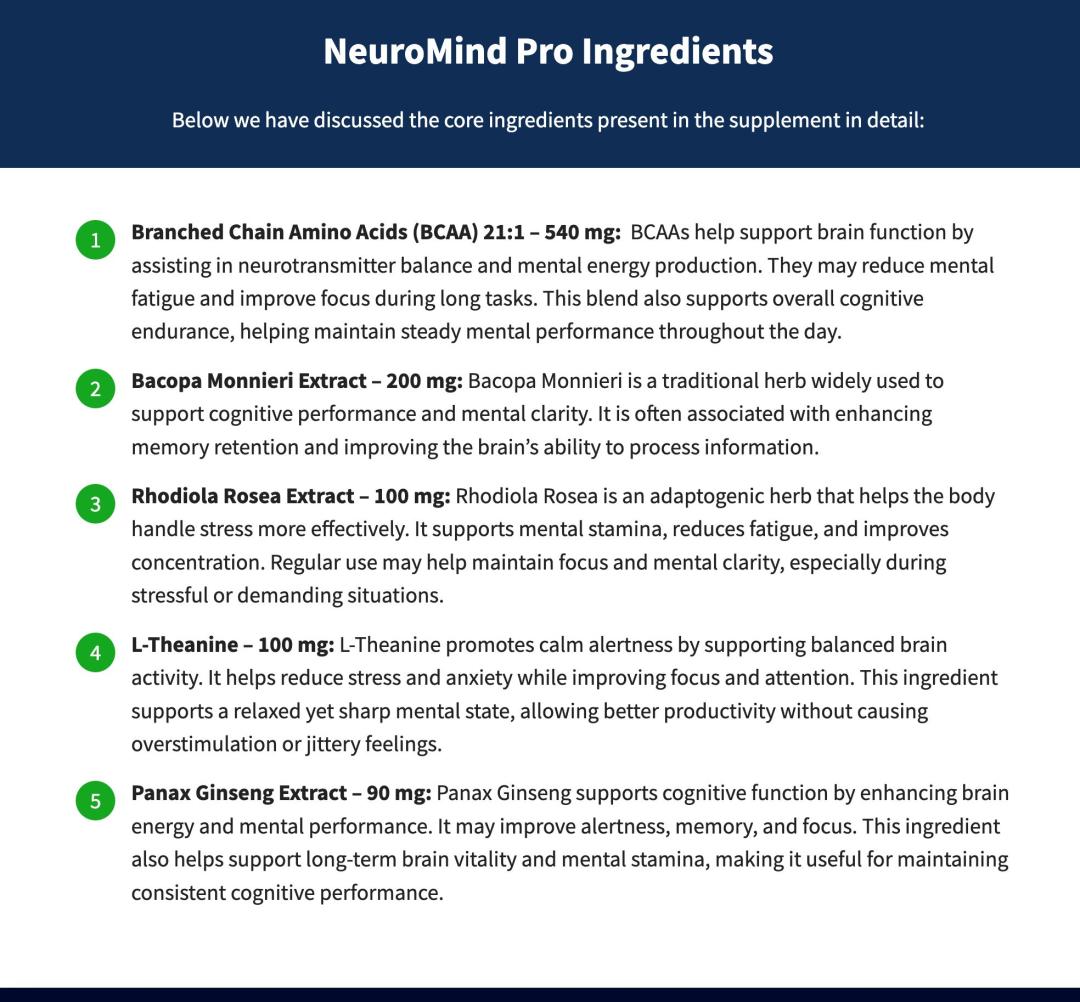
The Herbal & Amino Acid Blend:
Some digital storefronts display a label featuring a baseline mixture of Branched-Chain Amino Acids (BCAAs), Bacopa Monnieri, Rhodiola Rosea, L-Theanine, and Panax Ginseng.
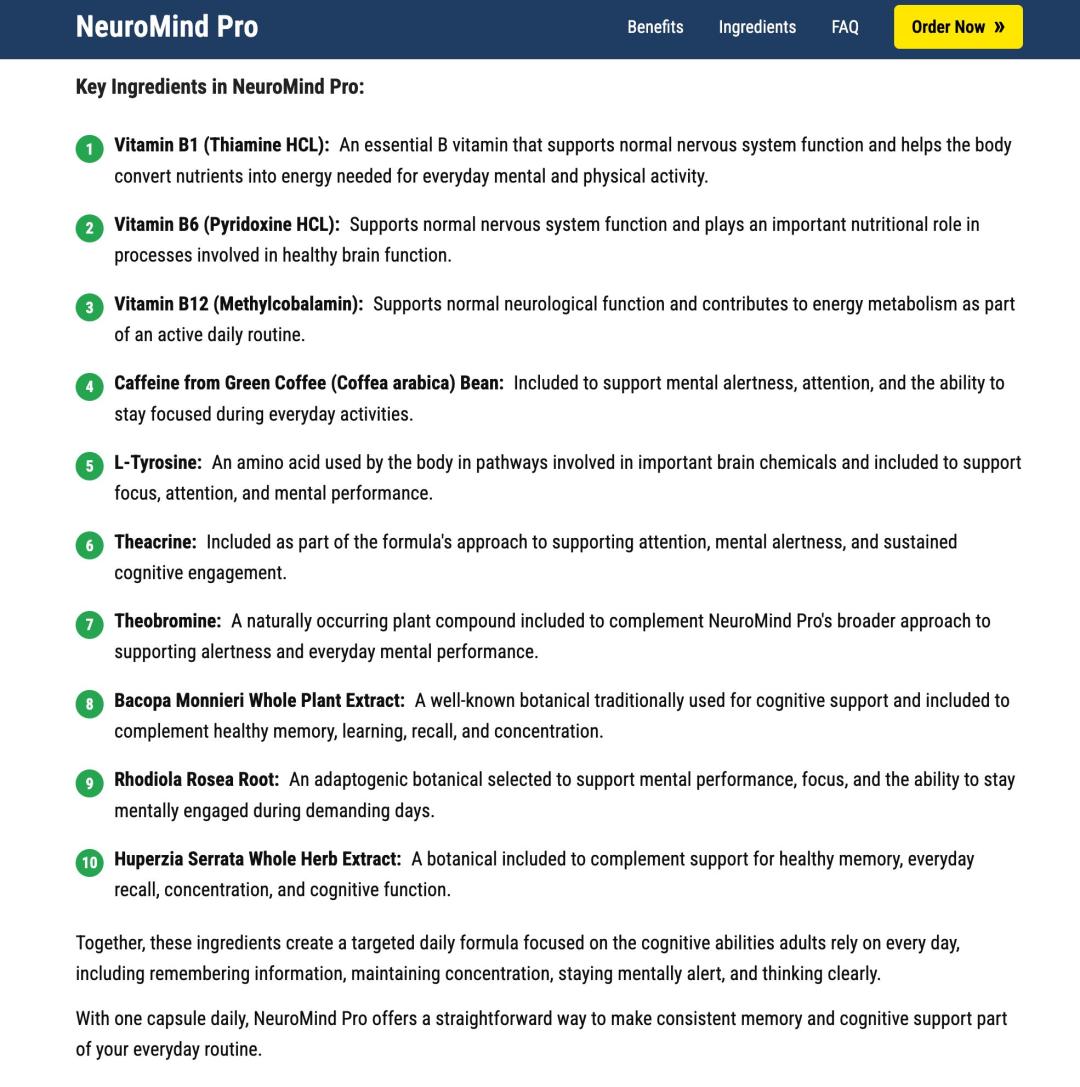
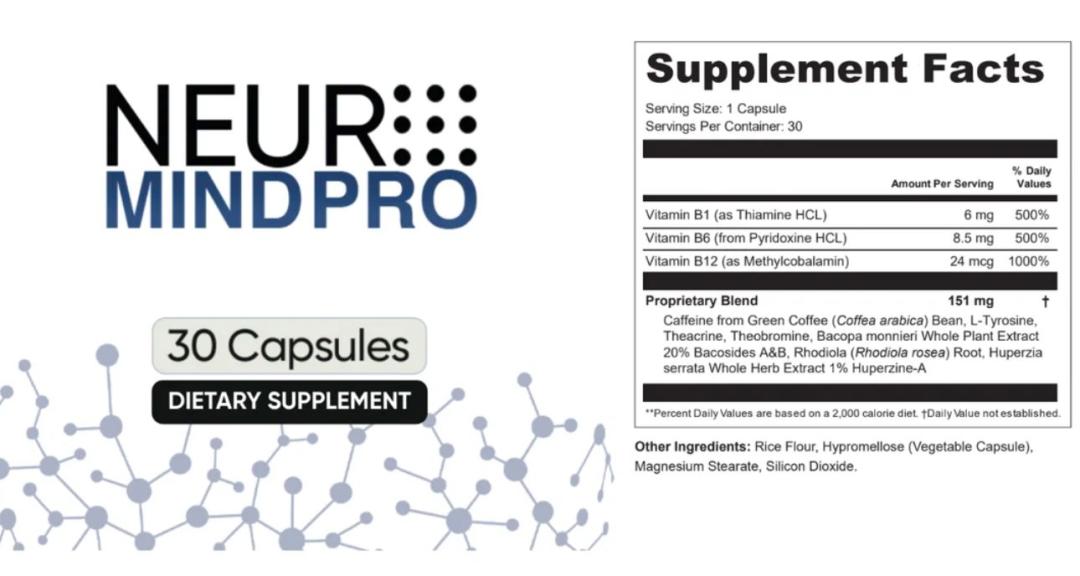
The Vitamin & Stimulant Blend:
Alternative checkout pages list an entirely different formulation centered around essential B vitamins (B1, B6, B12) combined with Caffeine from Green Coffee Bean, L-Tyrosine, Theacrine, and Theobromine.
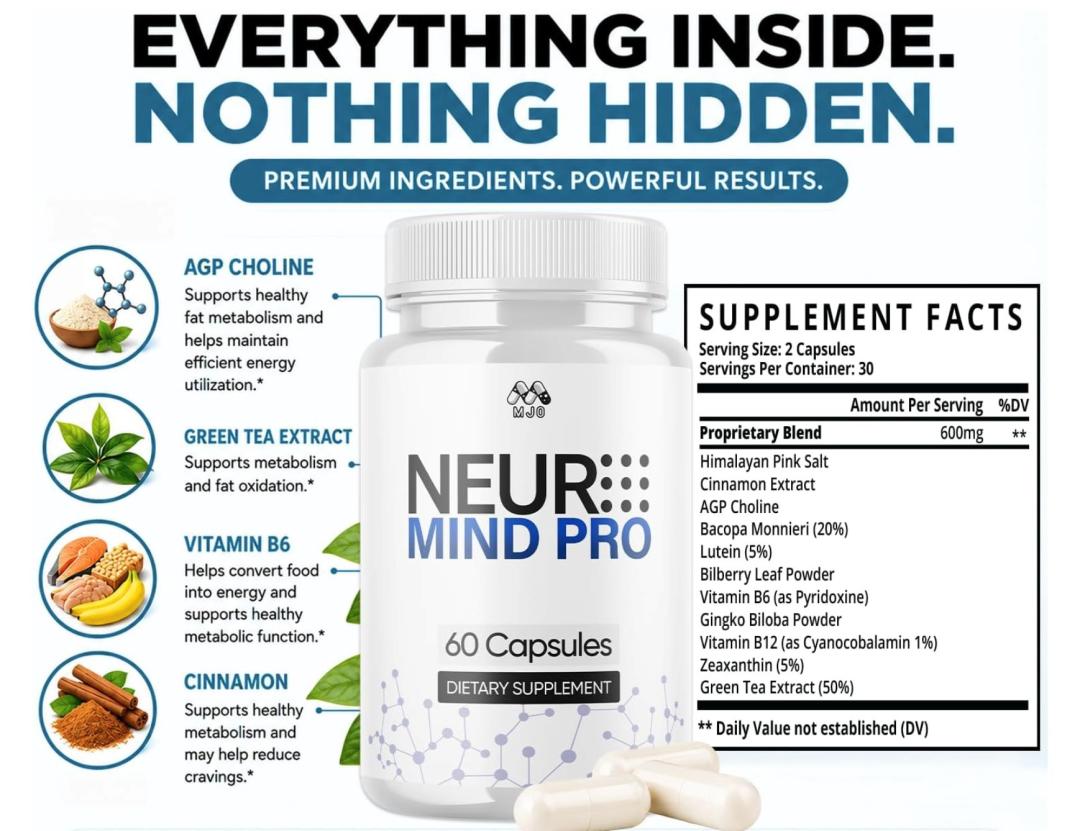
The Botanical & Dense Nutrient Blend:
Other marketplace listings present a highly complex proprietary blend containing ingredients like Himalayan Pink Salt, AGP Choline, Lutein, and Bilberry Leaf.
Because of these substantial variations, what arrives in a physical shipment may not mirror the exact ingredients viewed on a specific promotional page. Consumers are strongly encouraged to verify the physical label upon delivery before introducing the capsules into a daily routine.
The online marketing ecosystem for Neuro Mind Pro features several promotional strategies that are common within the white-label supplement industry. Recognizing these patterns can help individuals assess the background of the product.
Many landing pages for the product utilize layouts that mimic mainstream news portals, such as CNN World or independent medical blogs. These pages frequently feature static images of national broadcasters or popular morning talk shows.
These layouts seem to be promotional templates designed to establish immediate credibility, rather than indicating genuine, broadcasted investigative reports or independent news features. Furthermore, there appears to be no verified evidence that these news portals or media blogs have endorsed the product.
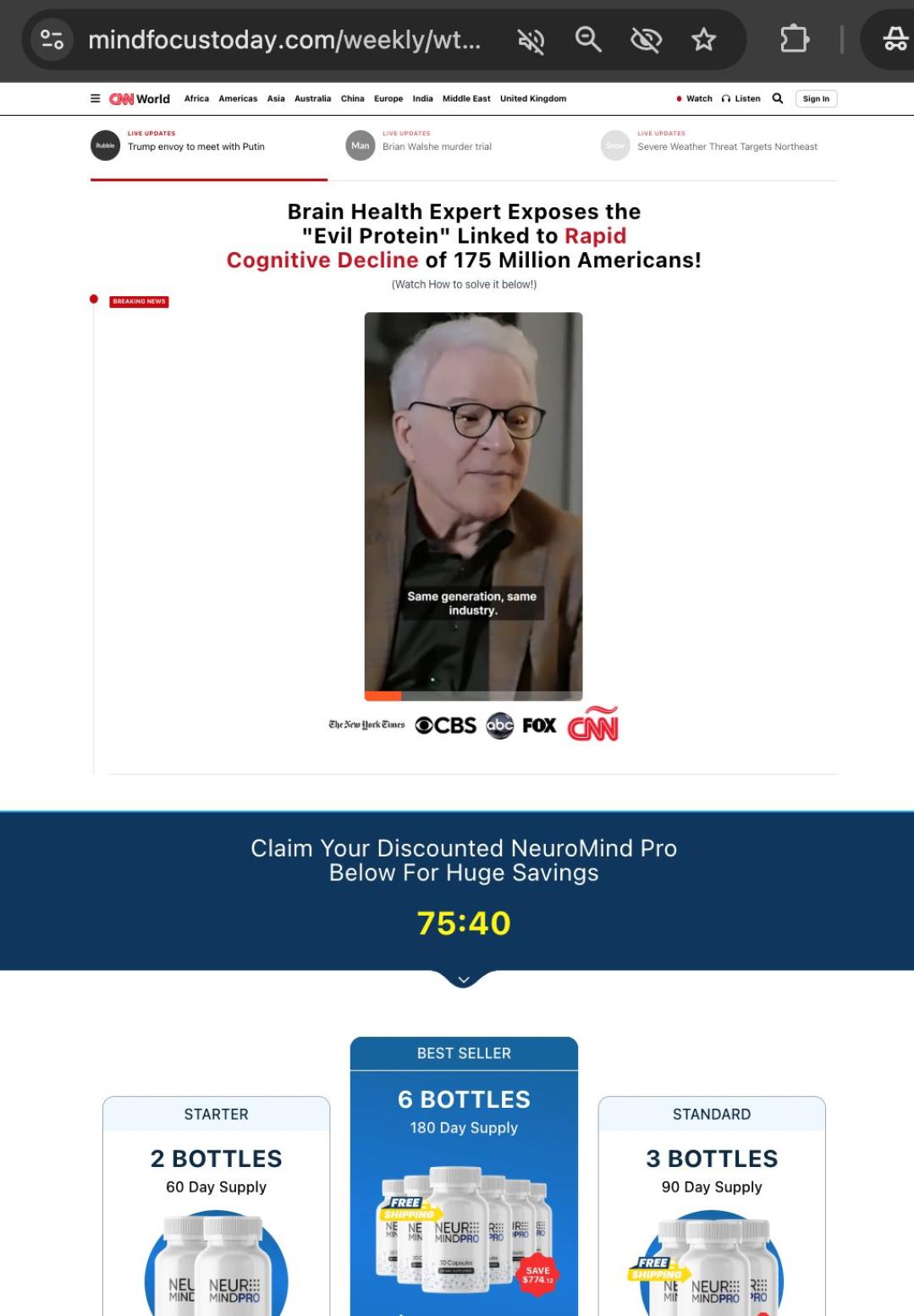
Promotional videos and advertisements linked to the supplement occasionally feature footage or references to high-profile philanthropists, tech leaders, or public figures. Investigative organizations and consumer advocacy groups have noted that these segments may rely on highly edited video clips, simulated voice technology, or AI-generated media. Consequently, there appears to be no verified, public record of endorsement from these individuals.
The presence of active countdown timers set to zero, fluctuating pricing tiers, and immediate "low stock alerts" are integrated into many checkout portals. These elements seem intended to create a sense of immediate urgency, potentially leading consumers to complete a transaction before fully researching the background of the vendor.
To provide a neutral overview, it is helpful to look at both what might offer support and where specific risks may arise based on the ingredients frequently cited.
Certain versions of the supplement utilize well researched botanicals like Bacopa Monnieri and Ginkgo Biloba. Clinical literature suggests these specific extracts may support normal cerebral blood circulation and cognitive focus over extended periods of consistent use. However, to potentially achieve the outcomes observed in clinical trials, ingredients generally need to be present in the specific standardized amounts studied by researchers.
In the case of several Neuro Mind Pro listings, the precise dosage of individual active components may appear unclear due to the use of proprietary blends, or the listed amounts may not fully align with those utilized in published clinical data.
Ingredients like L-Theanine are widely recognized for supporting a state of relaxed alertness, which may help mitigate minor daily stress without causing heavy drowsiness. However, as with other nootropic compounds, the potential benefits observed in scientific literature are typically tied to specific standardized doses.
Because some versions of NeuroMind Pro present L-Theanine as part of an undisclosed proprietary blend, the exact amount included in each capsule may appear unclear, meaning it may or may not reach the therapeutic thresholds generally evaluated in clinical trials.
The inclusion of foundational B-complex vitamins may support normal cellular energy pathways for individuals who have existing dietary deficiencies.
The lack of a fixed recipe means the physiological impact may be highly inconsistent from one bottle to the next.
Active ingredients found in some versions, such as St. John's Wort or Ginkgo Biloba, are known to interact with common prescription therapeutics. These combinations may affect blood clotting efficiency or alter the breakdown of blood pressure medications and antidepressants.
As a dietary supplement, the specific compound blend has not undergone rigorous, independent clinical trials or FDA review for medical efficacy before being offered online.
Neuro Mind Pro (NeuroMind Pro) seems to operate within a complex network of white-label resellers, leading to noticeable variations in packaging, pricing, and active ingredients across different storefronts. Furthermore, it appears that the complete Neuro Mind Pro formulation as a whole hasn’t been subjected to independent clinical testing to verify its collective safety or efficacy.
While certain variants may utilize ingredients with recognized potential, the specific dosage of these components often remains unclear or obscured within proprietary blends, meaning they may not align with standard therapeutic thresholds.
Additionally, the widespread utilization of unverified celebrity media clips and simulated news portal layouts further highlights the supreme importance of consumer caution.
Before purchasing or consuming any new dietary supplement, the most reliable step is to consult a licensed healthcare professional. A physician can review the exact physical label ingredients and safely evaluate whether the product aligns with your personal health profile.
This objective review is for educational, informational, and critical commentary purposes only, based on independent evaluation of publicly available marketing materials, ingredient listings, domain behaviors, and third-party consumer feedback. This neutral analysis of documented retail inconsistencies makes no definitive accusations regarding the legality of the business entities involved, neither promoting nor condemning the product or its storefronts. Individual experiences vary; consumers must autonomously evaluate marketing claims and digital transparency.
All product names, logos, and trademarks (including "Neuro Mind Pro" and "NeuroMind Pro") belong to their respective owners and are used under fair use guidelines for identification only. This content is not professional medical advice, diagnosis, or treatment; always consult a licensed healthcare professional before introducing new dietary or wellness supplements to your routine.
This article has been written by a Scam Fighter Contributor, De-Reviews.com Team. If you believe the article above contains inaccuracies or needs to include relevant information, please contact ScamAdviser.com using this form.
De-Reviews.com Team is a group of scam researchers, editors, and online safety advocates dedicated to exposing online fraud and helping consumers stay safe online. The team has been investigating scams, fraudulent websites, phishing campaigns, and other online threats since 2014. Read the Full Author Profile.
