
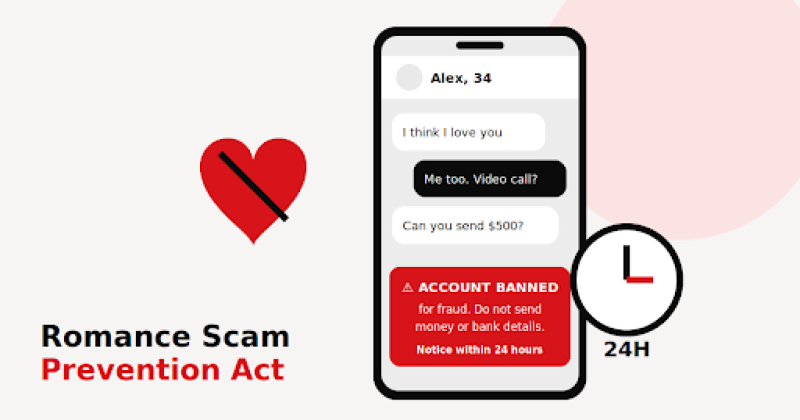
Dating applications in the United States will soon be legally required to alert users whenever an account they have messaged is permanently banned for fraud.
The bipartisan Romance Scam Prevention Act was signed into law by President Donald Trump on Tuesday, mandating that online dating providers notify impacted users generally within 24 hours of issuing a fraud-related ban. The legislation, originally spearheaded by Rep. David Valadao (R-CA) in the House and Sens. Marsha Blackburn (R-TN) and John Hickenlooper (D-CO) in the Senate, cleared Congress unanimously following historic fraud spikes.
According to Federal Trade Commission (FTC) telemetry cited in reporting by the International Consortium of Investigative Journalists (ICIJ), Americans lodged over 70,000 romance scam reports in 2025, surrendering an unprecedented $1.47 billion to bad actors.
"Millions of Americans use online dating platforms to find meaningful relationships, making these platforms a target for scammers looking to exploit unsuspecting victims," Valadao noted following enactment.
While major dating platforms routinely purge flagged accounts, removal alone has consistently failed to protect victims. Fraudsters systematically lure targets off-platform to SMS, WhatsApp, or Telegram within hours of matching. Once off-app, victims often communicate with scammers for weeks or months—completely unaware that the original profile was banned for criminal conduct.
The new federal framework systematically addresses that blind spot:
The legislation follows mounting congressional pressure, including a Joint Economic Committee minority investigation that examined fraud mechanics across Match Group properties (such as Tinder and Hinge). Committee data revealed that the median scam account had been viewed over 500 times before removal in late 2025, up from under 70 views in mid-2024.
While statutory protections take effect over the coming year, digital daters must remain vigilant against classic social engineering tactics:
If you suspect you have engaged with a romance scammer, cease all communication immediately, alert the dating platform, and report the transaction details to the FTC at ReportFraud.ftc.gov. You can also submit the malicious account details and URLs through ScamAdviser's Report a Scam database to help protect other daters across the network.
Source: Fergus Shiel, "New US law requires dating apps to include warnings on romance scams," International Consortium of Investigative Journalists (ICIJ), October 21, 2026.
