

Adult content sites account for nearly 10% of all web traffic globally, making them a primary target for data harvesting and aggressive advertising. Platforms like Oolveri.com use the promise of "unseen" content to draw you in, often masking the underlying technical risks. You enter for the video, but you might leave with trackers you never authorized.
In a Nutshell
Oolveri.com markets itself as a provider of "unseen hot erotic Tamil adult videos" that are updated daily. This type of marketing targets users looking for niche content that is often difficult to find on mainstream, moderated platforms. While the site promises a seamless experience, you should be aware that these videos are often hosted on external third-party servers.
When you click "play," you may not be interacting with the site itself but with an external video player. These players frequently use overlays—invisible layers that trigger a new window or tab when you click anywhere on the screen. This is the primary way sites that do not charge a subscription fee generate revenue from your visit.
From Whois and ScamAdviser database, Oolveri.com was registered on September 29, 2021. In the world of niche adult sites, a three-year lifespan suggests a level of stability compared to "fly-by-night" sites that disappear after a few months. However, longevity does not automatically guarantee safety or the legality of the hosted content.
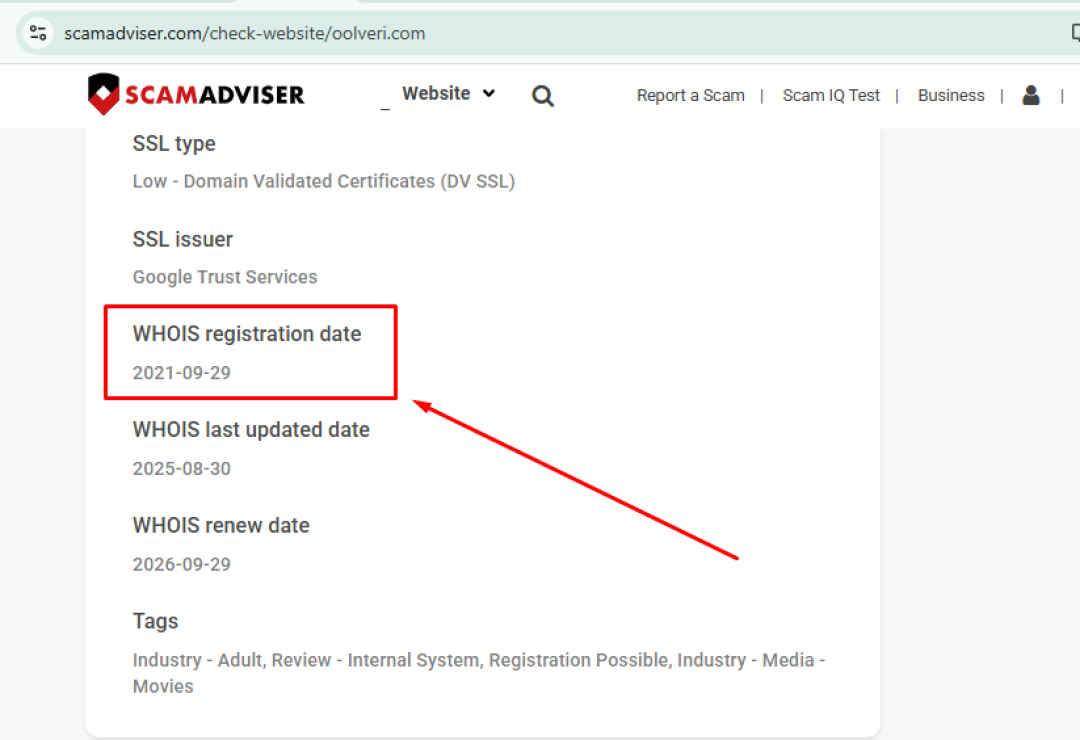
Longevity often means the site has found a reliable way to stay online despite potential copyright or hosting challenges. For you, this means the site is established, but the underlying risks of visiting unmoderated platforms remain the same. You are still responsible for protecting your device from the scripts running in the background.
Free sites must pay for their servers and bandwidth somehow, and Oolveri.com likely relies on ad-supported revenue. This often involves malvertising—a practice where malicious code is hidden within legitimate-looking advertisements. You might click a "close" button on a pop-up only to have it trigger a download or a redirect to a suspicious site.
These redirects often lead to "scareware" pages that claim your device is infected with a virus. These warnings are almost always fake and are designed to trick you into downloading "cleaner" software that is actually malware. Staying on the primary page is difficult when every interaction leads your browser elsewhere.
Privacy is a major concern on sites that offer adult content without requiring a signup. While not having to provide an email address is a plus, it does not mean you are browsing anonymously. Most of these sites use cookies—small data files stored on your browser—to track your preferences and browsing habits.
This tracking data is often sold to third-party advertisers who build a profile of your digital interests. If you are not using a VPN (Virtual Private Network), your IP address is also visible to the site administrators and their ad partners. This information can reveal your general location and your internet service provider.
If you choose to visit Oolveri.com, you can minimize your risk by using a modern browser with strict privacy settings. An active ad blocker is your best defense against the "invisible" clicks and unwanted pop-ups that plague free video sites. This simple tool can prevent most malicious scripts from ever reaching your device.
Additionally, consider using a secondary browser or an "incognito" window to prevent the site from accessing your main browsing history. Never download files or "players" suggested by the site, as legitimate video streaming rarely requires extra software today. Keeping your operating system updated ensures that even if a script runs, your security patches are ready to block it.
Your skepticism regarding Oolveri.com is a healthy reaction to any site offering "unseen" content for free. You can report suspicious redirects to the Google Safe Browsing team or your national cybercrime authority, such as the FBI's IC3 in the United States. Oolveri.com offers free access at the potential cost of your digital privacy.
This article has been written by a scam fighter volunteer. If you believe the article above contains inaccuracies or needs to include relevant information, please contact ScamAdviser.com using this form.
Adam Collins is a cybersecurity researcher at ScamAdviser who operates under a pseudonym for privacy and security. With over four years on the digital frontlines and 1,500+ days spent deconstructing thousands of fraud schemes, he specialises in translating complex threats into actionable advice. His mission: exposing red flags so you can navigate the web with confidence.
