
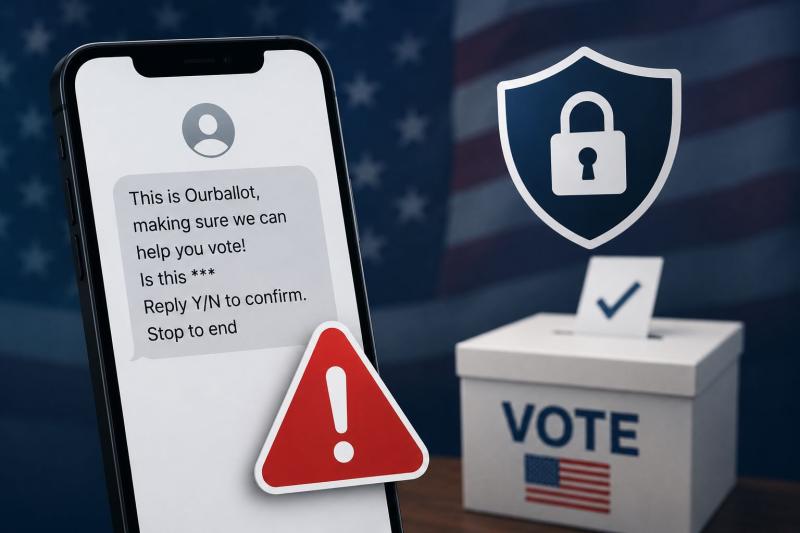
Many people across the United States have recently reported receiving unexpected text messages mentioning Ourballot and offering help related to voting. Since election related scams are becoming increasingly common, these messages have caused confusion among recipients who are unsure whether they are receiving genuine voter assistance or a suspicious text campaign.
One commonly reported message says:
"This is Ourballot, making sure we can help you vote! Is this *** Reply Y/N to confirm. Stop to end"
The message may appear harmless at first because it does not immediately ask for money or passwords. However, receiving an unexpected voting related message from an unknown sender naturally raises questions. So, is the Ourballot text message a scam, or is there another explanation? Let’s find out here.
A large number of recipients have reported receiving similar messages even though they do not remember signing up for voter related notifications.
Some people online have said they received the message without requesting any election updates, while others reported that the texts arrived suddenly in large numbers. This has led many users to question how their phone numbers were obtained and why they were contacted.
Unexpected messages are one of the main reasons people become suspicious. Legitimate organizations usually make it clear why they are contacting someone and provide an easy way for recipients to verify the communication.
Based on available information, Ourballot appears to be associated with voter education and engagement activities. The initiative reportedly focuses on helping people access election related information, such as:
While some reports suggest that OurBallot is connected with voter education activities, the unsolicited nature of these messages has caused significant concern. Election officials and security warnings have advised people to treat unexpected voting related texts with caution, especially if they request replies, personal information, or direct users to external links.
Even when a message may have a legitimate purpose, several warning signs make recipients cautious.
Unexpected Contact:
Many people say that they never subscribed to receive messages from Ourballot. A sudden text about voting from an unfamiliar sender can look similar to other unwanted marketing or scam messages.
Asking Users to Reply:
The message asks recipients to reply with Y or N to confirm. While confirmation requests can be used by legitimate services, replying to unknown messages can sometimes confirm that a phone number is active. Scammers often use active phone numbers for future spam campaigns, phishing attempts, or fraudulent offers.
Possible Links and Information Requests:
Some election related scams attempt to direct people to fake websites that imitate official voting portals. These websites may try to collect personal information, including:
In more serious cases, malicious links may attempt to install unwanted software or steal information from a user's device. For this reason, people should never assume a voting related message is safe simply because it mentions elections.
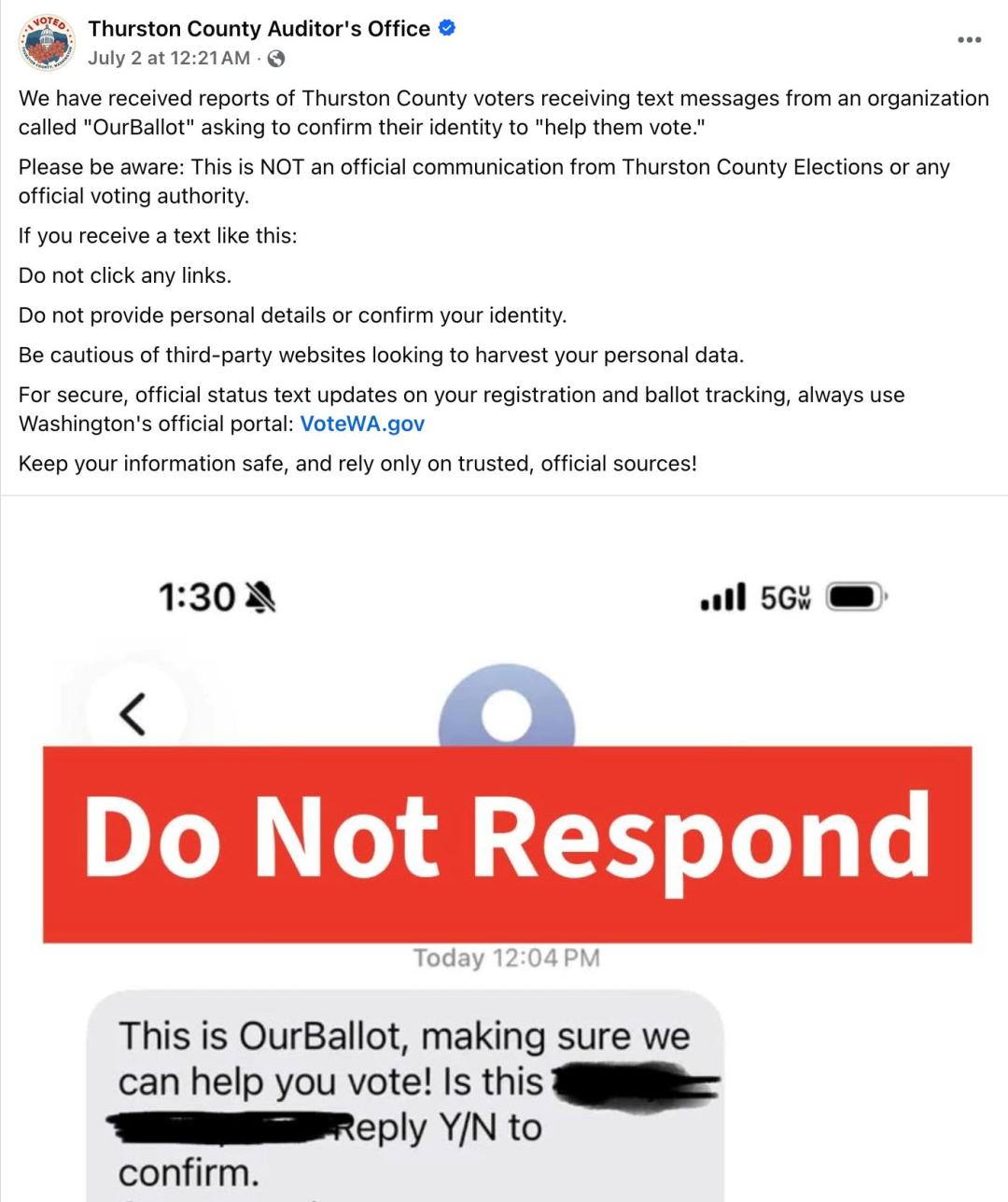
Concerns about these messages have also been raised by election officials. The Thurston County Auditor's Office in Washington shared a warning after receiving reports from voters about Ourballot related text messages. The office clarified that these messages were not sent by their election office or the Washington Secretary of State.
This highlights an important safety lesson: a message discussing voting does not come from an official election authority.
Election periods often attract scammers because voting is an important and time sensitive topic. Fraudsters may use urgency or fear to encourage people to act quickly. Some warning signs include:
Requests for Sensitive Information:
Be cautious if a message asks for details such as:
Official election offices generally do not ask voters to confirm sensitive personal information through unexpected text messages.
False Claims About Your Voting Status:
Some scams falsely claim that:
These claims are designed to make people panic and respond without checking.
Fake Rewards or Incentives:
Some fraudulent campaigns may promise:
These offers are often used to collect personal information.
Requests for Payments:
Be extremely careful if anyone asks for money to:
Legitimate election services do not require random text message payments.
If you receive this message and are unsure about it, follow these safety steps:
Do Not Click Unknown Links:
Avoid opening links from unexpected voting messages. Instead, manually type official government websites into your browser.
Do Not Share Personal Information:
Never provide your personal details through a text message unless you have independently verified who is contacting you.
Verify Through Official Sources:
If you want to check your voter registration, ballot status, or polling location, use trusted sources such as:
For example, voters can use official government resources such as Vote.gov rather than relying on links received through unsolicited messages.
Report Suspicious Messages:
If you believe the message is unwanted or suspicious:
If you choose to reply "STOP" to unsubscribe, understand that responding to unknown senders may confirm that your number is active.
The available information suggests that Ourballot appears to be connected with voter education efforts, rather than being confirmed as a fake organization. However, the way many people received the messages is concerning because they were unexpected and unsolicited.
The biggest issue is that unsolicited voting related texts can look very similar to phishing campaigns. Since phishing scammers often use election related topics to trick people, these messages should be treated carefully. Cybercriminals frequently use important events such as elections to trick people into revealing information or visiting unsafe websites.
If you receive an Ourballot message, do not panic, but do not blindly trust it either. Avoid clicking links, avoid sharing personal information, and verify election information directly through official government channels.
When it comes to election related messages, independent verification is always the safest approach. A few seconds spent checking the source can help protect your personal information from much bigger problems later.
This article has been written by a Scam Fighter Contributor, De-Reviews.com Team. If you believe the article above contains inaccuracies or needs to include relevant information, please contact ScamAdviser.com using this form.
De-Reviews.com Team is a group of scam researchers, editors, and online safety advocates dedicated to exposing online fraud and helping consumers stay safe online. The team has been investigating scams, fraudulent websites, phishing campaigns, and other online threats since 2014. Read the Full Author Profile.
