
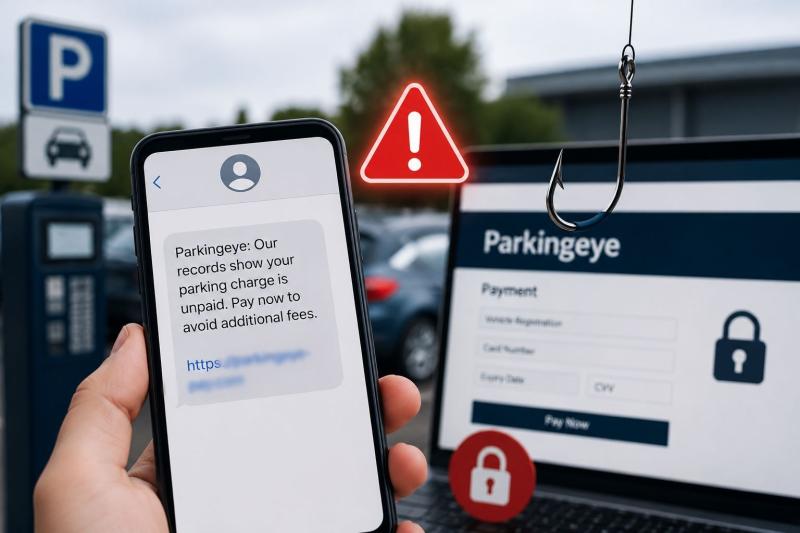
Many UK drivers are receiving text messages that come from Parkingeye, claiming they have an unpaid Parking Charge Notice (PCN). These messages try to convince people to make an urgent payment through a link. However, these texts are not genuine Parkingeye notifications. They are phishing attempts created by scammers to steal personal information, vehicle details, or payment card details.
Parkingeye is a real parking management company in the UK, but scammers often misuse the company’s name to make fake messages look trustworthy. Parkingeye has also warned the public about these fraudulent text messages and confirmed that these scam texts are not sent by the company.
The scam usually starts with a text message saying that a parking payment has not been completed or that a parking charge remains unpaid. The message creates panic by suggesting that the recipient must act quickly to avoid additional fees, penalties, or other problems.
The main goal is to make people click on a fake payment link. The link usually leads to a website designed to look official but is actually controlled by scammers. These fake websites may ask for details such as:
Once scammers collect this information, they may use it for fraud or other criminal activities.
One example of such message is:
"Our records currently indicate that the parking fee associated with your vehicle has not been successfully settled. To avoid additional charges and any administrative restrictions, please complete payment at your earliest convenience."
Although the wording may look professional, genuine Parkingeye messages do not work this way.
A major warning sign is that Parkingeye does not send notices for Parking Charge Notices or unpaid fines through text messages. Genuine parking charges or fines are sent through official methods, such as a physical notice placed on a vehicle or a letter sent through the post.
A real Parking Charge Notice normally includes important information, including:
Fake scam texts often leave out these important details because they are not connected to any real parking event.
Scammers use several tricks to make these messages appear urgent and believable. Some common signs include:
The message may threaten extra charges, penalties, or restrictions if payment is not made quickly. This pressure is designed to stop people from checking whether the message is real.
The link inside the message is usually not the official Parkingeye website. Scam links may contain random letters, unusual website endings, or addresses that look slightly different from the real website. Always check the website address carefully before entering any information.
Some scam messages ask recipients to reply with "Y" or "Yes" to activate the link. They may also tell users to close and reopen the message or copy the link into a browser if it does not open.
This is a common trick used by scammers to bypass phone security features that may hide links from unknown senders. A genuine company would not ask you to do this.
A fake message may not mention:
This lack of these information is another warning sign.
Some scam messages may contain small mistakes that reveal they are not genuine. For example, they may use a fake or poor quality logo, unusual wording, incorrect spelling, grammar errors, or a company name and design that looks slightly different from the official branding. These small differences can be a sign that the message was created by scammers rather than the real organisation.
If you receive a text message claiming to be from Parkingeye and you are unsure whether it is genuine, avoid taking any action through the message itself. Scammers rely on quick reactions, so it is important to slow down and verify the information first.
Here are the steps you should follow:
Reporting these messages helps authorities and mobile providers track scam campaigns and reduce the number of people targeted by similar fraud attempts.
If you think you may actually have an unpaid parking charge, do not trust a text message. Instead, check through official Parkingeye communication channels.
A genuine Parkingeye Parking Charge Notice will come through official channels and provide details that allow you to confirm the claim, including the reference number, location, date, and payment or appeal options.
The Parkingeye text message scam shows how scammers misuse trusted company names to make fake messages appear believable. A real organisation like Parkingeye does not send these scam messages or ask customers to make urgent payments through suspicious links. However, criminals often pretend to represent trusted brands to trick people into sharing personal information or payment details.
Urgent payment requests, suspicious links, and missing parking details are common warning signs of fraud. Before making any payment or sharing personal information, always verify the details through official sources.
Disclaimer: The information in this article is provided for educational and awareness purposes. Company names, phone numbers, sender names, and other details referenced may have been impersonated, spoofed, or otherwise misused by scammers. Their appearance in this article does not necessarily identify the legitimate company, owner of a phone number or account as being involved in fraudulent activity.
Author Information:
This article has been written by a Scam Fighter Contributor, De-Reviews.com Team. If you believe the article above contains inaccuracies or needs to include relevant information, please contact ScamAdviser.com using this form.
De-Reviews.com Team is a group of scam researchers, editors, and online safety advocates dedicated to exposing online fraud and helping consumers stay safe online. The team has been investigating scams, fraudulent websites, phishing campaigns, and other online threats since 2014. Read the Full Author Profile.
