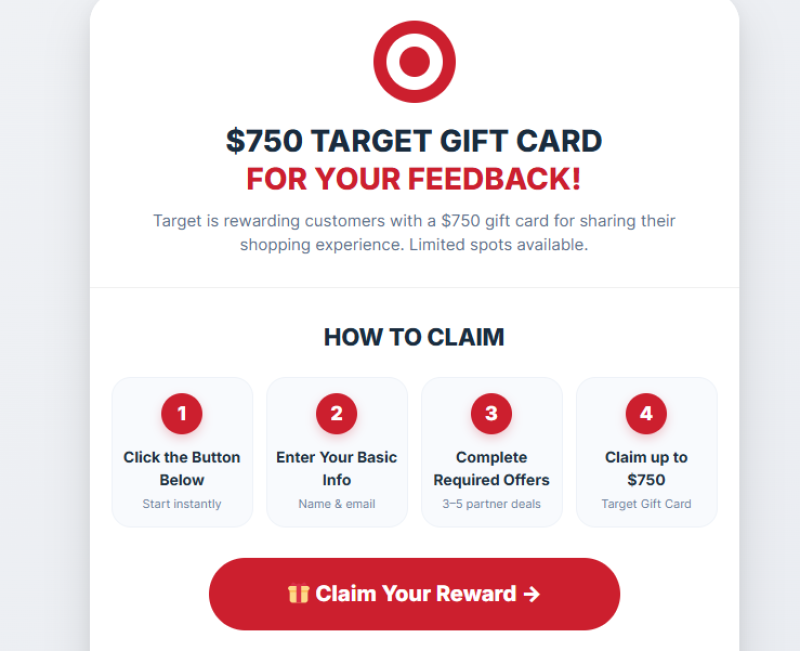
Perklovely.com is very likely a scam. That is the short answer. If you are asking "is this website legit" before you hand over your email or phone number, the signs here point away from legit, not toward it.
Perklovely.com tells visitors they can get a $750 Target gift card by completing quick tasks. App installs. Free trials. Product sign ups. Each one is supposed to take three to five minutes. In exchange, you get closer to a reward that almost never actually arrives. Below is what we found when we checked the site, and how you can run the same checks yourself the next time a page like this shows up in your feed.
Reward sites built around small tasks have been picked apart by researchers for years, and Perklovely.com follows the same structure. You start one task, and it tells you that you need to finish another before your gift card unlocks. Then another. The number of required tasks tends to grow the closer you get to the finish line, and the finish line itself keeps moving.
This model works because each individual step feels harmless. Installing an app costs nothing up front. Signing up for a free trial feels reversible. But the tasks are usually paid affiliate offers, meaning the site operator earns money every time you complete one, whether or not you ever see that $750 card. Your reward is the bait. Their revenue is the sign up.
If you want to check if a website is legit before you start clicking through offers like this, look for a clear, single path to a reward with no shifting requirements. Perklovely.com does not offer that.
While reviewing the site, we noticed pop ups designed to create urgency. Messages appear showing that someone nearby has "just claimed" a coupon or gift card, timed to make you feel like the offer is limited and going fast. These notifications are a common design pattern on task and reward sites, and they are usually scripted to appear on a loop rather than reflecting real activity.
Others seen elsewhere, like countdown timers, limited spots remaining, and "someone in your area just won" banners, all serve the same purpose. They shorten the time you spend thinking and increase the chance you skip past red flags you would otherwise notice.
We ran Perklovely.com through ScamAdviser, a website safety checker used to score domains on trust and risk. ScamAdviser gives Perklovely.com a trust score of 0 and labels the site "Likely Unsafe."
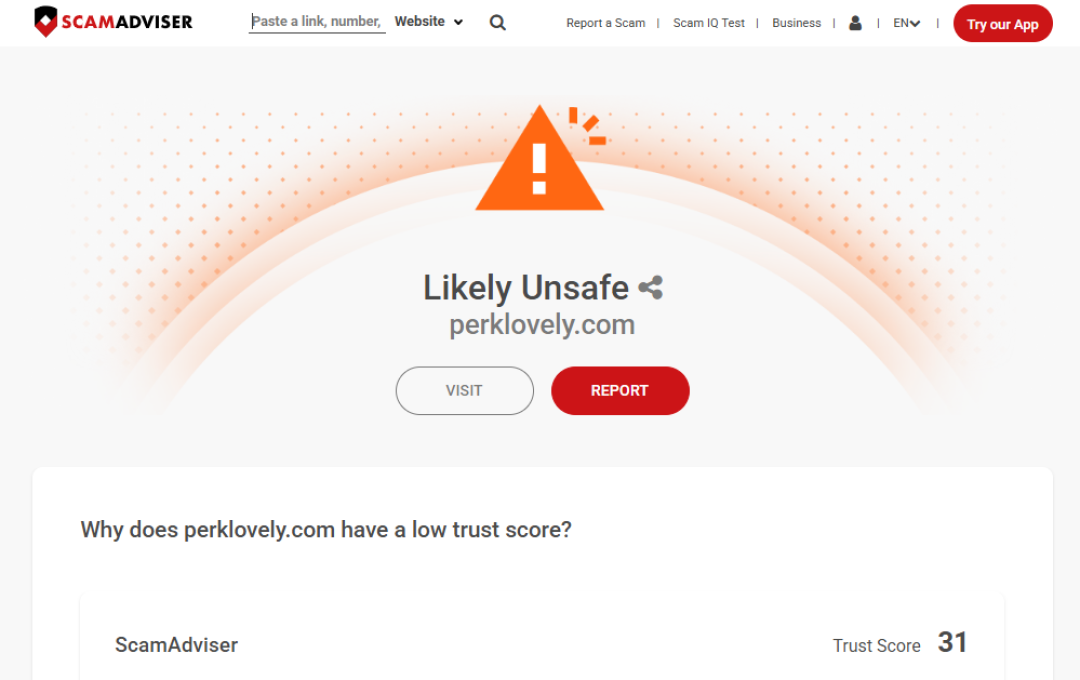
A few specific findings from ScamAdviser stand out:
This is a good moment to build the habit of running a website safety check yourself before you engage with an offer that sounds too good to pass up. A trust score check takes under a minute and can save you a lot more time than that if it steers you away from a scam.
The Target gift card is the hook, not the product. Look at what Perklovely.com actually collects along the way. Every "simple" task asks for something: your email address for a newsletter sign up, your phone number to "verify" your account, your name and address to "confirm eligibility" for the reward.
None of that data goes toward printing you a gift card. It goes into a database that gets sold, reused, or fed into future scam campaigns. Your email ends up on spam lists. Your phone number starts receiving robocalls and text scams. Your personal details become the raw material for more targeted attempts down the road, sometimes months after you forgot you ever visited the site.
This is the real business model behind most reward and task scams. Data has value on its own, gift cards do not need to exist for the site to profit.
A general checklist helps here, whether you are looking at Perklovely.com or any other reward site that lands in your inbox or social feed.
Is this website safe to use? Based on the domain age, the hidden ownership, and the low trust score ScamAdviser assigned it, Perklovely.com is not a site we would recommend entering any personal information into, regardless of how appealing the $750 figure looks.
Target has never run a promotion through Perklovely.com, and there is no public record connecting the two. The pattern here matches long documented task and reward scams: a big prize, a growing list of "quick" tasks, pressure tactics to stop you from thinking it through, and a trust score from ScamAdviser that lands at the bottom of the scale. If you already completed tasks on the site, change any passwords you reused, watch for spam or phishing attempts on the email and phone number you provided, and skip any further requests for payment or personal details tied to this offer.
See more interesting articles from ScamAdviser:
This article has been written by a scam fighter volunteer. If you believe the article above contains inaccuracies or needs to include relevant information, please contact ScamAdviser.com using this form.
Adam Collins is a cybersecurity researcher at ScamAdviser who operates under a pseudonym for privacy and security. With over four years on the digital frontlines, he specialises in translating complex threats into actionable advice. His mission: exposing red flags so you can navigate the web with confidence.