
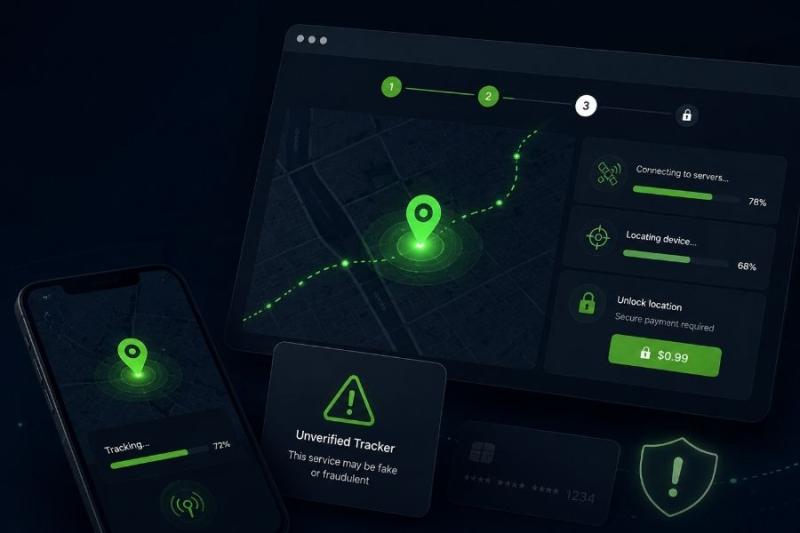
Some people may want to track someone, and their best shot is tracking a phone, as most of us carry our phones with us all the time. Not everything works as we hope they would. A phone number tracking scam usually starts with one promise: enter a number and see someone’s live location. The site may show a loading map, a fake satellite screen, or a “searching database” animation to make the process feel real.
A normal website cannot show a person’s live GPS location just because you type in their phone number. In many cases, these sites collect numbers, push payment pages, sell fake subscriptions, or lead users toward phishing and spyware risks. We’ve had similar cases before, where users reported similar websites, which can be found later in the article.
How phone number tracking scams work
Phone tracking scams work exactly as you dream of them, as if you would put a telephone number into a website and they will give you the exact location of it. As if you are the FBI…
The site usually asks you to enter a phone number first. After that, it may show a fake progress screen with messages such as “locating device,” “connecting to satellite,” or “GPS signal found.” These screens create the feeling that the site already found something. Well, we have some bad news.
The site may ask for:
Some sites never show any useful results. Others show generic data, such as the country, carrier, or region linked to a phone number prefix. That is not live tracking. It is just lookup data.
Before you enter any details, check the website with ScamAdviser’s website checker and read the Trust Score report. A low Trust Score, hidden owner details, a new domain, or many negative reviews should make you stop. You can also check our guide on how to read a Trust Score.
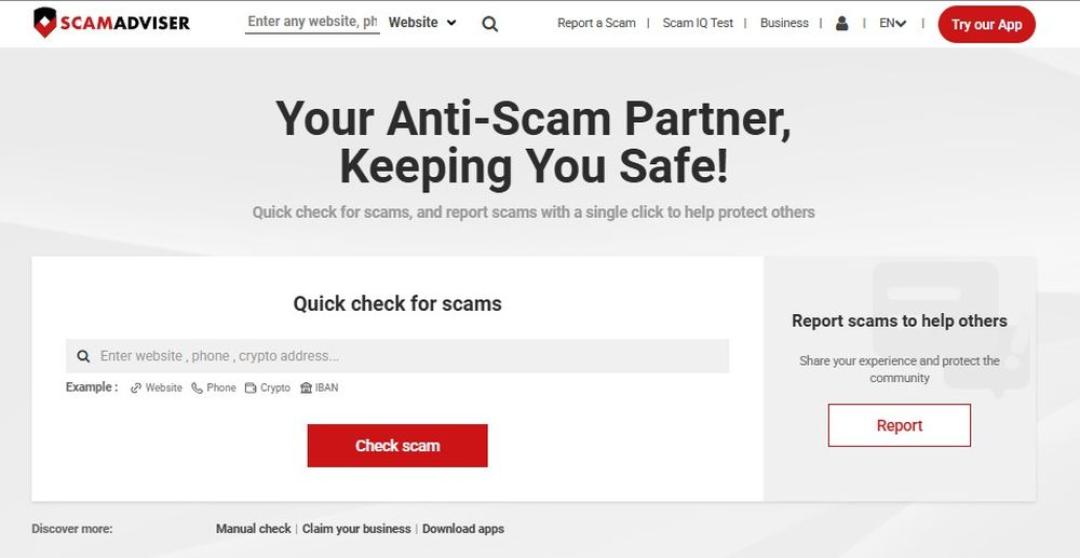
Put the website name in the box and hit the magic button.
Phone tracker scam pages borrow design patterns from real security tools. This usually creates trust in the user.
Many people know that phones can be located through Apple Find My, Google Find Hub, mobile carriers, family safety apps, or emergency services. Scam sites use that general knowledge and remove the most important part: consent or account control.
These scammers might use a moving map that looks technical, so it feels convincing. But a map animation does not prove that the site has found a device. It is really easy to do with the technology today.
Some scam pages show a marker near the country or region of the number. That may come from public numbering data, not from the phone’s actual location.
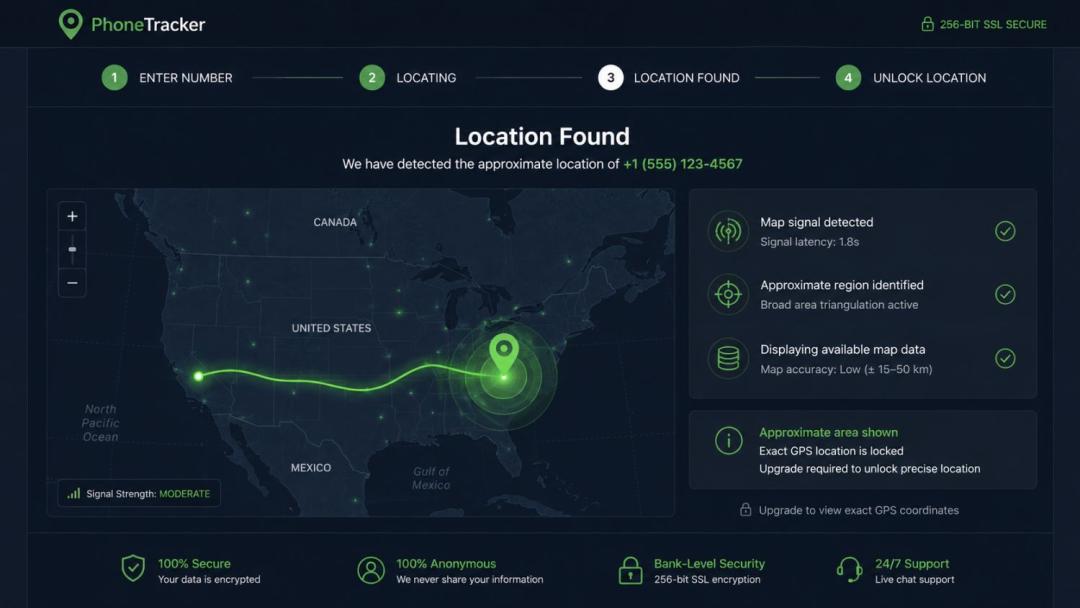
The fake map is another trick in the book because it gives users a trustworthy feeling
A progress bar gives the user time to believe the process works. It may show messages such as “database match found” or “location ready.”
The final step often asks for payment. That is where the financial side of the scam happens. Scammers are usually after your money.
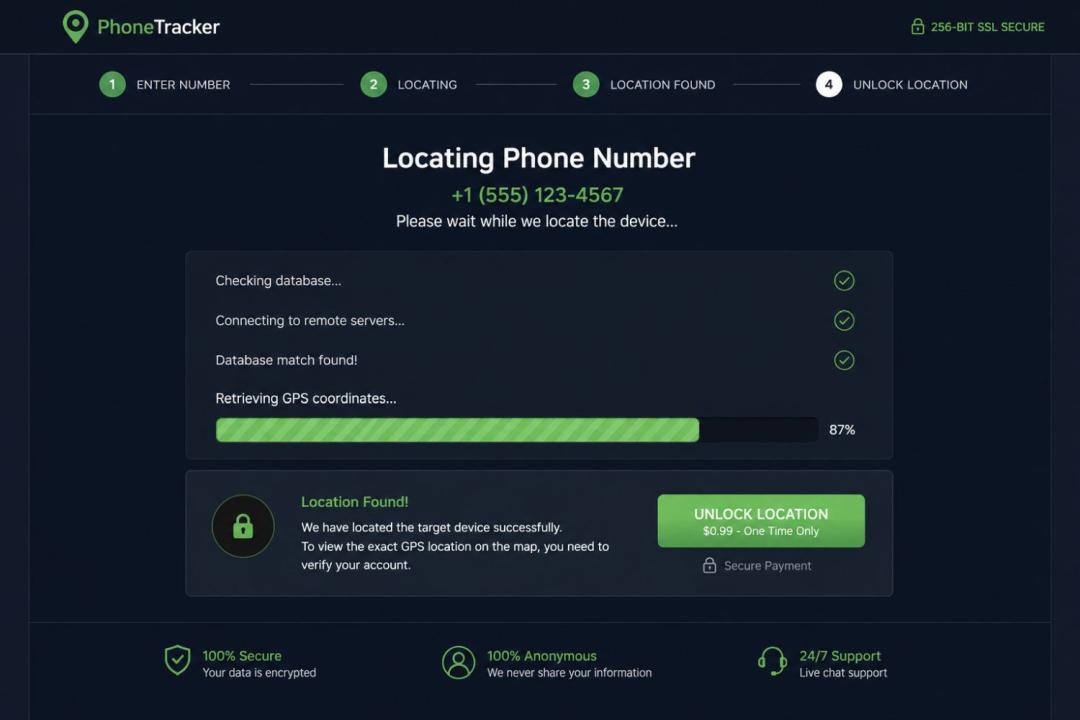
A progress bar is an old trick that gives the user the feeling that something will happen as the progress bar fully loads.
Many phone tracking sites ask for a small payment, such as €0.50 or $1. The amount feels harmless, but the payment page may sign you up for a recurring subscription.
Check the billing terms before you enter card details. Look for the full price, renewal period, cancellation method, company name, and contact information.
A public website cannot reliably track someone’s live phone location by number alone.
Real tracking works through controlled systems. These systems may include the phone owner’s Apple or Google account, a family location app with consent, a carrier process, or law enforcement access under local rules. A random website does not get that access just because you enter a number.
You will find the claims on the left side and the reality on the right:
A phone number can reveal limited information in some cases. For example, a lookup tool may show the country code, carrier, or original number region. That does not mean the person is physically there.
A phone tracking site can collect more than the number you typed.
When you use a suspicious tracker site, the operator may log your IP address, browser data, device type, email address, payment details, and the phone number you searched. That creates privacy risks for you and for the person whose number you entered.
The number may be used for:
A SIM swap means a criminal tries to move someone’s phone number to another SIM card. If they succeed, they may receive SMS login codes for online accounts.
Real phone tracking is limited, permission-based, and tied to an account or device.
The first steps you should follow are as follows:
Use tools that require clear consent and are actually legit:
A safe tool should explain what it tracks, who can see the location, how to stop sharing, and how the data is stored.
Use a simple review process before you enter any personal details.
A professional-looking website can still be risky. Good design does not prove that the tracking claim is real.
ScamAdviser has reviewed many phone tracking websites so far, and it is safe to say that most of them follow similar patterns.
Some sites appear to show only generic number data. Others may expose personal information from leaked databases. Proxyearth.org is one example ScamAdviser has reviewed separately. That case showed why “phone tracking” pages can be more than harmless fake tools: they may pull from exposed personal data while still claiming to provide live GPS tracking. That one was illegal.
The Proxyearth website was likely using leaked information, which is illegal and may have legal consequences.
This is why you should not treat these sites as toys. A phone number can connect to a person’s identity, accounts, and private life.
Can a website track a phone by number?
No, a normal public website cannot show someone’s live GPS location just because you enter their phone number.
Is phone tracking legit?
Phone tracking is legitimate when it uses account access, device ownership, carrier support, or clear consent from the person being tracked.
Can I get my money back after paying a phone tracker site?
You may be able to dispute the charge if the site misled you, so contact your bank or card issuer quickly and keep proof.
What should I use to find my lost phone?
Use Apple Find My for Apple devices and Google Find Hub for Android devices.
Is it safe to enter my own number on a phone tracking site?
No, you should not enter your number on an unknown tracker site because it may collect and reuse your data.
Written by: Jamie James
