
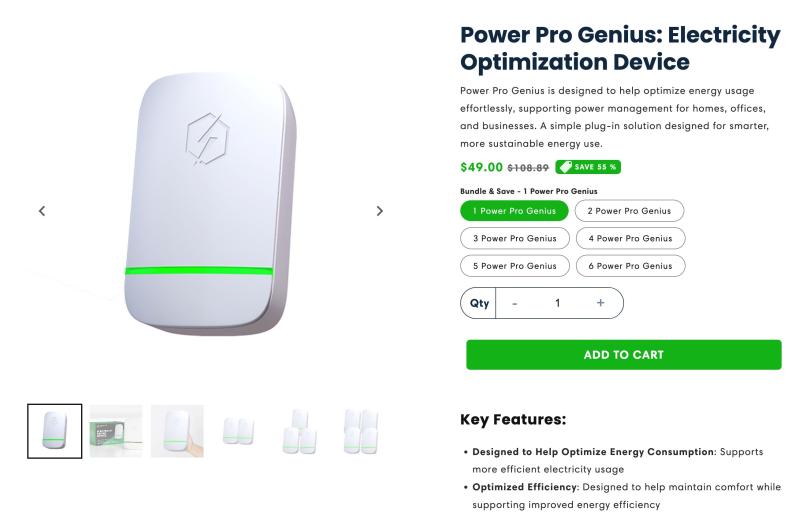
Rising electricity costs have led many homeowners to search for ways to reduce their monthly energy bills. Taking advantage of this demand, products such as the Power Pro Genius Electricity Optimization Device are being promoted as easy solutions that supposedly lower electricity consumption. The device is advertised as a simple plug-in unit that claims to optimize electricity flow, reduce wasted energy, and lower monthly electricity bills by significant percentages.
However, after examining the claims and reviewing what electrical experts and consumer protection organizations have said about similar devices, we found several reasons for concern. The advertised benefits appear questionable, and consumers should exercise caution before relying on claims that a small plug-in device can deliver substantial reductions in electricity bills.
The promotional material for Power Pro Genius Electricity Optimization Device suggests that it can:
Some advertisements even imply that households could see dramatic reductions in their energy costs after installing the device. These claims may sound appealing, especially at a time when many families are looking for ways to reduce utility expenses. The problem is that independent experts have repeatedly questioned whether such devices can actually deliver the promised results.
Products like Power Pro Genius Electricity Optimization Device are not entirely new. Similar plug-in energy saver devices have appeared under numerous brand names over the years.
When electronics specialists and independent reviewers have examined comparable products, they often found very simple internal components. In many cases, the devices contained little more than:
The glowing LED can create the impression that the device is actively saving energy, but experts say the presence of a light does not prove any meaningful reduction in electricity consumption.
Many electricity saving gadgets rely on a concept known as power factor correction. Power factor correction is a real engineering principle. Large factories and industrial facilities sometimes use specialized equipment to improve power factor because it can affect how commercial electricity customers are billed.
However, this is where an important distinction must be made. Most residential electricity customers are charged based on actual energy consumption measured in kilowatt hours (kWh). Electrical experts have repeatedly explained that minor power factor adjustments in a typical home generally do not result in noticeable savings on residential electricity bills. As a result, a device claiming to save large amounts of money through power factor correction alone raises serious questions.
Consumer watchdogs and electronics experts have long warned about plug-in energy saving devices similar to Power Pro Genius that promise dramatic results. Common concerns include:
Extraordinary Savings Claims:
Advertisements sometimes claim users can reduce electricity bills by 30%, 50%, or even 90%. Such figures are difficult to reconcile with established electrical engineering principles. If a small plug-in box could consistently achieve those results, it would likely attract widespread recognition from energy authorities and utility companies.
Recycled Products Under New Names:
Many energy saving gadgets seems remarkably similar despite being sold under different brand names. Nearly identical products have been marketed under names such as Stop Watt, Miracle Watt, Pro Power Save, Watt Rescue, and numerous others. Rebranding can make it difficult for consumers to track previous complaints and reviews.
Aggressive Marketing Techniques:
Some websites selling these products use tactics such as:
These strategies can create urgency and encourage purchases before buyers have time to conduct proper research.
Another issue involves product quality and safety. Experts have warned that some low cost electricity saving devices may not undergo rigorous testing or certification. Poorly manufactured electrical products can potentially create risks such as:
Because consumers usually cannot verify the quality of internal components, caution is recommended when purchasing any electrical device from unfamiliar sources.
Energy experts generally recommend proven methods for reducing electricity consumption rather than relying on plug-in miracle devices like Power Pro Genius.
Examples include:
These approaches are supported by established energy efficiency research and can produce measurable savings when implemented correctly.
The marketing behind Power Pro Genius Electricity Optimization Device presents it as a simple solution for lowering electricity bills. However, the available evidence raises significant concerns.
Hence, similar plug-in energy saving devices contain only basic components and lack a convincing mechanism for delivering the dramatic savings often advertised. The claims made by these products, particularly those involving large reductions in household electricity costs are highly questionable. All these factors suggest that extreme caution is needed.
Consumers considering Power Pro Genius should carefully research the product, evaluate the evidence supporting its claims, and remember that proven energy saving strategies remain the most reliable way to reduce electricity costs rather than devices like Power Pro Genius.
This article has been written by a Scam Fighter Contributor, De-Reviews.com Team. If you believe the article above contains inaccuracies or needs to include relevant information, please contact ScamAdviser.com using this form.
De-Reviews.com Team is a group of scam researchers, editors, and online safety advocates dedicated to exposing online fraud and helping consumers stay safe online. The team has been investigating scams, fraudulent websites, phishing campaigns, and other online threats since 2014. Read the Full Author Profile
